Inside the centuries-old swan census ordered by King Charles III
The annual five-day census of swans dates back to the 12th century

Scarlet uniforms cut a striking figure against the River Thames this week as the annual five-day census of King Charles III’s swans, known as Swan Upping, commenced.
The traditional event, which began on Monday, sees a young swan gently lifted, measured, inspected, and released, to assess the health of the royal flock.
The unique tradition stems from the monarch’s lesser-known title, Seigneur of the Swans, or Lord of the Swans. According to ancient lore, this title grants the reigning sovereign ownership of all mute swans found in Britain’s open waters.
Each year, a dedicated team of carefully selected oarsmen, dubbed ‘Swan Uppers’, embark on a stretch of the Thames to locate the birds.
When a swan family is sighted, the cry of "All up!" rings out, prompting the boats to swiftly encircle the birds for marking and a thorough check for any signs of disease or injury.
“It gives us an indication of what’s going on throughout the country,” said David Barber, who wears a scarlet jacket and a white swan feather in his cap and bears the title of King’s Swan Marker.
“It’s a tradition, but I think it’s serving a very useful purpose as well.”
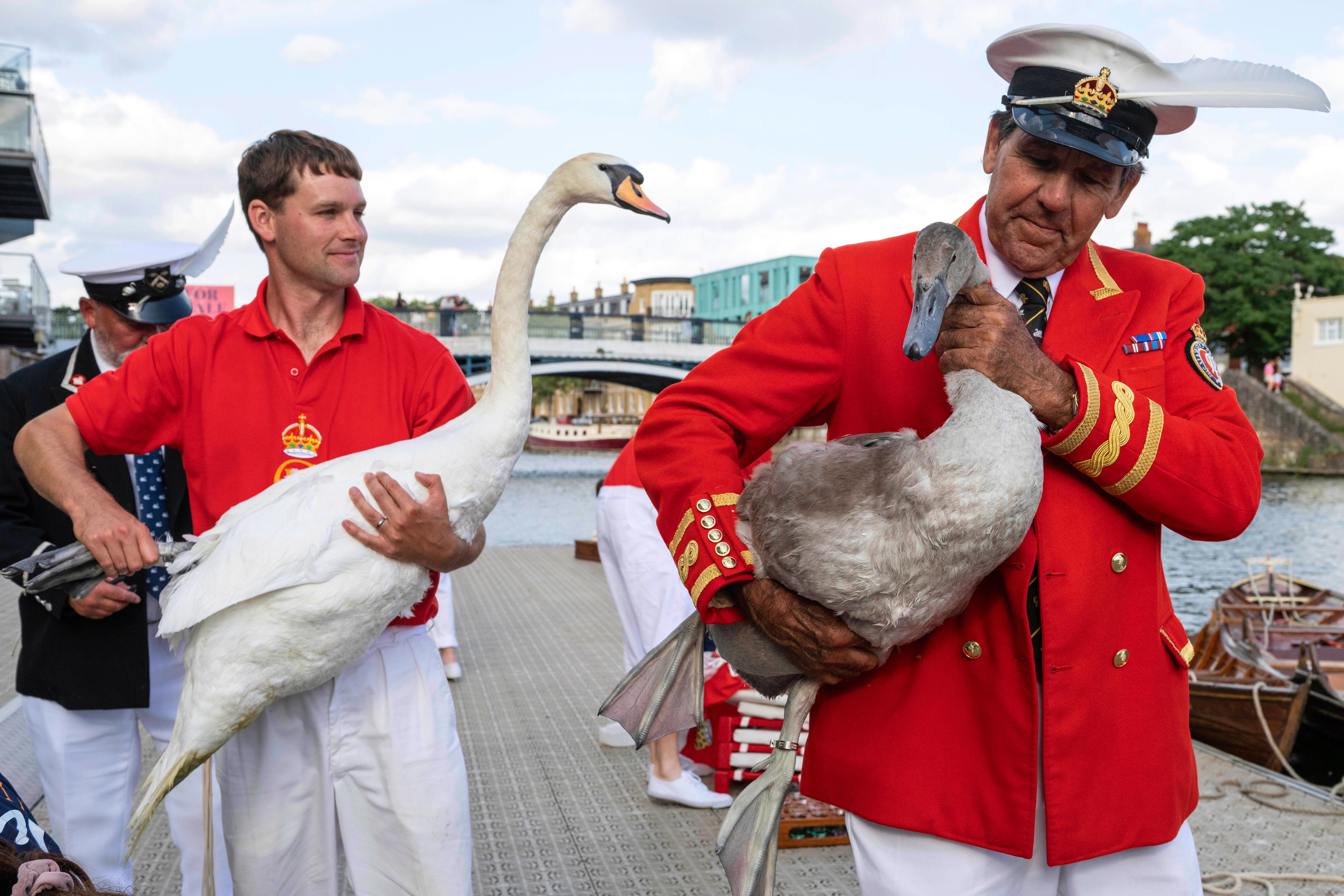
Barber has been leading the event for more than 30 years. He is accompanied by a vet and oarsmen dressed in three colors: red for the king, white for the Worshipful Company of Vintners and blue stripes for the Worshipful Company of Dyers.
The last two are medieval London trade guilds that were granted ownership of some Thames swans in the 15th century.
The census tradition dates to the 12th century, when swans were considered an important food for royal banquets and feasts.
While swans are now legally protected from hunting, they face threats from disease, pollution, vandalism and cruelty, Barber said.
Their numbers have declined over the last two years, primarily due to outbreaks of avian flu across Britain, he said, adding that only 86 young swans were found during last year’s Swan Upping, which was 45 per cent fewer than the year before that.
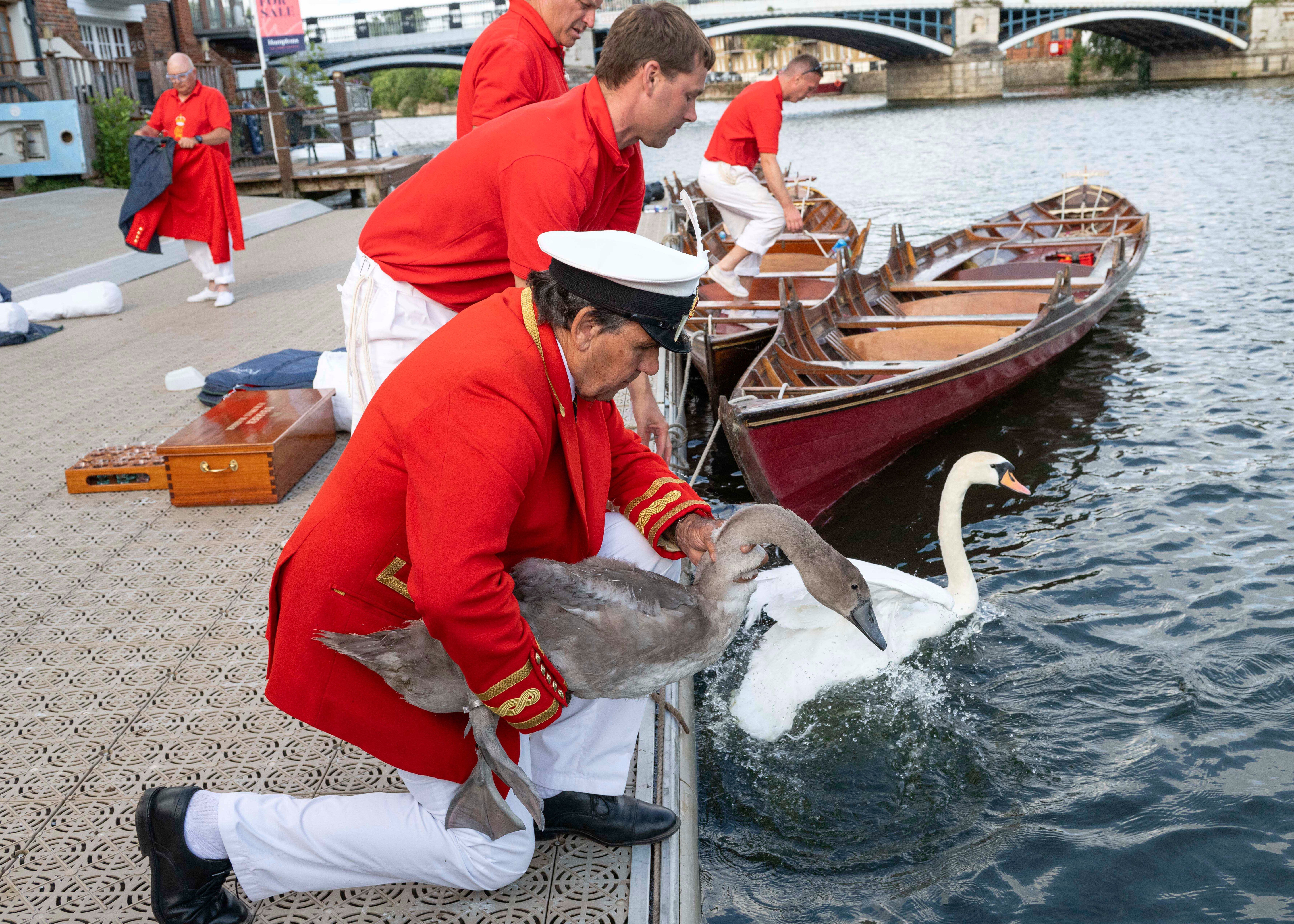
But Barber appeared positive at the end of the event's first day, with a total of 16 young swans recorded.
The census continues until Friday, traveling from Sunbury, on the outskirts of London, to Abingdon, 80 miles (130 kilometers) upstream.
Bookmark popover
Removed from bookmarks