‘I live in a country that hates me’: What’s next for trans people in the UK?
In April, the UK’s highest court ruled that the legal definition of a woman should be based on biological sex. Nicole Wootton-Cane speaks to five transgender Britons about how they feel the decision has affected their lives, and what comes next
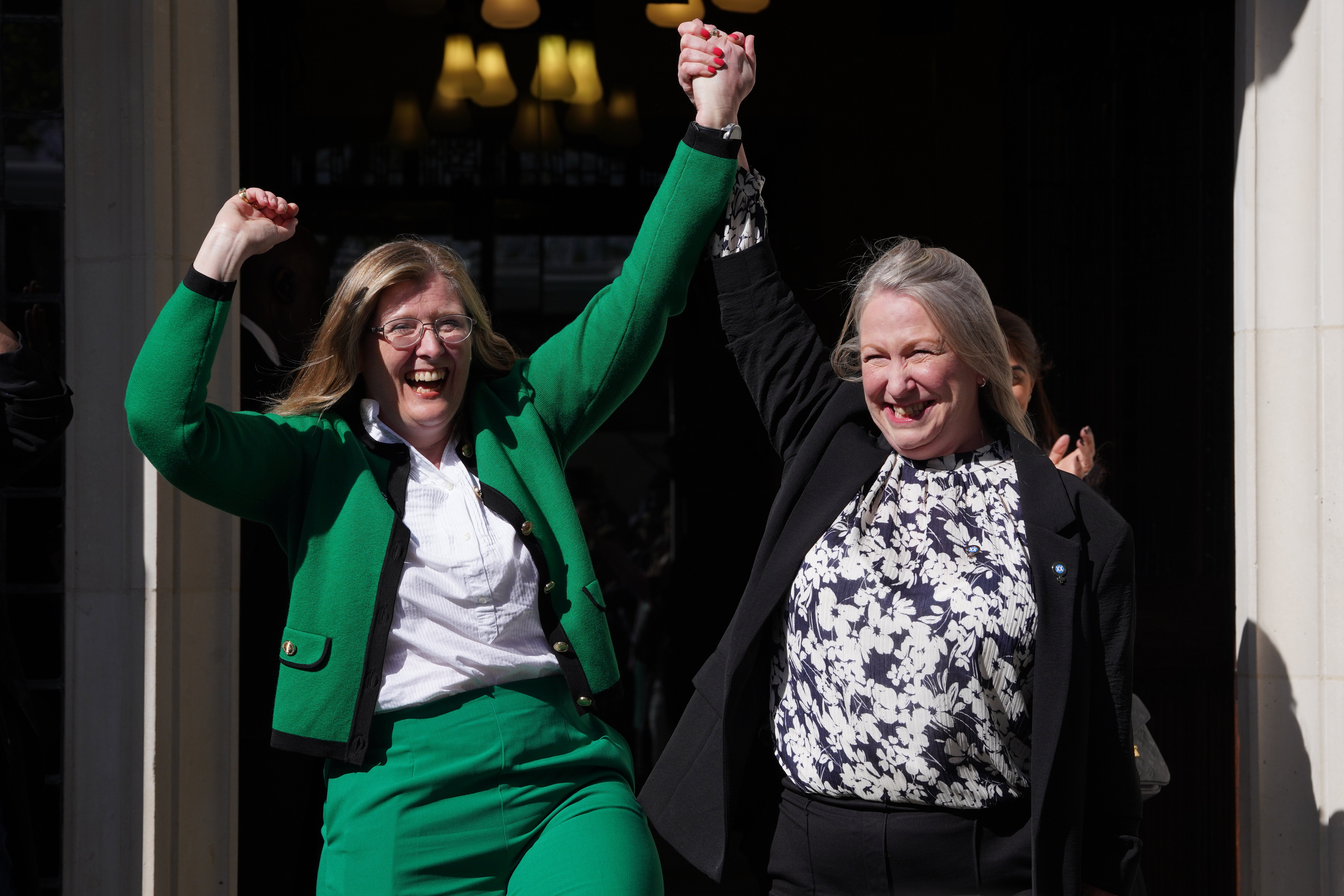
The image of two women emerging from the Supreme Court building in London on a sunny April afternoon, arms raised in ecstasy, champagne at the ready, is one of the most unforgettable pictures of 2025.
It came moments after the UK’s highest court gave its decision on the legal definition of a woman, ruling that, for the purposes of the Equality Act, it should be based on biological sex.
But as these campaigners celebrated, others remember listening to the news come in and feeling “terrified”. Members of the trans community said they felt the country had taken a “huge step backwards” in what one woman described as a move that had “put the clock back to worse than several decades ago”.
Recently leaked Equality and Human Rights Commission (EHRC) guidance suggested that trans people could be asked about whether they should be accessing single-sex services based on their physical appearance or behaviour.
The guidance was dismissed as “unworkable” by MPs and charities, who warned that it could result in the “segregation, harassment and exclusion of trans and gender non-conforming people”.
The Independent spoke to five trans people about the impact of the judgment on their lives since April and what they believe the next year holds for trans people in the UK.
‘I live in a country that hates me’
Chris Northwood, 38, a trans woman working as a software engineer and city councillor in Manchester, believes the Supreme Court judgment has opened the doors for people to see trans acceptance as “illegal”.
“It feels like we’ve taken a big step backwards this year,” she said. “As a visible trans woman, I’ve certainly seen an uptick in abuse, both on the doorstep canvassing and online.”
For her, the impact of the ruling became most obvious after she was hit by “terrifying” anxiety after returning from a holiday. “We landed in the UK and I had to pop to the toilet in the airport,” she said. “I worried about being challenged and all of a sudden I realised that hadn’t been weighing on me while I was away. I feel like I have to get in and out as soon as possible when using public toilets in the UK now.”
Ellis, 40, who did not want to give his surname, is a trans man. The impact of the Supreme Court ruling, he said, had been “immediate and damaging”.
He told The Independent he had gone from feeling the UK was a “relatively safe and welcoming place to live” to worrying about how “viable” it will now be to live here safely as a trans person. Since April he had noticed some of his friends stopping going out to pubs and restaurants to avoid using public bathrooms.
“There is a feeling of suicidal ideation for a lot of people I know – people who haven’t felt like that before are now saying, ‘I live in a country that hates me’,” he said. “That’s genuinely the feeling.”
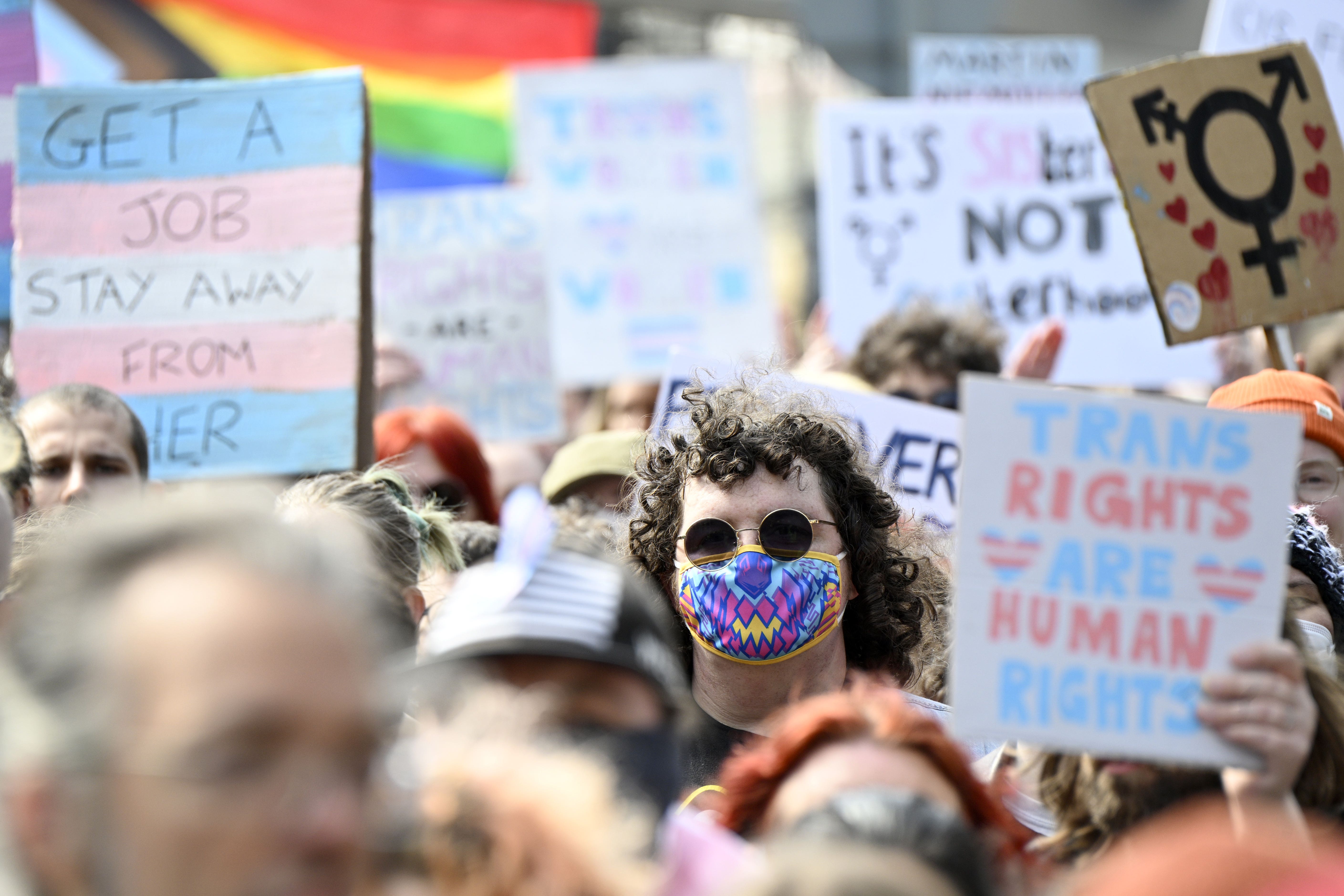
Marlo, who did not want to share their surname, identifies as transmasculine, a term used to describe someone who was assigned female at birth but identifies with masculinity. They had already experienced being thrown out of both male and female toilets since April.
“The effects of the Supreme Court ruling are real and palpable,” the 37-year-old said. “It’s depressing, it’s sad, and it’s also terrifying.”
Fox Fisher, who is non-binary transmasculine – meaning they have masculine traits but do not identify as a man or woman – said they have stopped going to the gym after they experienced transphobia while using the sauna there.
“There is a lot of worry,” the 45-year-old said. “That’s a consequence of the media and the government, and that has made it very, very hard for people to exist and to thrive. I think the UK government is failing its trans and non-binary citizens.”
Fleeing the country
Dr Victoria McCloud was the UK’s first openly transgender judge. She moved to Ireland last year after feeling she was no longer safe in the UK, and following the Supreme Court judgment founded the Trans Exile Network to support those looking to do the same.
She told The Independent she had been in contact with “hundreds” of other trans people who are following suit, many of whom have particular fears over the future of healthcare provision.
“They don’t want to leave their homes,” she said. “These are people who have successful careers, families. It’s very traumatic.”

Chris Northwood said she and her partner had also considered leaving the UK. “We love our life here, but we have had to think: is there a limit to how bad it could get?” she said. “If it gets to a point where healthcare is so difficult to access, then it would probably make it unfeasible to live in this country.”
Ellis also said he, along with many of his friends, is struggling to see a future where he feels safe in the UK.
“I don’t use the phrase ‘flee’ lightly,” he said. “That is where a lot of trans people I know have got to. They do not see a safe future in this country.”
Statistics suggest they are not alone. A YouGov poll in October found that 84 per cent of respondents, all of whom were trans, said the UK was “fairly unsafe” or “very unsafe” for trans people. Almost two-thirds (65 per cent) of trans adults reported verbal abuse in public spaces, while nearly one in four (24 per cent) said they had suffered physical violence.
Hope for the future
But despite the fear, those who spoke to The Independent said there were glimmers of hope as we move into 2026. Several spoke about taking inspiration from the creative talents and kindness of those within the trans community.
“We’re seeing the community really come together to help others, that’s what gives me hope,” Dr Fisher said.
Marlo said: “It’s great to be reminded of that complete magnetic force we have as scapegoats and vilified members of the community.”
Others are hoping the ruling itself may not survive. Dr McCloud is challenging the Supreme Court decision directly, taking it to the European Court of Human Rights. She is arguing that the Supreme Court’s decision not to hear her submissions as a trans woman deprived her of her Article Six rights – the right to a fair trial.
She is hopeful that the judgment will be reversed, even if not through her own challenge, but she conceded that the process could take years. In the meantime, she believes the trans community has become more unified and coordinated since the ruling.

“After a bit of a scramble, we are now organised, we are taking actual steps which are actually succeeding,” she said. “I believe that actually this year may turn out to be better than we expect.”
Ellis agreed: “This year has been the terrible, terrible shock of it, but my sense is we’re more prepared. We feel a bit more unified, and we know how to take care of each other a bit more now.”
A government spokesperson said: "Everyone deserves to be treated with dignity and respect. We are clear that there are laws in place to protect trans people from discrimination and harassment.
“The UK proudly upholds a robust legislative framework to protect LGBT people and we are working to advance these rights, including bringing forward legislation to ban conversion practices and strengthening protections against hate crime."
If you are experiencing distress or are struggling to cope, you can speak to the Samaritans in confidence on 116 123 (UK and ROI), email jo@samaritans.org, or visit the Samaritans website to find details of your nearest branch.
If you are based in the USA, and you or someone you know needs mental health assistance right now, call or text 988, or visit 988lifeline.org to access online chat from the 988 Suicide and Crisis Lifeline. This is a free, confidential crisis hotline that is available to everyone 24 hours a day, seven days a week. If you are in another country, you can go to www.befrienders.org to find a helpline near you.
Bookmark popover
Removed from bookmarks