The time has come to admit it – we have failed young people at every step of the way
As new unemployment figures show 18–24-year-olds are being hit hardest, Chloe Combi argues it’s time for older generations stop blaming young people’s mental health and attitudes – and start taking responsibility for a system that has badly let them down. Here’s how we fix it


The time has come for the brutal truth and to stop waiting for miracles. Young people in the UK are being, and have been, failed by almost every conceivable measure, and we are in serious danger of losing them as a generation if we don’t make the significant changes that might give them a fighting chance.
It’s time to stop blaming Gen Z’s and Gen A’s mental health, screen addictions and loneliness and anxious personalities for their current poor state – those things are very real, but they’re symptoms, not causes. People would be amazed how quickly those things would clear up, if young people knew there were jobs they could realistically aspire to or get, or a first home they could one day afford, rather than watching the future they could have had play out on Netflix or an influencer’s social feed. And the latest unemployment figures mean this generation are feeling less coming-of-age and more coming-of-rage.
The latest data shows that the UK unemployment rate climbed to 5.2 per cent as of this week, up from the high of 5.1 per cent in December 2025. Young people have been the hardest hit, with a combination of tax hikes and AI making entry-level jobs scarce. Graduates from the best institutions and with degrees that have cost them over £50,000 are discovering hiring wastelands and a dehumanising application process that means they often hear nothing at all from hundreds of applications. The unemployment rate for British 16- to 24-year-olds has surged to around 16 per cent, meaning nearly one in eight young people are now out of work – significantly higher than the EU average.
The dream of home ownership for the majority of Gen Z’s is more akin to the stuff of science fiction. Renting, even for young people in employment is increasingly out of bounds and represents not what it once did for older generations – fun, freedom and frequent freezing showers – but a weird kind of prison where you might have your own space, but you have no money for socialising, cheap clothes or dates. I don’t know. Maybe that has got something to do with the mental health crisis that has seen this dubbed the anxious generation.
Kizzy, 24, has a graduate job that pays OK, but not nearly enough to live on, and she says: “I actually couldn’t afford rent, food, travel, bills, clothes, let alone going out or meeting new people. How is it that I’m working 60 hours a week, but have to choose between heating and eating? I’m probably doing the best of all my uni friendship groups. Out of 10 of my close uni friends, six are unemployed, one is in the gig economy, and three are working but still living at home. I think we’re all depressed and feeling pretty hopeless, and we’re the lucky ones!”
-copy.jpeg?quality=75&width=230&crop=3%3A2%2Csmart&auto=webp)


It is no surprise at all that into this generational void, toxic things seep. Directionless young people who can’t get a foot on any ladder become more susceptible to quick fixes, and the explosion of crypto, sports betting and addiction, extreme influencers and populist politics was inevitable.
If the system isn’t working for you, you look to systems that might. If you’ve got no job to feel proud of that pays you decently, no professional or economic status to point to, no place to call home, and no community to hold you up, feeling angry or depressed and less willing to socialise becomes an inevitability. Add to this mess IRL friendships and relationships being replaced by online ones and even synthetic (AI) ones. Something has gone profoundly wrong that our young are living like this. And the problem isn’t with them. It is with the generations before them that created this no-hope landscape.
Forget the tropes of expensive avocado bunches and macha lattes. This is a generation that has nowhere to go and nothing much to do without the help of the bank of mum and dad. But that’s if they are lucky. Chances are mum and dad are busy working longer and longer hours for less money, because inflation is killing us while corporations get richer and richer.
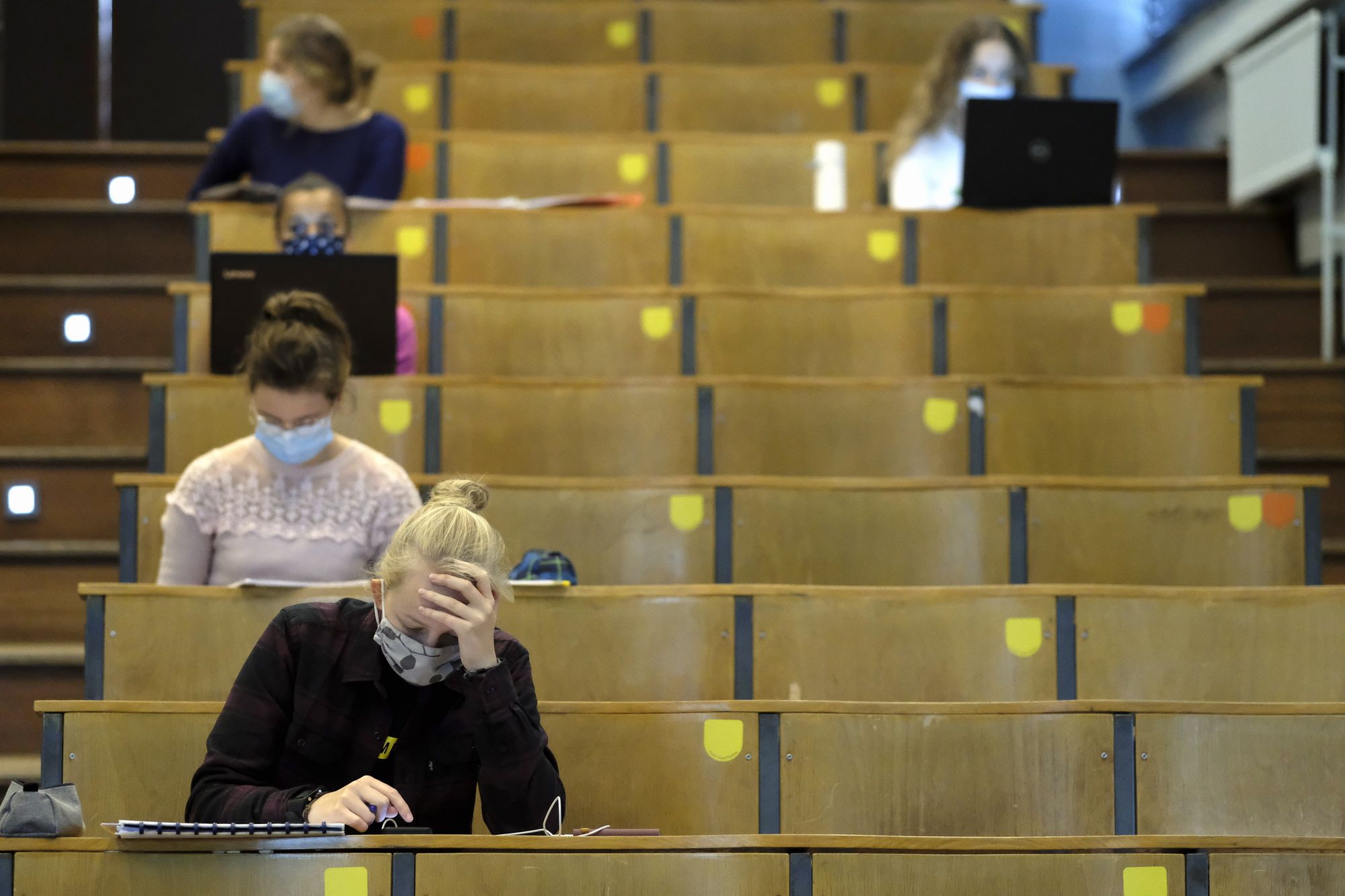
This is a generation who is now facing job annihilation thanks to Ai taking entry jobs at a faster rate in the UK than any other. And before this, they were the generation whose exams were cancelled in Covid, and were told to stay inside and shut up while the government opened up golf courses and theme parks before they opened schools. The rot started then and has just gotten worse. As successive governments do mathematical somersaults to keep things like the triple lock pensions for the over sixties, barely a finger has been lifted to help the next generation get on the right track.
There are no miracles that are going to fix this, but there are significant changes that can be made that might lead us back to a place where young people will not only survive, but actually thrive. As it is, they are the first generation who look like they will die earlier and be poorer than the generation ahead of them
Nobody is immune to the crisis that is hitting them and it will soon hit the rest of us as we realise we will one day need their strength and resources to hold society together. Corporations making eyewatering profits, but refusing to hire young people, or paying them peanuts which can hardly count as a living wage, should be required by law to put some of their profits into projects to help younger generations both professionally and personally.
Pooling money into professional training and learning programmes would be an investment on so many levels. Millions of kids are leaving school with little or no work experience and no knowledge of where to look for jobs, how to apply for them or how to make themselves hireable. Creating a bridge and a trusted line of contact that’s nationally recognised and accessible to everyone between industry (many of which are struggling to hire and retain) and young people isn’t just desirable, but desperately needed on both sides of the equation.
Young people also need a sense of community. That means affordable sports clubs, youth clubs, discos, gigs and events young people want to go to that are safe, fun, well-run and inclusive. After Covid, we all got out of the habit of socialising and never really went back to it, and younger generations never really started. This has been catastrophic for the exact industries young people need the most.
Younger Gen Z’s and Gen A’s face a potential future extinction of IRL entertainment and socialising, and if we don’t teach them to get excited about going out into the world, we can’t blame them for not wanting to leave their bedrooms. And only when young people start getting properly invested in the world around them, can have a reasonable conversation about the kind of mandatory youth service that has has been mooted recently. No one can ask a generation to give a year or two of their lives to ‘their country’, when they feel like they are receiving nothing in return.
There are two truths: we are currently strangers to each other with little to no community to speak of, and Gen A and Gen Z are dangerously socially bubbled, rarely seeing outside their immediate peer groups. That needs to change and it’s a two-way street. Older generations have got to stop looking down and judging this generation by standards that are in no-way comparative to what they are now facing.

Action is the best antidote to anxiety. Giving young people a chance; the government needs to create an organised system of experiences for them which will help them grow professionally, foster community and make connections between generations that have been entirely lost to all of us.
We also need to get real about higher education and beyond. Getting a degree can still be a brilliant asset and remains one of the best (and often essential) entry points to the professional world. However, it is a system that hasn’t evolved that much and is in dire need of a facelift.
Institutions must be legally required to be transparent about the value added of every degree and courses that are adding nothing to a young person’s life, and the thousands of pounds of interest being added to student debt should be scrapped. Industry – every industry – needs to stop being vague about what they want, what makes a young person hireable and lay out explicitly their hiring requirements.
If you want apprenticeship style degrees – say so. If you’re only hiring graduates from specific subjects – say so. If you value work experience over academic certificates – say so! If an entry-level job doesn’t really need a degree, for the love of god, scrap that as a hiring requirement and open it up to school-leavers. A huge part of the current pain felt by both young people and many industries is a total lack of transparency and clarity. This needs to change.
Over the last thirty years, there has been an enormous global transfer of wealth from younger to older people. In the US Boomers are now thirty times wealthier than Gen Z and, in the UK, average households 65-74 hold £502,500 in wealth whilst Gen Z has approximately £15,200. No one is suggesting a raid on Boomers’ wealth, but it’s time to extend some generosity back to young people and get creative with what that looks like.
Rather than companies matching pension contributions, could this instead become housing contributions for younger workers, so they have a realistic chance to save for a house deposit and create assets for their generation? If hugely profitable companies want to get young people back into the office, should they be required to offer subsidised rent and transport costs as part of the package? If companies want ‘work-ready’ young people, shouldn’t they be offering professional training courses to create exactly that, rather than making young people do expensive degrees they complain don’t deliver quality candidates?
This is a crisis of such monumental proportions, it’s not just governments who can fix it. We can all play our part. If not, the decline will be terminal and contrary to the laws of nature, we’ll lose the youngest first. And for once, we can’t blame them.
Join our commenting forum
Join thought-provoking conversations, follow other Independent readers and see their replies
Comments
Bookmark popover
Removed from bookmarks