How will Boris Johnson run the government from isolation?
After testing positive for coronavirus, the prime minister has turned to videoconferencing to help him govern while quarantined in No 11, writes John Rentoul

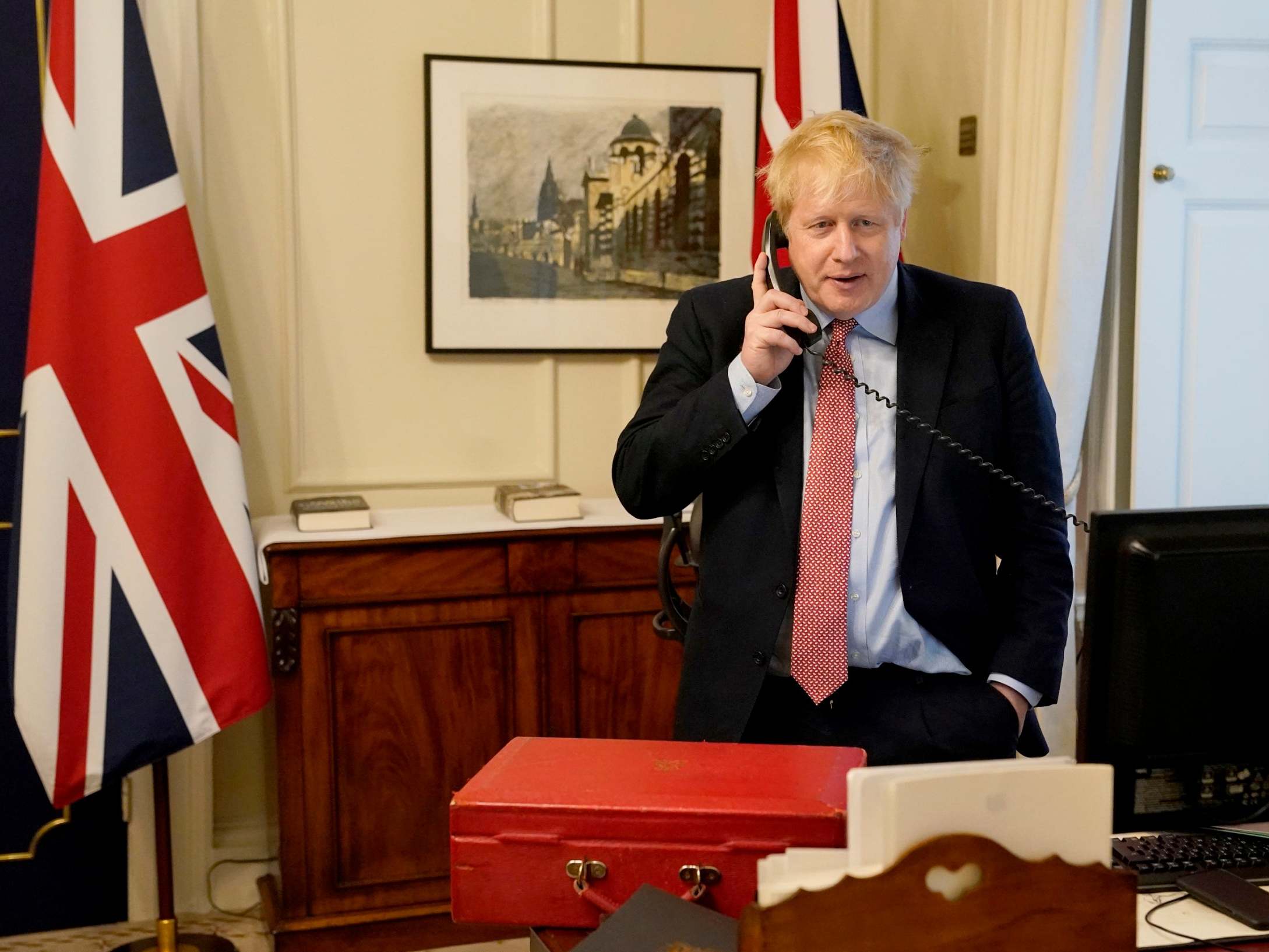
We have been told that the prime minister will be self-isolating for seven days in his flat, which is the larger one above 11 Downing Street – Rishi Sunak, the chancellor, uses the smaller one at the top of No 10. Boris Johnson’s food will be left on a tray outside his internal door.
He had mild symptoms of coronavirus on Thursday afternoon, was tested on the advice of Chris Whitty, the chief medical officer for England, and had the positive result at midnight.
On Friday morning he recorded a video in the flat announcing the news. Thus confirming that he is able, through what he called the “wizardry of modern technology”, to keep in touch with the outside world.
But how easy will it be for him to run the country by remote control? In fact, most of the machinery of government has moved online in dramatic fashion over the past few days.
Tuesday’s cabinet meeting was the first to be held by videoconference, with just Boris Johnson, Matt Hancock, the health secretary, Mark Sedwill, the cabinet secretary, Chris Whitty and two or three support staff in the cabinet room – and a photographer who recorded the historic event.
On Thursday, the prime minister took part in a G20 summit meeting – of the 20 countries with the largest economies – also by videoconference.
The photo of the cabinet meeting revealed that the government was using a popular free videoconferencing programme called Zoom, which prompted concerns about security. However, this was a temporary arrangement until a more secure means of communicating could be set up.
The timing of the prime minister’s isolation means that he will not need to send another minister to the House of Commons in his place, as parliament went into its Easter recess on Wednesday, a week early, and will not return until 21 April at the earliest. If he had needed to send a deputy, though, Downing Street confirmed this week that it would have been Dominic Raab, who, as well as being foreign secretary, holds the title of first secretary of state.
Raab would also take over chairing cabinet, cabinet committee and other meetings by video, if Johnson became too ill to work.
Otherwise, the business of government, much of which for a prime minister is done by phone, will continue as normal. There will be PhD theses to be written in years to come about the differences in decision making between face-to-face and remote meetings.
But the main difference for the prime minister might be the slight disorientation with which many of us are familiar, of being confined to quarters for days on end.
Join our commenting forum
Join thought-provoking conversations, follow other Independent readers and see their replies
Comments
Bookmark popover
Removed from bookmarks