How much ‘political capital’ does Boris Johnson have to spend?
A drop in the polls can be reversed, but the road is far from clear for the prime minister, writes Sean O'Grady

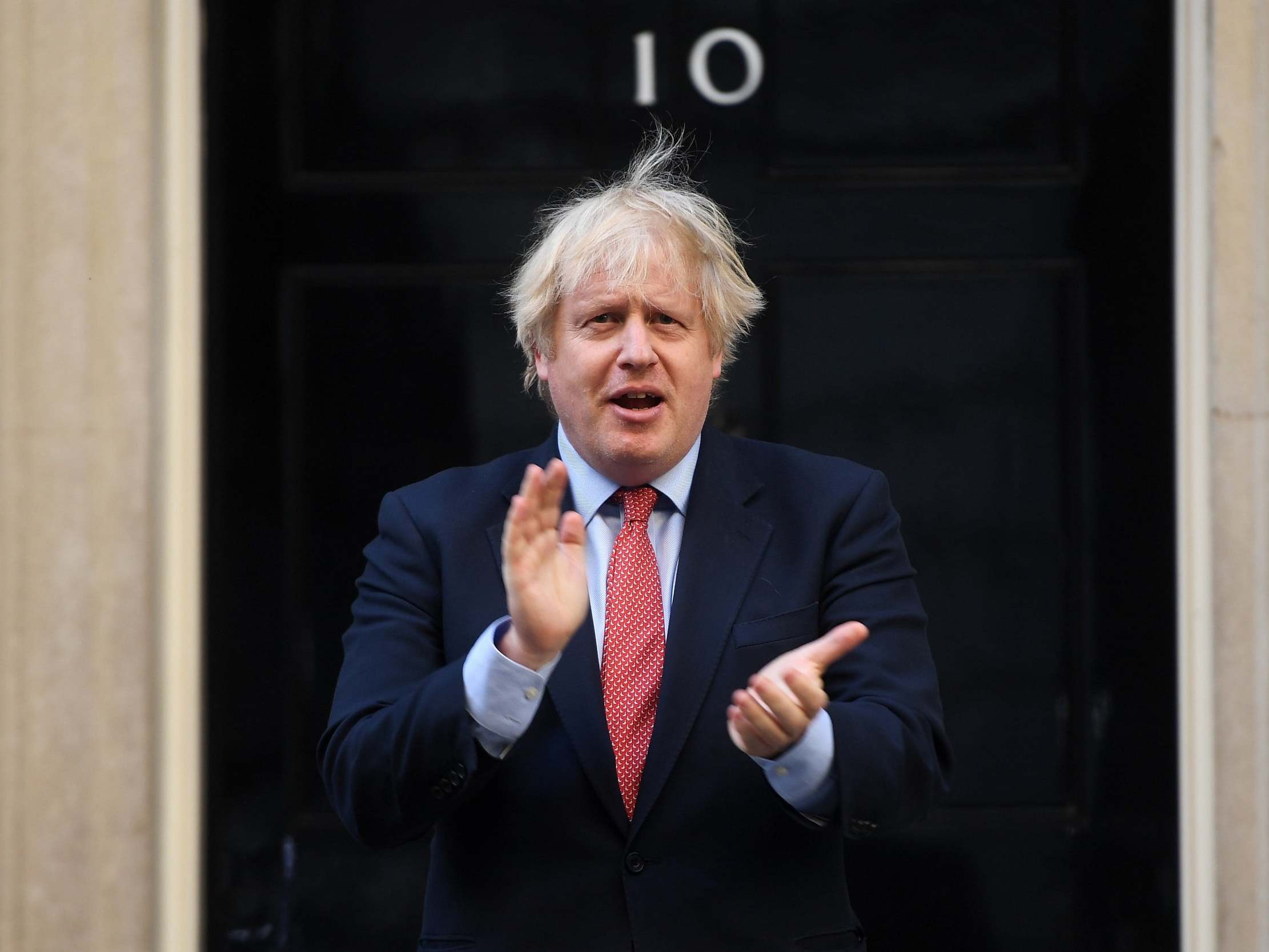
It’s often been said in recent days that the prime minister was spending huge amounts of “political capital” in trying to save his chief adviser, Dominic Cummings. Indeed, that was one of the few things people on all sides of this argument could agree on, and the science, or at least the social science of the opinion polls confirms as much. Boris Johnson’s approval rating has slumped by 20 points and has turned negative – more people disapprove of the way he’s doing his job than approve of it. Meanwhile the ratings of his new rival, Labour leader Keir Starmer have seen an upsurge, building on last week’s success on the NHS surcharge on foreign NHS workers.
The Tories remain ahead in the polls, but the impressive leads they’ve enjoyed since the run up to last December’s general election are also narrowing. On the the latest reading, the Conservatives are on 44 per cent, down four percentage points, with Labour up five, to 38 per cent, both on a week ago. While it could be argued to reflect some resilience in government support after such a public battering, it is still true that the Johnson honeymoon is over.
The worrying aspect for Tory party managers is that the decline in prime ministerial ratings dates back to before the Cummings scandal, to 8 April, oddly coinciding with the peak for reported Covid deaths. After some weeks of a globally observed phenomenon of voters rallying around their leaders, in Britain at least such goodwill is being rapidly dissipated.
One question must be whether it is worth it, and whether Mr Cummings’s contribution to this crisis and the future governance of Britain is worth the “investment” of so much political capital. It is uncertain.
Looking ahead to the four plus years until the next general election is, as ever, a hazardous exercise. However some things do seem clear. First, this pandemic has had a scale of impact and a lasting effect that few other societal shocks do. Outside of the world wars and prolonged depressions, it is unprecedented in the era of modern democratic politics.
The numbers of people directly and indirectly harmed – physically, emotionally, financially – is huge. Businesses and the public finances will take years to recover. As the aftershocks reverberate through the 2020s, bad memories will be revived and blame/responsibility apportioned anew. There will be a public inquiry, but every family will want to work out what went wrong and why.
Politically, the vast borrowings now being undertaken will mean difficult choices for a government already committed to spending more, borrowing more and limiting its ability to raise new taxes. The “levelling up” agenda and the new large-scale infrastructure investments such as HS2 may need to be scaled back. More will have to be found from individuals to fund social care.
The NHS with all its demands will be a public priority. Yet there will be less money around to pay for better public services and rising personal consumption. Business confidence and consumer confidence perhaps will fully recover to pre-Covid levels only slowly. They are usually allied with political success for a governing party.
Did someone mention Brexit? It hasn't come up much recently, admittedly, but it too hangs in the balance as a driving political force. Now that Brexit is “done” in the formal sense of departure, there is still room for the crucial EU and other talks to go wrong. That would mean yet another economic hit, before any dynamic post-Brexit effects start to come through – and they could take decades.
A labour shortage and a collapse of sterling could push costs and prices higher just as growth slows and, paradoxically, unemployment rises (because vacancies and jobless people are mismatched). The real nightmare would be if HM Treasury and the Bank of England were no longer able to support the real economy and/or the banks. Such an economic disaster would do the Conservatives no favours: in office since 2010 they could no longer plausibly blame Labour.
So these are strange times with stranger futures. The past, for what it is worth, offers mixed lessons. The Exchange Rate Mechanism debacle of 1992, for example, sunk the Major government for the next four years, making Tony Blair’s path to power easier.
David Cameron’s historic mistakes over the EU referendum gave way to years of Tory disarray and, almost, a Corbyn government. On the other hand the Iraq war didn’t stop Blair winning his hat-trick in 2005, while Conservative governments got over the disasters of Suez and the poll tax in time for subsequent election victories in 1959 and 1992, albeit with a change at No 10.
Looking ahead, Johnson, keen on his history, is said to be fearful of the precedents of Winston Churchill and Gordon Brown. Churchill won the war, and Brown saved the banks, but they were not thanked for it by the electorate when in 1945 and 2010 the time came for the people to give their verdict.
Even if he can claim to have “seen off” the coronavirus and rescued the economy Johnson might still lose the next election with a newly competent Labour opposition – but if he messes up on Covid, he may be gone long before he and Dom ever set about the next Tory manifesto.
Join our commenting forum
Join thought-provoking conversations, follow other Independent readers and see their replies
Comments
Bookmark popover
Removed from bookmarks