UK accused of hypocrisy at landmark UN foreign aid conference
Experts at the fourth Financing for Development Conference (FfD4) say the UK cannot talk up its role in helping developing nations while cutting aid commitments
The UK has been accused of “hypocrisy” over its lack of high-level participation at a key global development finance summit, on top of cuts to Britain’s aid budget – while talking up its role in helping lower-income nations.
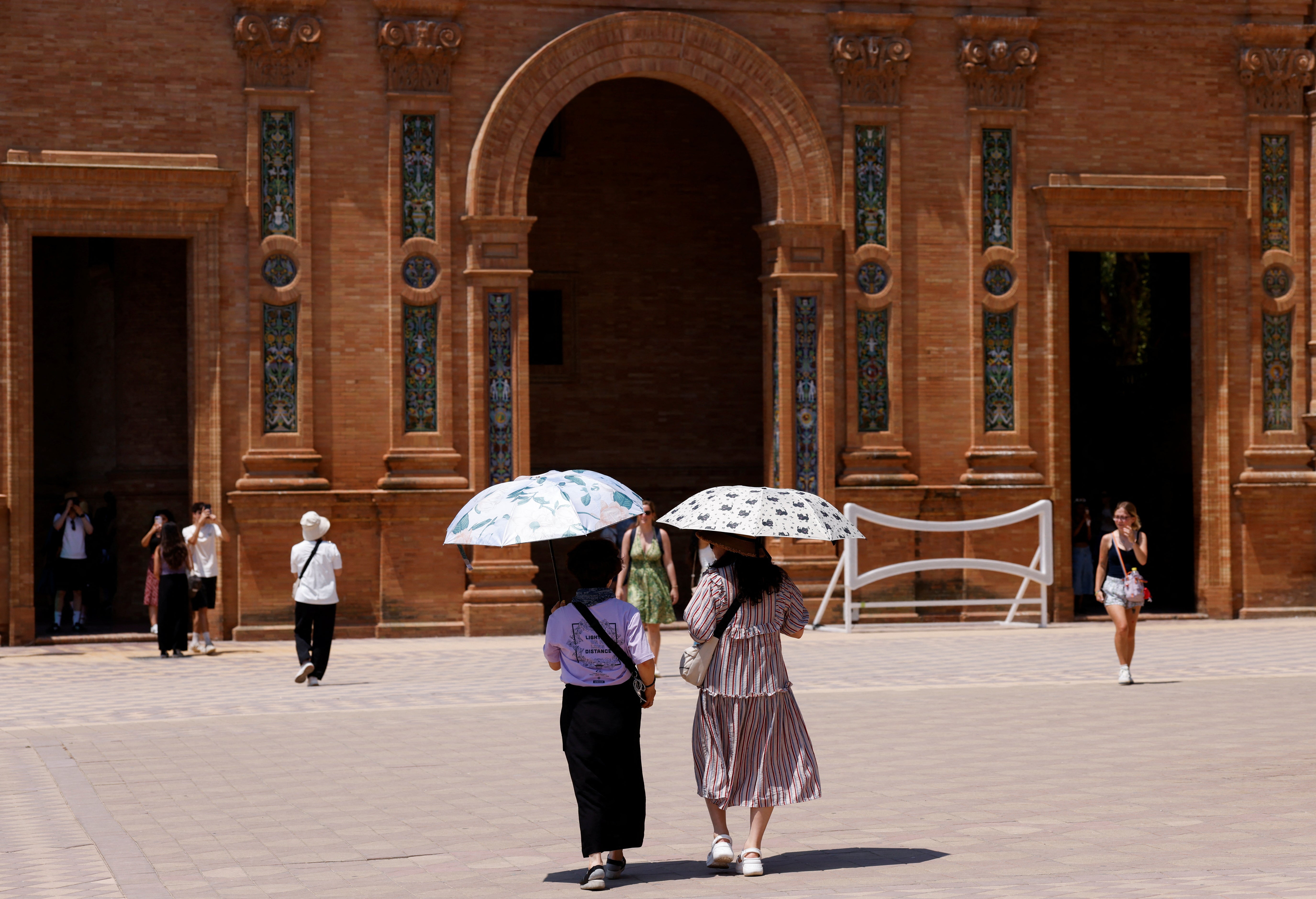
The accusations have been made at the fourth Financing for Development Conference (FfD4), a once-a-decade summit happening all week in Seville, Southern Spain, where delegates are aiming to tackle the perennial problem of how to help developing countries access the money they need.
Thirty-two African countries currently spend more on debt repayments than on healthcare, and 25 African countries spend more on debt payments than on education, an issue that activists say needs urgent action.
Some 50 world leaders are due at FfD4, including Emmanuel Macron of France, Mark Carney of Canada, and Ursula von der Leyen, President of the European Commission. The UK, however, has only sent a government minister in the form of Baroness Chapman, the international development minister.
“A level of ambition from the UK government would have been demonstrated clearly by sending higher level participation such as the prime minister or Foreign Secretary,” Lydia Darby, a senior policy advisor at Save the Children, told The Independent.
Ahead of fDf4, writing in The Independent, Baroness Chapman called for a “new era for global aid and development”, that would see developing countries helped in building their own tax systems, and greater investment in developing countries from the private sector, among other measures.
Hannah Bond, Co-CEO at ActionAid UK, said that it is “hypocritical” for the UK to talk about “fair finance” while cutting overseas aid.
“If the UK truly cares about fair finance, it must honour its overseas aid commitments, tackle unfair debts, and pay its fair share in addressing the climate crisis,” Bond said. “Without this, talk of fair finance is nothing more than empty PR.”
Baroness Chapman’s appearance comes off the back of the UK cutting its foreign aid budget from 0.5 per cent to 0.3 per cent of Gross National Income (GNI) - which is expected to reduce foreign aid by £6.2 billion by 2025.
Alex Farley, from advocacy group Bond, said that it is “impossible” to see how the UK can deliver on existing funding commitments, respond to humanitarian crisis, and tackle climate change, following he 0.5 to 0.3 per cent cut.
“Let alone undo the damage these cuts have done to our reputation and credibility with countries,” she added.
“It would be nice to hear the government expressing regret for its cuts to the aid budget, rather than blithely claiming that they are somehow doing developing countries a favour,” Michael Jacobs, from the think tank ODI, told The Independent.
Mr Jacobs added that the claim that private sector money can substitute public funds is “silly at best, disingenuous at worst”.
This is because “the private sector wants returns, while much aid - for health, schools, sanitation, climate adaptation - doesn't make a profit, so is not investable”, he said.

Catherine Pettengell, executive director of NGO network Climate Action Network UK concurred that the UK had “failed to sufficiently support developing countries’ calls for fairer debt, tax, international cooperation, and climate finance” in build-up to the conference.
“It’s a crushing blow that only compounds the recent UK aid cuts,” she added.
Attendees of FfD4 say, however, that it is not all doom and gloom in Seville.
The final agreement of the talks - the Compromiso de Sevilla - was in fact agreed to just ahead of this week’s conference. According to Save the Children’s Ms Darby, there is notably positive language on matters including international tax cooperation and an agreement to initiate an intergovernmental process on debt.
“The document is an important step with plenty to build on in the months and years to come,” Darby said - though she acknowledged it has inevitably fallen short of “the transformative ambition that civil society and vulnerable communities worldwide had called for”.
While the UK, along with the EU, has been accused of watering down key priorities for low-and-middle-come countries, these countries have at least contributed much more positively than the US, which withdrew from talks ahead of the conference over the refusal from the rest of the world to delete the goal of “sustainable development” from the text.
This story is part of The Independent’s Rethinking Global Aid series
Join our commenting forum
Join thought-provoking conversations, follow other Independent readers and see their replies
Comments
Bookmark popover
Removed from bookmarks