Africa is much bigger than you think. Here’s how you’ve been misled
A world map drawn in the 1500s is to blame
The African Union is championing a drive to replace the 16th-century Mercator world map, arguing its widespread use by governments and international bodies inaccurately depicts Africa's true scale.
The projection, devised by cartographer Gerardus Mercator for navigation, distorts continent sizes, inflating areas near the poles like North America and Greenland, while shrinking Africa and South America.
Selma Malika Haddadi, the deputy chairperson of the AU Commission, said the map's impact is significant.
"It might seem to be just a map, but in reality, it is not."
She argued that the Mercator fosters a false impression of Africa as "marginal", despite it being the world's second-largest continent, with 54 nations and over a billion people.
Such stereotypes influence media, education, and policy, she said.

Criticism of the Mercator map is not new, but the 'Correct The Map' campaign – led by advocacy groups Africa No Filter and Speak Up Africa – has revived the debate, urging organisations to adopt the 2018 Equal Earth projection, which tries to reflect countries' true sizes.
"The current size of the map of Africa is wrong," Moky Makura, executive director of Africa No Filter, said.
"It's the world's longest misinformation and disinformation campaign, and it just simply has to stop."
Fara Ndiaye, co-founder of Speak Up Africa, said the Mercator affected Africans' identity and pride, especially children who might encounter it early in school.
"We're actively working on promoting a curriculum where the Equal Earth projection will be the main standard across all (African) classrooms," Ms Ndiaye said, adding she hoped it would also be the one used by global institutions, including Africa-based ones.
Ms Haddadi said the AU endorsed the campaign, adding it aligned with its goal of "reclaiming Africa's rightful place on the global stage" amid growing calls for reparations for colonialism and slavery.
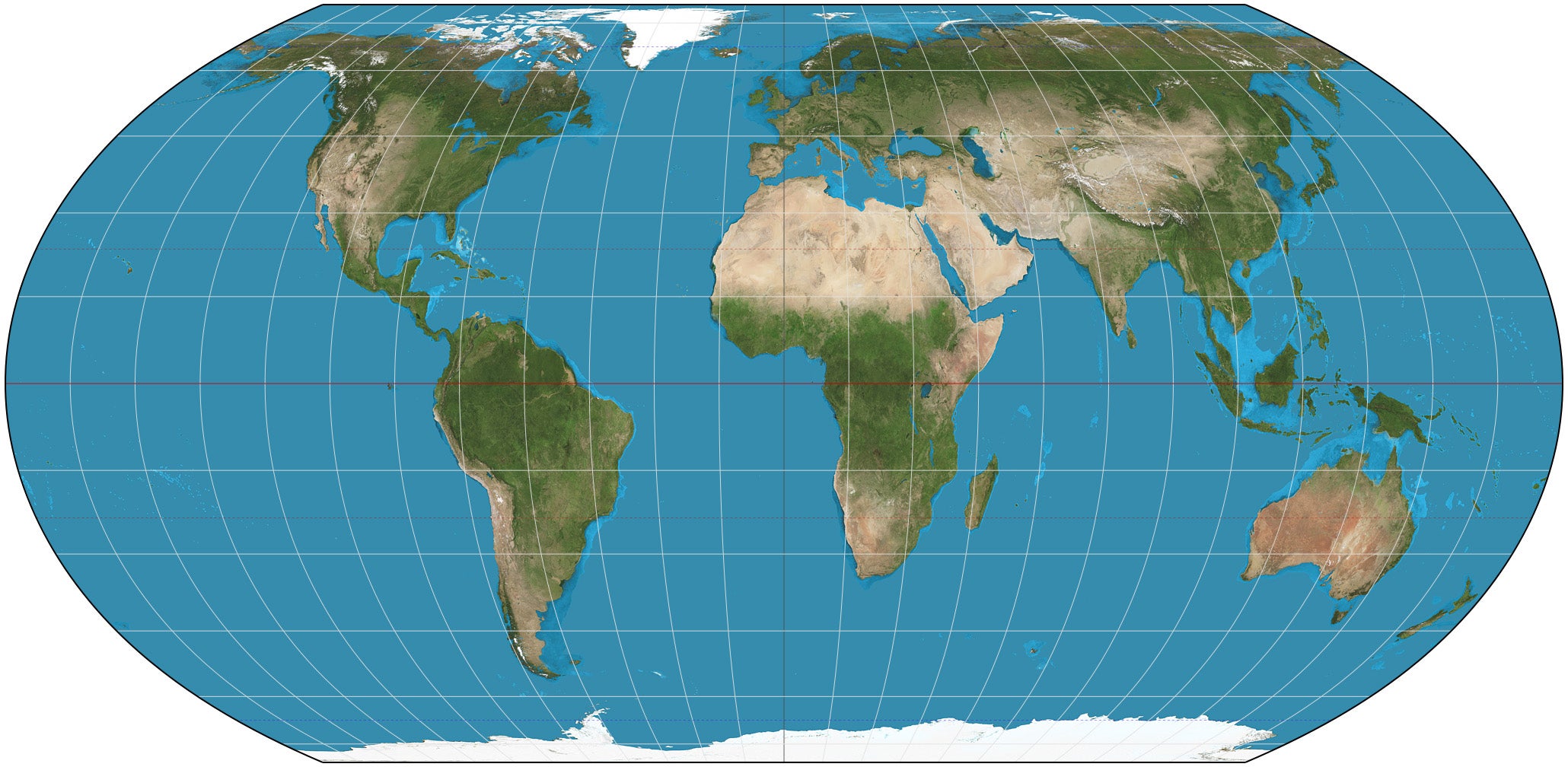
The AU will advocate for wider map adoption and discuss collective actions with member states, Ms Haddadi added.
The Mercator projection is still widely used, including by schools and tech companies.
Google Maps switched from Mercator on desktop to a 3D globe view in 2018, though users can still switch back to the Mercator if they prefer.
On the mobile app, however, the Mercator projection remains the default.
'Correct The Map' wants organisations like the World Bank and the United Nations to adopt the Equal Earth map. A World Bank spokesperson said they already use the Winkel-Tripel or Equal Earth for static maps and are phasing out Mercator on web maps.
The campaign said it has sent a request to the UN geospatial body, UN-GGIM. A UN spokesperson said that once received it must be reviewed and approved by a committee of experts.
Other regions are backing the AU's efforts. Dorbrene O'Marde, Vice Chair of the Caribbean Community (CARICOM) Reparations Commission, endorsed Equal Earth as a rejection of Mercator map's "ideology of power and dominance".
Join our commenting forum
Join thought-provoking conversations, follow other Independent readers and see their replies
Comments
Bookmark popover
Removed from bookmarks