Canada loses its measles elimination status after various outbreaks
Canada first eliminated measles in 1998 but has struggled to curb the virus in the past year

Canada has officially lost its measles-free status, international health experts confirmed on Monday, amidst a surge in outbreaks and declining childhood vaccination rates across North and South America.
The highly contagious virus has led to 5,138 cases this year, including two tragic deaths of premature babies who were exposed in the womb. This significant setback comes more than a year after the disease began its renewed spread.
The "elimination status" is a symbolic yet hard-won designation, signifying a country's success in halting the continuous spread of the virus within its local communities, even if isolated cases from travel might still occur.
Measles typically manifests with a high fever and a characteristic rash on the face and neck.
While most individuals recover, the World Health Organisation identifies it as a leading cause of death among young children.
Serious complications, such as blindness and brain swelling, are particularly prevalent in infants and adults over 30.
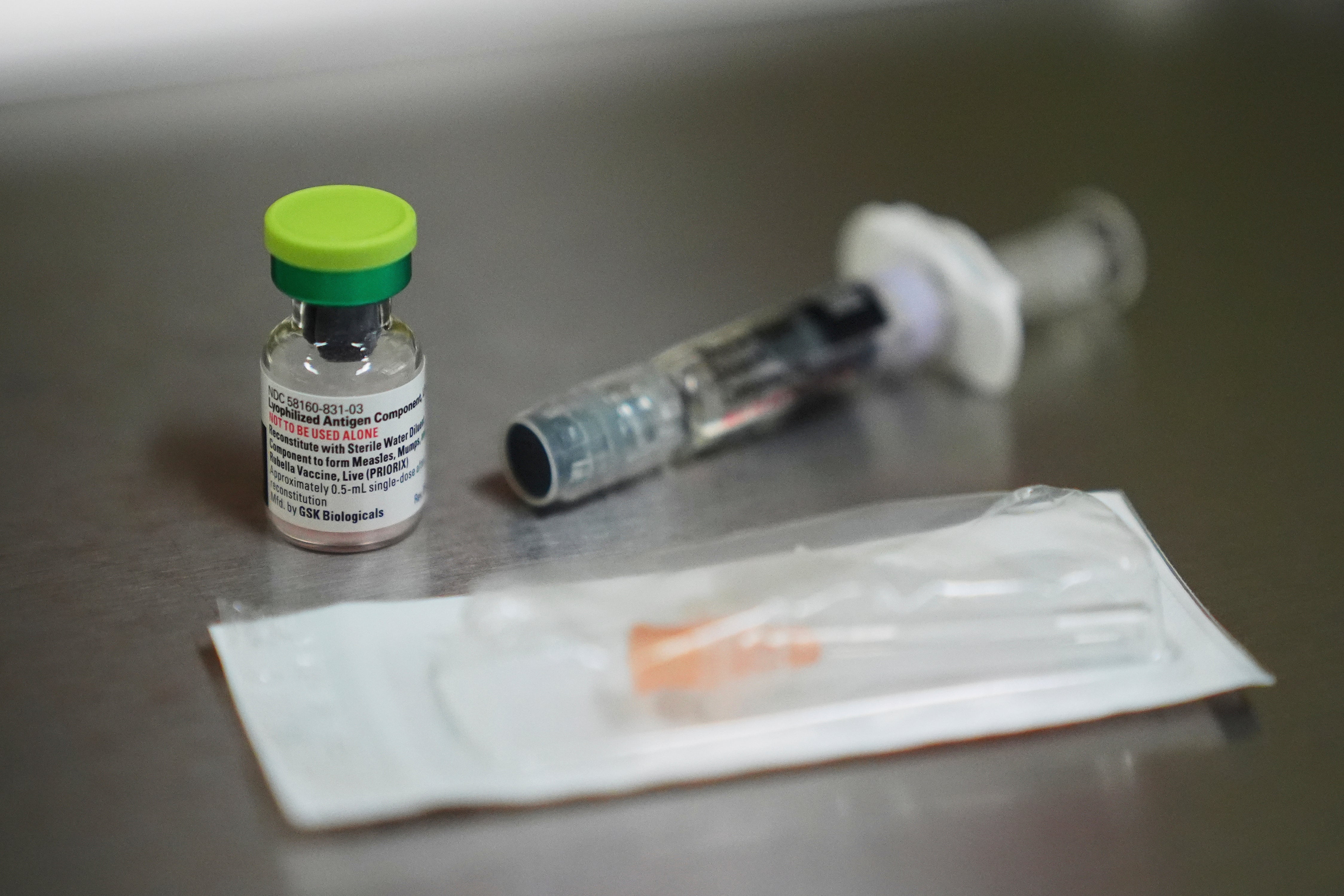
Canada eliminated measles in 1998, followed by the United States two years later. After hugely successful vaccination campaigns, the Americas became the first region in the world to be free of measles in 2016.
Health officials estimate the measles vaccine prevented 6.2 millions deaths in the Americas between 2000 and 2023.
But vaccination rates have since slipped across the Americas, falling below the 95 per cent coverage rate needed to stop outbreaks.
Large outbreaks in Venezuela and Brazil in 2018 and 2019 cost the region its elimination status. It was reclaimed in 2024, but ends again with Canada’s loss.
Experts from the Pan American Health Organization, an independent health agency, made the determination after analyzing data on Canada’s outbreaks that showed the virus has spread continuously for a year.
The United States could be next.
Its elimination status, won in 2000, is at risk even though the large outbreak that killed three and sickened nearly 900 across Texas, New Mexico and Oklahoma is over.

Current outbreaks in the U.S. include 34 cases in South Carolina and one hitting towns on the Arizona-Utah border that has sickened more than 150 since mid-August.
That has made for the worst year for measles in the U.S. in more than three decades. Only nine states haven’t confirmed cases, according to the Centers for Disease Control and Prevention. The CDC has confirmed 1,681 cases this year and 44 outbreaks.
A large outbreak also continues in Chihuahua, Mexico, where health officials have confirmed 4,430 cases as of last week and 21 deaths, according to state health data.
Mexican and U.S. officials have said the genetic strains of measles spreading in Canada match those in the Texas and Chihuahua outbreaks. All those outbreaks affected certain Mennonite Christian communities who trace their migration over generations from Canada to Mexico to Seminole, Texas.
In August, officials said Mennonite communities in Belize, Argentina, Bolivia, Brazil, and Paraguay had outbreaks of the same type of measles virus.
Mennonite churches do not formally discourage vaccination, though more conservative Mennonite communities historically have low vaccination rates and a distrust of government.
Last month, the Pan American Health Organization confirmed more than 12,000 cases this year across at least 10 countries. Most are in Canada, the U.S. and Mexico. Bolivia recorded almost 400 measles cases, according to the group’s report.
Bookmark popover
Removed from bookmarks