30 states now in worst tier for CDC flu designation as cases spike across the nation
More than 90% of the H3N2 infections analyzed were a new version — known as the subclade K variant
Thirty states have landed in the CDC’s worst tier for flu activity and health officials warn the severe season is likely to get worse.
New government data posted Monday — for flu activity through the week of Christmas — showed that, by some measures, this season is already surpassing the flu epidemic of last winter, one of the harshest in recent history.
COVID-19 infections also have been rising, other federal data show, though they remain less common than flu.
Flu infections surged over the holidays, with 45 states reporting high or very high flu activity during the week of Christmas, up from 30 states the week before.
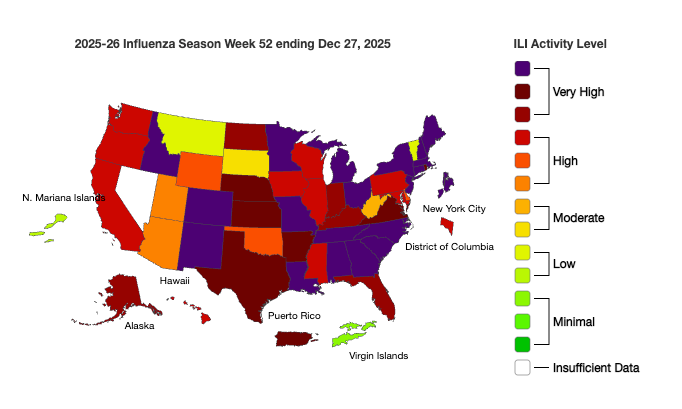
Thirty states moved into the “very high” flu activity tier in the most recent data. The kind of flu that’s been spreading may be driving the higher numbers, public health experts say.
One type of flu virus, called A H3N2, historically has caused the most hospitalizations and deaths in older people.
So far this season, that’s the type most frequently reported. Even more concerning, more than 90% of the H3N2 infections analyzed were a new version — known as the subclade K variant — that differs from the strain in this year’s flu shots.
The flu can cause mild to severe illness, and at times can lead to death. Flu symptoms usually come on suddenly.
States reporting 'very high' flu activity
- Alabama
- Alaska
- Arkansas
- Colorado
- Connecticut
- Florida
- Georgia
- Idaho
- Indiana
- Kansas
- Kentucky
- Louisiana
- Maine
- Massachusetts
- Michigan
- Minnesota
- Missouri
- Nebraska
- New Hampshire
- New Jersey
- New Mexico
- New York
- North Carolina
- North Dakota
- Ohio
- Rhode Island
- South Carolina
- Tennessee
- Texas
- Virginia
Flu seasons often don’t peak until January or February, so it’s too early to know how big a problem that mismatch will be.
Last flu season was bad, with the overall flu hospitalization rate the highest since the H1N1 flu pandemic 15 years ago. Child flu deaths reached 288, the worst recorded for regular U.S. flu season.
Nine pediatric flu deaths have been reported so far this season. For children, the percentage of emergency department visits due to flu has already surpassed the highest mark seen during the 2024-2025 season.
The percentage of doctor's office and medical clinic visits that were due to flu-like illness also was higher late last month than at any point during the previous flu season.
The U.S. Centers for Disease Control and Prevention estimates at least 11 million illnesses, 120,000 hospitalizations and 5,000 deaths from flu have already occurred this season.
The agency recommends that everyone 6 months and older who has not yet been vaccinated this season get an annual influenza vaccine.
People who have flu often feel some or all of these signs and symptoms:
- fever or feeling feverish/chills
- cough
- sore throat
- runny or stuffy nose
- muscle or body aches
- headaches
- fatigue (tiredness)
- some people may have vomiting and diarrhea, though this is more common in children than adults
Bookmark popover
Removed from bookmarks