Mardi Gras makes changes to it’s famous beads a year after bringing in ban
Beads are back, but not the cheap plastic ones
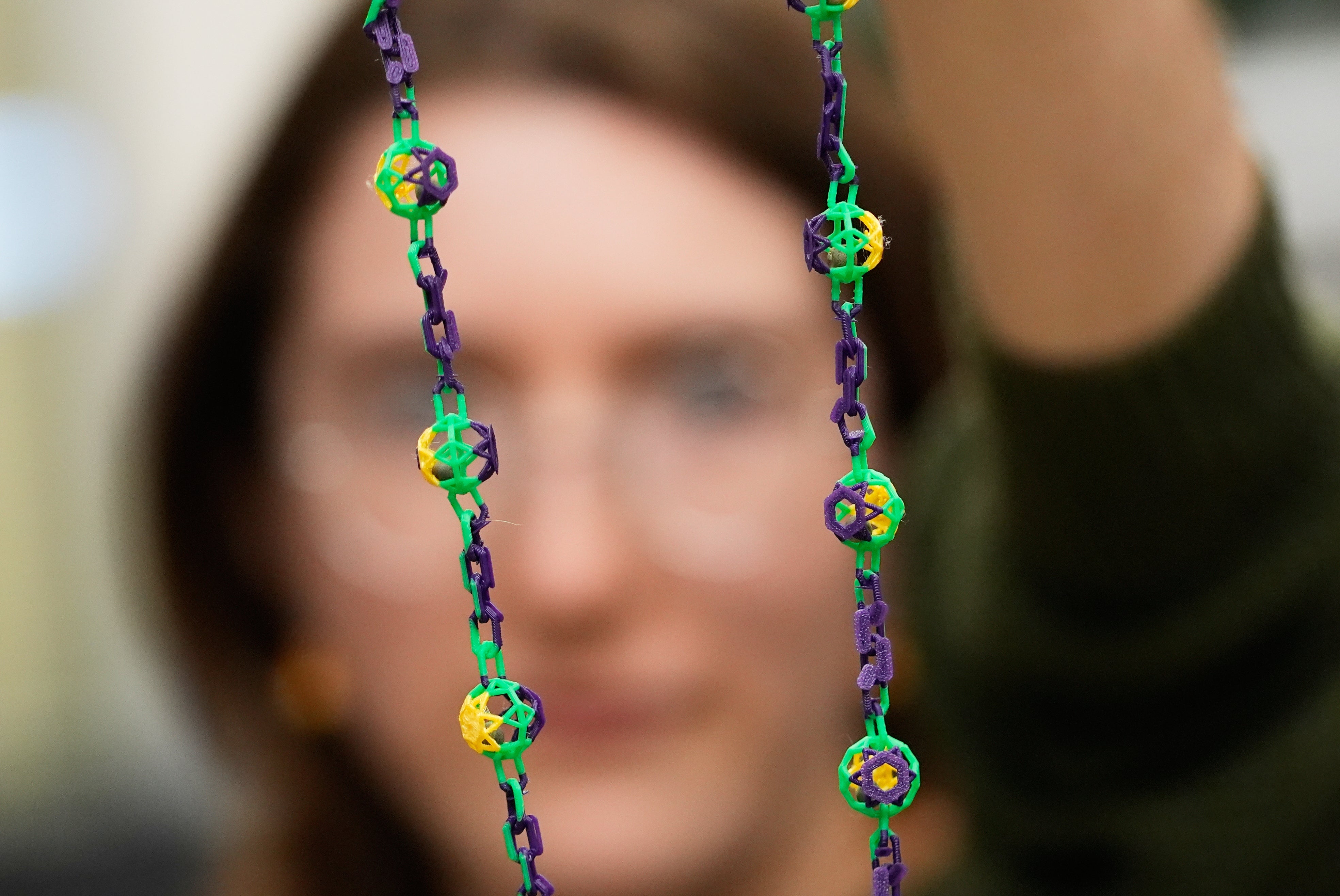
New Orleans is immersed in Carnival season, synonymous with its myriad green, gold, and purple Mardi Gras beads. Once cherished glass keepsakes, eagerly caught by parade-goers, these have evolved into countless cheap plastic necklaces, mass-produced overseas and flung from floats.
While many spectators adorn themselves with dozens, a significant number are discarded or left strewn across the streets. The environmental toll became starkly apparent a few years ago when, following severe flooding, the city discovered over 46 tons obstructing its storm drains. This growing ecological concern presents a dilemma: the beads are now widely seen as a problem, yet a Mardi Gras without them feels almost unimaginable.
In a radical move towards sustainability, the Krewe of Freret took the decision last year to prohibit plastic beads from their parade entirely.
“Our riders loved it because the spectators don’t value this anymore,” Freret co-founder Greg Rhoades said. “It’s become so prolific that they dodge out of the way when they see cheap plastic beads coming at them."
This year, beads are back, but not the cheap plastic ones. Freret is one of three krewes throwing biodegradable beads developed at Louisiana State University.
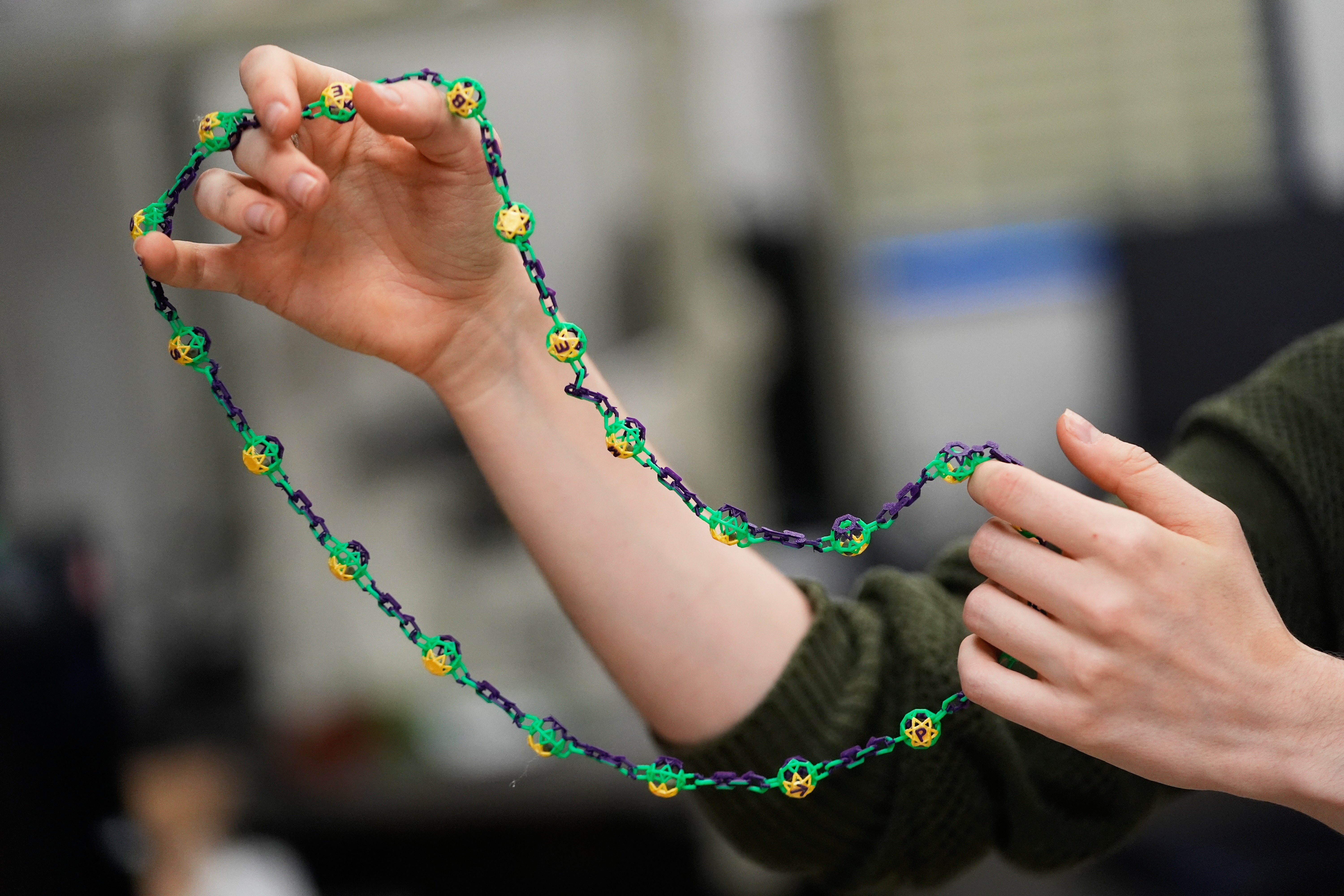
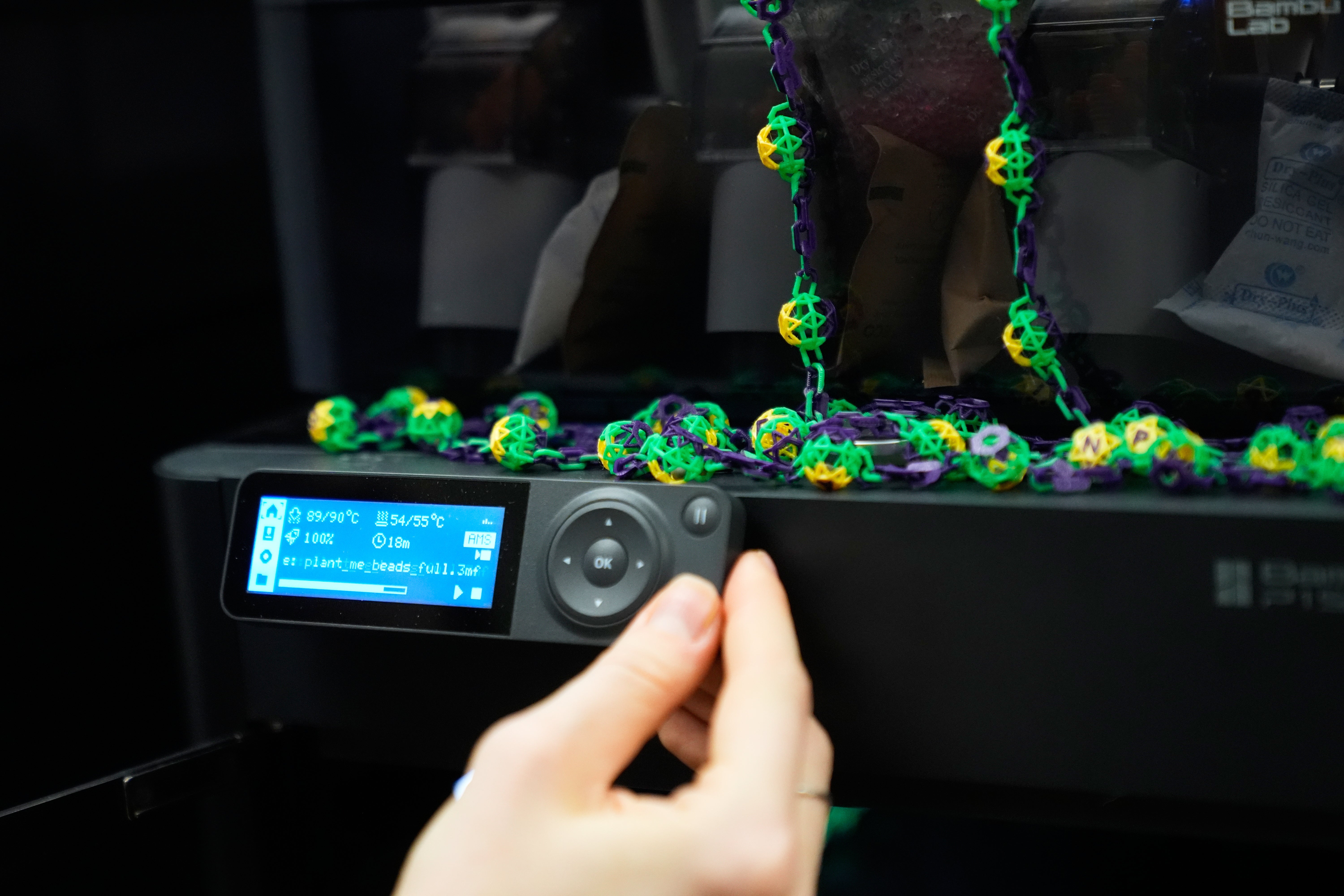
The “PlantMe Beads” are 3D-printed from a starch-based, commercially available material called polylactic acid, or PLA, graduate student Alexis Strain said. The individual beads are large hollow spheres containing okra seeds. That is because the necklaces can actually be planted, and the okra attracts bacteria that help them decompose.
Kristi Trail, executive director of the Pontchartrain Conservancy, said plastic beads are a twofold problem. First, they clog the storm drains, leading to flooding. Then those that aren’t caught in the drains are washed directly into Lake Pontchartrain, where they can harm marine life. The group is currently preparing to study microplastics in the lake.
The trend toward a more sustainable Mardi Gras has been growing for years and includes a small but growing variety of more thoughtful throws like food, soaps and sunglasses. Trail said there is no good data right now to say if those efforts are having an impact, but the group recently got a grant that should help them answer the question in the future.
“Beads are obviously a problem, but we generate about 2.5 million pounds of trash from Mardi Gras,” Trail said.
Strain works in the lab of Professor Naohiro Kato, an associate professor of biology at LSU. He first got the idea to develop biodegradable beads in 2013 after talking to people concerned about the celebration's environmental impact. As a plant biologist, Kato knew that bioplastics could be made from plants and got curious about the possibilities.
The first iteration of the lab's biodegradable beads came in 2018, when they produced beads made from a bioplastic derived from microalgae. However, production costs were too high for the algae-based beads to offer a practical alternative to petroleum-based beads. Then Strain started experimenting with 3D printing, and the PlantMe Bead was born.
For the 2026 Carnival season, LSU students have produced 3,000 PlantMe Bead necklaces that they are giving to three krewes in exchange for feedback on the design and on how well they are received by spectators.
One funny thing, Kato said, is that people have told him they love how unique the PlantMe Beads are and want to keep them.
“So wait a minute, if you want to keep it, the petroleum-plastic Mardi Gras bead is the best, because this won’t last,” he said.
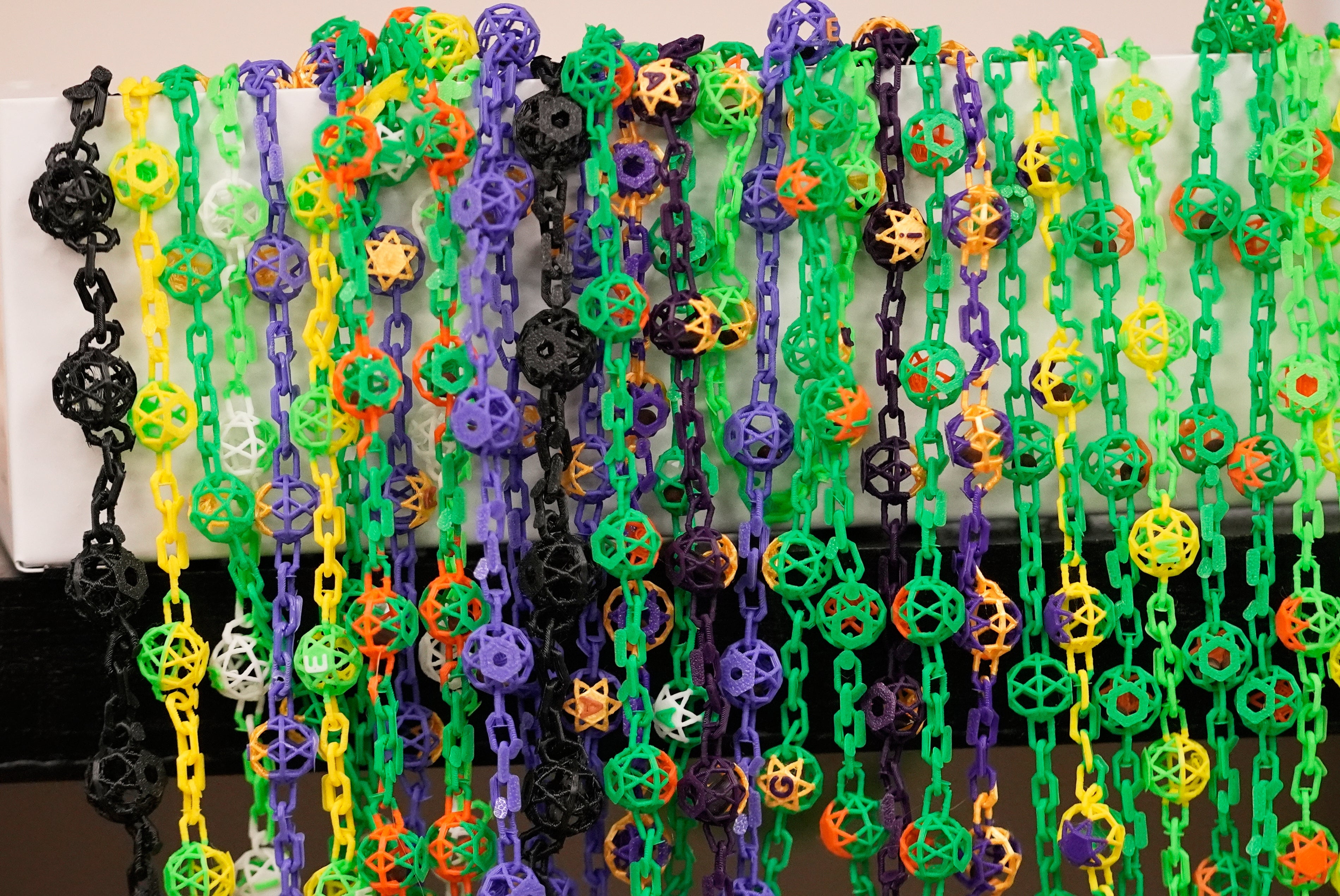
The lab is still working on ideas for a more sustainable Mardi Gras. Strain is experimenting with a different 3D printer material that biodegrades quickly without needing to be planted. Kato is talking with local schools about turning Mardi Gras bead-making into a community project. He envisions students 3D printing necklaces while learning about bioplastics and plant biology. And he is still exploring ways to make algae-based bioplastic commercially viable.
Ultimately, however, Kato said, the goal should not be to replace one plastic bead with a less harmful one. He hopes Mardi Gras embraces the idea of less waste.
Rhoades said Freret is moving in the same direction.
“In 2025, we were the first krewe — major parading organization — to say, ‘No more. No more cheap beads. Let’s throw things that people value, that people appreciate, that can be used year-round,’ " Rhoades said.
One of the most coveted items they throw is baseball hats with the Freret logo. He sees people wearing the hats around the city, and he says other krewes have noticed.
“I really believe that we, and other krewes, are able to inspire your larger krewes,” he said. “They want people to like their stuff. They want people take their stuff home, and use it, and talk about it, and post it on social media, and say, ‘Look what I just caught!’ ”
Bookmark popover
Removed from bookmarks