Zuckerberg takes stand in social media trial as jury hears that he’s trained on how to avoid being ‘fake, robotic and corporate’
The Meta CEO told the courtroom he is ‘well known to be bad at this’ and gets ‘plenty of advice’
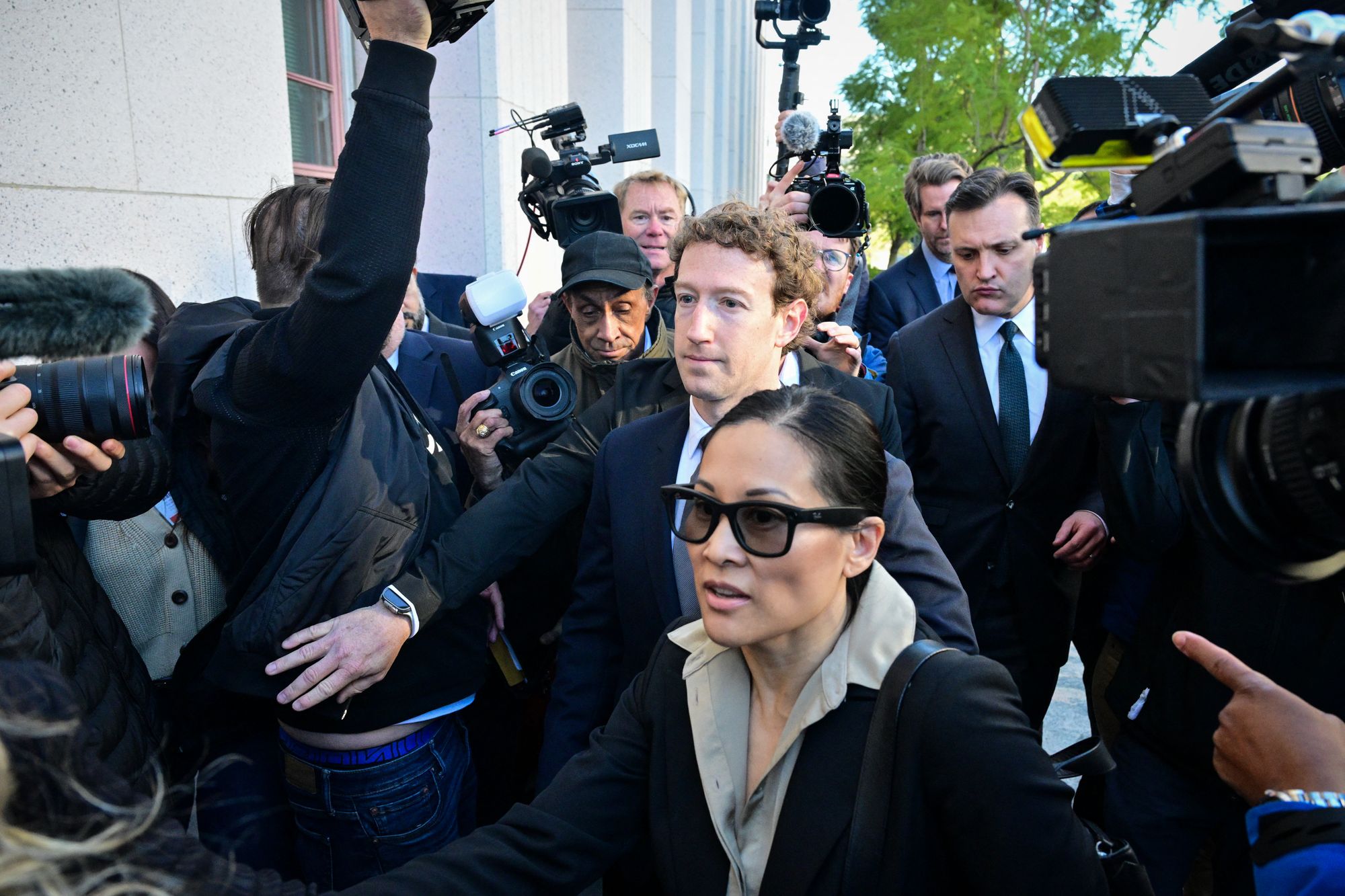
Mark Zuckerberg, CEO of Meta, has taken the stand in a Los Angeles courtroom to testify in a civil trial on social media addiction, a closely-watched case that could have major implications for the tech industry.
While testifying on Wednesday at the Los Angeles County Superior Court, Zuckerberg faced pointed questions about his media training and the company’s approach to underage users. The proceedings took a dramatic turn when the judge warned that anyone wearing AI glasses could be held in contempt of court.
This is the first time that the 41-year-old, who is worth an estimated $220 billion, has appeared at a civil trial. At the center of the case is a 20-year-old California woman, identified in court papers only as KGM, who filed a lawsuit against Meta, TikTok, Google, and Snap in 2022.
She accused the companies of following Big Tobacco’s playbook: instilling addictive behaviors in teens while dismissing their own research showing their products posed health risks. KGM said that, as a young child, she began obsessively using YouTube and Instagram. She claimed these platforms exacerbated her suicidal thoughts and depression — an allegation the companies have denied.
Zuckerberg took the stand around noon, where he was immediately peppered with questions by the plaintiff’s attorney, Mark Lainer. When asked about his media training, Zuckerberg responded that he is “well known to be bad at this” and gets “plenty of advice,” according to Sky News.
The jury was shown a document titled the "Zuckerberg comms plan,” which includes advice for the 41-year-old on how to avoid appearing “fake, robotic, corporate and cheesy.”
Zuckerberg also told the court that he stands by his earlier statement asserting that companies should not engineer their platforms to deliberately encourage young people to spend excessive amounts of time online.
“You should try and create something useful,” he said. “And if you do, people will naturally want to use it."
The billionaire was further pressed about documents provided to Congress that stated some 4 million children under the age of 13 use Instagram. Zuckerberg responded that some kids lie about their age when signing up.
“You expect a 9 year old to read all of the fine print,” Lainer asked, according to CNBC. “That’s your basis for swearing under oath that children under 13 are not allowed?”
At one point, the judge presiding over the trial made an unusual pronouncement: threatening to punish anyone recording the proceedings with AI smart glasses.
“If you have done that, you must delete that, or you will be held in contempt of the court,” the judge said, according to CNBC. “This is very serious.”
The outlet noted that several members of Zuckerberg’s entourage appeared to be wearing Meta’s AI glasses, which the company unveiled last year.

The tech titan’s financial motives were also discussed. When asked if his spending habits should be scrutinized, Zuckerberg pointed out that he has “pledged to give almost all of my money to charity.”
Earlier Wednesday, family members who say their children were harmed by social media were spotted in front of the courthouse, holding hands and embracing.
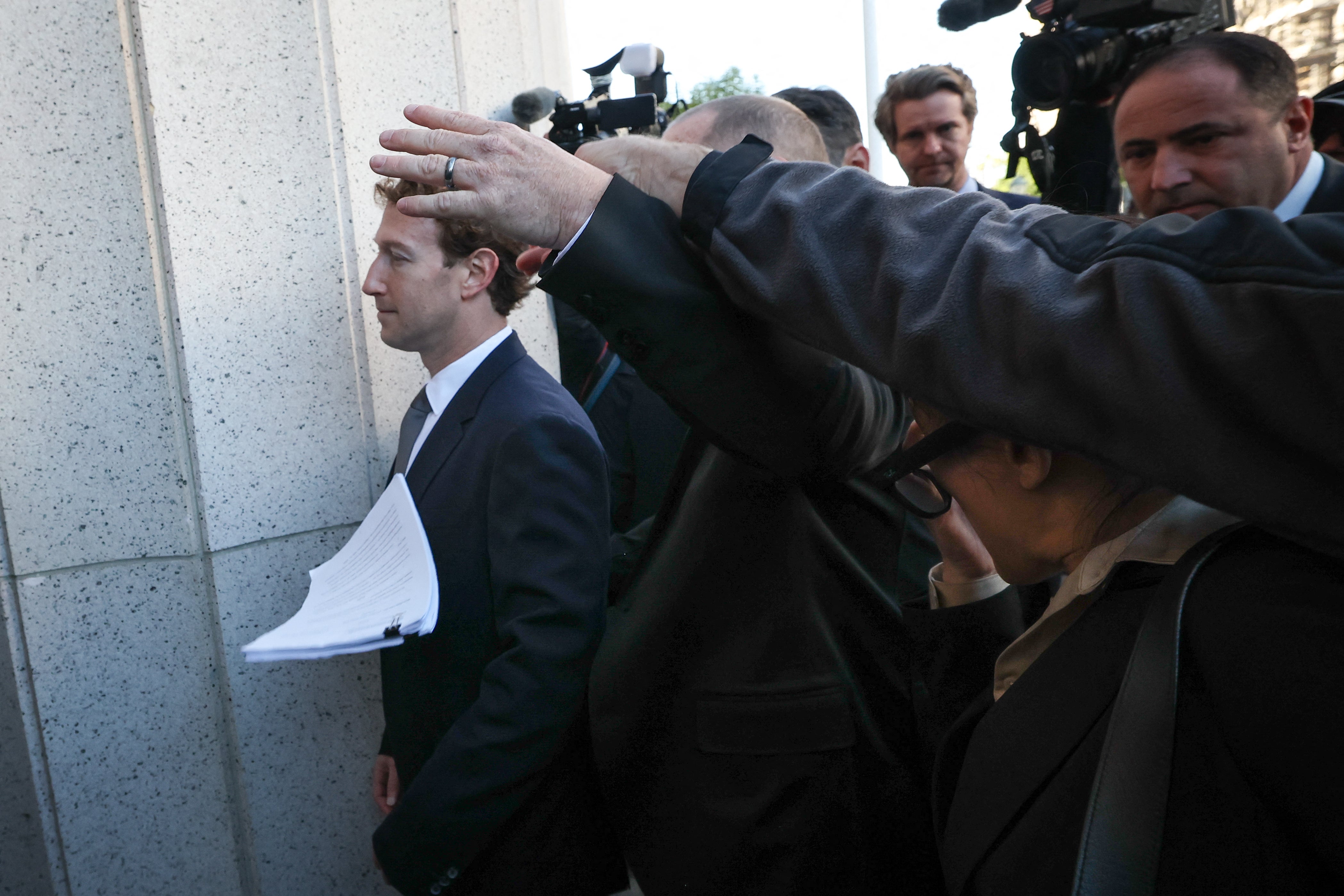
As Zuckerberg entered a short time later, he appeared to be served legal papers. A video posted online showed a man approaching the tech boss with a sheaf of papers, while saying: “Mark Zuckerberg, you’ve been served.” Zuckerberg did not respond, and it’s not clear if someone in his entourage picked up the paperwork.
Before the trial began, TikTok and Snap settled with the plaintiff, narrowing the case to two defendants: Meta and Google.
“These companies built machines designed to addict the brains of children,” Lanier said at the beginning of the trial earlier this month. “And they did it on purpose."
Meta, the parent company of Instagram and Facebook, has pushed back against the allegations.
“The question for the jury in Los Angeles is whether Instagram was a substantial factor in the plaintiff’s mental health struggles. The evidence will show she faced many significant, difficult challenges well before she ever used social media,” a Meta spokesperson told The Independent.
Paul Schmidt, Meta’s lawyer, said in his opening statement that medical records indicate the plaintiff had a tumultuous home life and that she sought out social media platforms to cope with her pre-existing struggles.



Google has also denied the allegations brought by KGM.
More than 1,500 similar lawsuits have been filed against social media companies, but KGM’s is the first of a consolidated group to go to trial, according to CNN. It’s been chosen as a bellwether trial, meaning its verdict could help shape the outcome of numerous suits like it.
A legal victory for KGM could set a landmark precedent, making tech companies liable for designing addictive and harmful products.
In recent years, a number of studies have found links between young peoples’ frequent use of social media and negative mental health outcomes, such as anxiety and depression.
Meta, headquartered in Menlo Park, California, is also on trial in a separate case in New Mexico, in which plaintiffs accuse the company of exposing minors to sexual material and fostering a “breeding ground” for sexual predators. The company has denied the charges and has accused prosecutors of adopting “sensationalist” tactics.

Zuckerberg has appeared before Congress to testify on what impact his platforms — which are used by billions of people worldwide — have on youth mental health.
In January 2024, Zuckerberg attended a Capitol Hill hearing on social media's harms, where lawmakers blasted him and other tech CEOs for failing to adequately address issues including addiction, mental health crises, bullying and sexual predators.
During the televised hearing, children and parents provided testimony describing how young people were exploited on social media platforms. Demonstrators silently stood behind Zuckerberg, holding up pictures of their deceased children

At one point, Republican Senator Josh Hawley asked Zuckerberg if he would like to apologize to the families of victims seated in the room.
“I’m sorry for everything you have all been through,” the Meta CEO said, while turning to face them. “No one should go through the things that your families have suffered.” He noted that the company has invested in “industrywide efforts” to safeguard children.
In recent years, Meta has implemented several child safety measures, including age restrictions and parental controls.
Join our commenting forum
Join thought-provoking conversations, follow other Independent readers and see their replies
Comments
Bookmark popover
Removed from bookmarks