Meet Sam Tsemberis, the outsider who is solving chronic homelessness across America
As CEO of Pathways to Housing his model has inspired policy across the US

The process of innovation is often one of mystery. Where does an idea come from? How do innovators find it? What makes them different from everyone else fumbling around in the dark?
Compounding the puzzle is the irony that those most likely to innovate are rarely the experts. They’re outsiders who see things freshly.
And so, on a recent morning, one such outsider picks his way down a sun-splashed Brookland street. Face patched in scruff, wiry frame crammed into a Patagonia jacket, he doesn’t at first seem like an innovator who has had national impact. But few thinkers today are in greater demand
Meet Sam Tsemberis. According to academics and advocates, he’s all but solved chronic homelessness. His research, which commands the support of most scholars, has inspired policies across the nation, as well as in the District. The results have been staggering. Late last month, Utah, the latest laboratory for Tsemberis’s’s models, reported it has nearly eradicated chronic homelessness. Phoenix, an earlier test case, eliminated chronic homelessness among veterans. Then New Orleans housed every homeless veteran.
Homelessness has long seemed one of the most intractable of social problems. For decades, the number of homeless from New York City to San Francisco surged — and so did the costs. At one point around the turn of the millennium, New York was spending an annual $40,500 on every homeless person with mental issues. Then came Tsemberis, who around that same time unfurled a model so simple children could grasp it, so cost-effective fiscal hawks loved it, so socially progressive liberals praised it.

And now, here he is again, peering up at another brick building on another urban street in another city that’s dabbling with his models. “This building,” he declares of the Irving Street structure, “is great.”
He pauses for a moment, eyes flashing.
“See that sign over there? It says, ‘Now Leasing.’ That’s what we look for.”
It’s that simple, he said. Give homes for the homeless, and you will solve chronic homelessness.
To the uninitiated, this may sound strange. Not because it doesn’t make sense. But because it’s so simple that to call it innovation would seem an insult to the likes of Thomas Edison. To think that, however, would underestimate how utterly radical Tsemberis’s proposition — give homes to addicts and drunks and schizophrenics without preconditions — once seemed. And still kind of does.
The truth is, we thought the earth was flat,” said Richard Bebout, a Washington scholar of homelessness who was once critical of Tsemberis’s work. “But here he was saying the earth is round, and we said, ‘You’ve got to be kidding me.'”
Homeless services once worked like a reward system. Kick an addiction, get a home. Take some medication, get counseling. But Tsemberis’s model, called “housing first,” said the order was backward. Someone has the best chance of improving if they’re stabilized in a home.
It works like this: First, prioritize the chronically homeless, defined as those with mental or physical disabilities who are homeless for longer than a year or have experienced four episodes within three years. They’re the most difficult homeless to reabsorb into society and rack up the most significant public costs in hospital stays, jail sentences and shelter visits.
Then give them a home, no questions asked. Immediately afterward, provide counseling, a step research shows is the most vital. Give them final say in everything — where they live, what they own, how often they’re counseled.
“People thought this was crazy,” said Tsemberis, who today runs Pathways to Housing. “They said, ‘You mean even when someone relapses and sells all the furniture you gave them … [to pay for] drugs, you don’t kick them out?’ And I said, ‘No, we do not.'”
Born in Greece and raised in Montreal, Tsemberis was never trained in how to treat the homeless. He repeats this point often. “I’m a psychologist,” he said. “I’m a clinician.”
And so, it perhaps came as a surprise when, in the early nineties, he took a job in New York City doing outreach for the mentally ill, which brought him into close contact with the homeless. He soon sank into their hidden world, noting the complexity of its social rules and survival tactics. How some experts perceived homelessness, he said he realized, was fundamentally flawed. This world’s denizens, in fact, were profoundly resourceful.
“We were equating the severity of diagnosis with ability to function,” he said. “But surviving in homelessness is labor intensive, exhausting and complicated. It calls for a skill set of functionality.”
Tsemberis’s task was to find the homeless, bring them in for help — sometimes against their will — and medicate them. “But I would see 30 percent of those people over and over and over again,” Tsemberis said. “We knew them by name and location and habit. We knew all of them.”

There was need of a change. So he assembled a very small, very unusual team. None of them had any training in homelessness. They, too, were outsiders. One was a recovering heroin addict. Another was a formerly homeless person. Another was a psychologist. And the last, Hilary Melton, was a poet and a survivor of incest.
“We were people who weren’t that far removed from the people we were serving,” recalled Melton, who runs Pathways Vermont. And so, over long conversations, they fashioned the rough contours of what would become housing first. “This was totally off the walls radical,” Melton said. “I remember the moment we took someone’s shopping carts in right off the streets and through the front door of an apartment, and left them there. It felt like Christmas morning.”
Tsemberis soon received $500,000 in federal funding, which he used to track what happened to 139 chronically homeless people who were immediately housed and offered counseling. In 1997, the results arrived. The small team couldn’t believe it. It showed a retention rate of nearly 85 percent. The next best model’s retention rate? Sixty percent.
Word spread. Tsemberis published another paper in 2000, this time in the respected Psychiatric Services, which ignited fierce debate in the homeless services community. Some loved it. Others thought Tsemberis was, if anything, naive.
Bebout, the Washington homelessness expert who now leads Green Door, a mental-health center, couldn’t understand why Tsemberis cared so much about housing aesthetics. Isn’t most important to just find a house, any house? “I said, ‘We’re not in the business of running pretty houses,'” remembered Bebout, who today is a fierce proponent of housing first. “The whole thing sounded nutty to us at the time. … But the data became so overwhelming.”
Success begat success. Several years later, the federal government tested the model on 734 homeless across 11 cities, finding the model dramatically reduced levels of addiction as well as shrank health related costs by half. “Adults who have experienced chronic homelessness may be successfully housed and can maintain their housing,” the report declared.
Around that time, the District got into the game. Between 2008 and 2010, the city added more than 1,200 units for the chronically homeless. One case study, which tracked 36 participants, showed 84 percent retention over two years. But then, the number of added homes plummeted. In 2012, only 121 units were added, and the District is still home to more than 1,700 chronically homeless, though Mayor Muriel Bowser’s new budget has since made the program a larger priority.
That inconsistency, Tsemberis and other experts say, can devastate the program. “We committed,” said Utah’s Gordon Walker, explaining how his state succeeded at eliminating homelessness — and saved millions. “It was costing us in state services, health-care costs, jail time, police time, about $20,000 per person. Now, we spend $12,000 per person.”
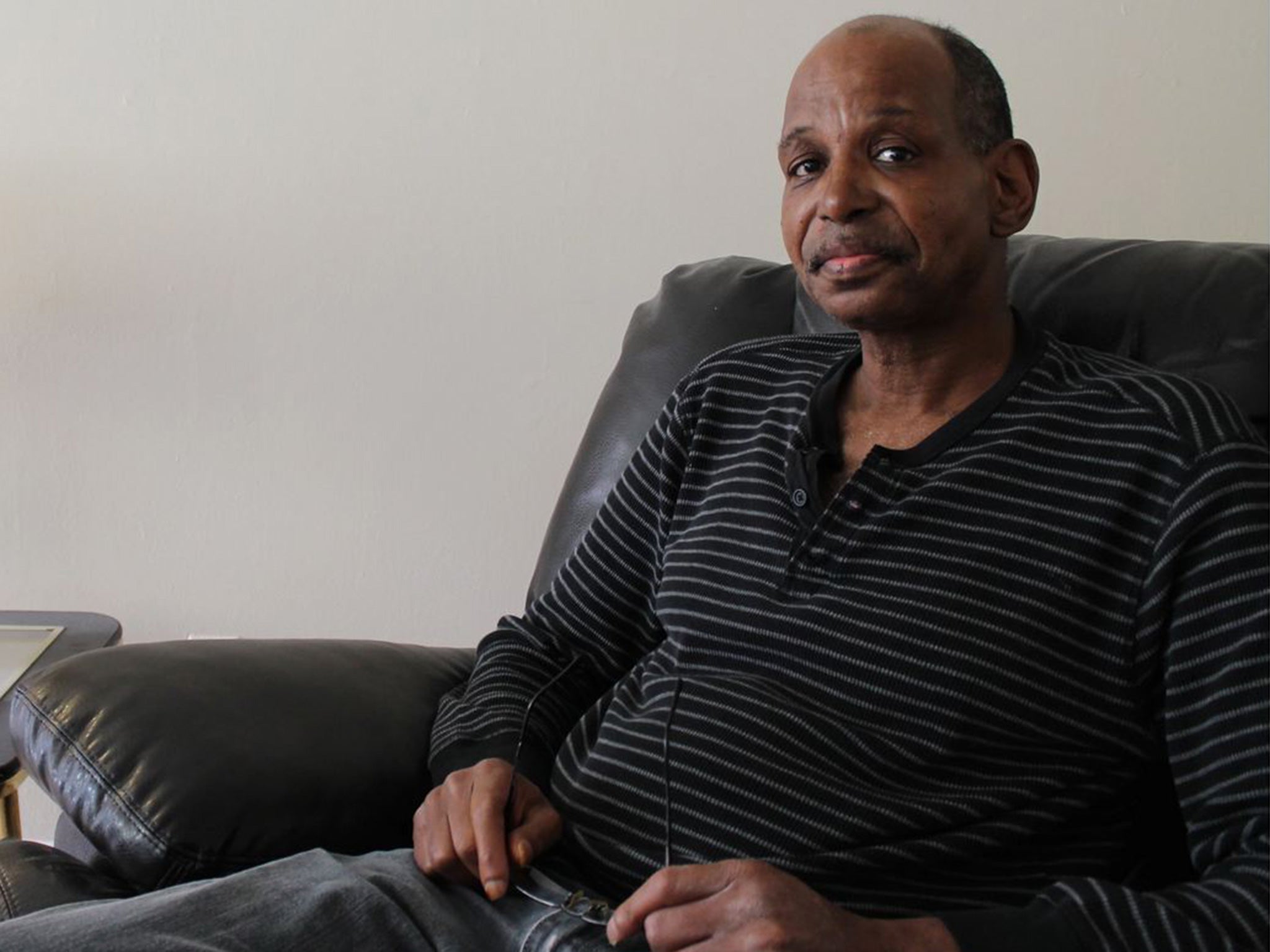
Still, in the District, stories of success poke through. Take Jerome Jackson. A drug addict with schizophrenia, he lived two decades on the streets. Then he heard about housing first. He wondered if the stories were true.
“They said they could find me a place fast; they told me not to worry,” Jackson said, at first alarmed that his addictions would exclude him from services. But they didn’t. “And lo and behold, they were right. I had a place in three months, and haven’t been homeless since.”
© Washington Post
Join our commenting forum
Join thought-provoking conversations, follow other Independent readers and see their replies
Comments
Bookmark popover
Removed from bookmarks