How to change your mind — and the minds of the people around you
How do you argue with your family in a productive way? How can you make sure your own belief system is serving you properly? Holly Baxter speaks with psychologists who explain why our brains are wired to prevent us from changing our minds — but how we can learn to do it anyway

When Daryl van Tongeren’s beloved brother died unexpectedly at 34, the loss made no sense to him. How could it? Van Tongeren was a lifelong Christian with “a very certain view of God and how God is supposed to work.” Raised to believe that the world followed a kind of moral logic wherein good things happened to good people and God took care of those He loved, he felt his faith shake. Why would such a God allow his brother — “a good father, a good husband, a good brother, a good friend” in the prime of his life — to die, leaving a vulnerable new family utterly bereft?
“I was very angry at God,” van Tongeren says — and not just at God, but at “how I had been taught to think about God.” It wasn’t just a singular belief about the loyalty and responsiveness of God that was challenged. The structure that held his entire belief system about the world in place was under attack. It was disorienting, scary, and upsetting. It took years for him to find a way to deal with the loss. And he was in a better position to do so than most, because he was also a psychology professor: an expert in how and why people change their minds.
“Changing our minds is probably one of the hardest things to do,” says professor of human development Keith Bellizzi, “and it's not necessarily because people are stubborn or irrational. It’s because there are these biological, psychological and social mechanisms that are really in place to protect our identity.”
When a core belief is challenged — “something like ‘I’m a good parent’ or ‘I’m a smart person’” — “the brain reacts as if we’re being attacked,” Bellizzi adds. “The same brain regions that activate during physical danger… light up when our beliefs are challenged.”
In order to prevent a total collapse of how we make sense of the world, we instead are more likely make small exceptions to rules: for instance, a born-and-raised racist taught to believe that all Latinos are bad people who meets a friendly, morally upstanding Latino neighbor is much more likely to pivot to “my friend isn’t like the rest of them” than to “racism is wrong”. A born-and-raised Christian who is taught that God protects who he loves might pivot to “God is angry with me” or “God has found me alone unloveable” rather than “Christian teaching is wrong”. It’s important for humans to have a stable identity and a reliable way of looking at the world; these protective mechanisms prevent us from falling for everything, miring ourselves in intractable confusion, and failing to fit into a cultural group. But of course, they can also work against us — catastrophically so.
This is why changing your mind — really changing your mind — is nowhere near as simple as it sounds. The process is all too often confusing and frightening rather than enlightening or even satisfying. Because the human brain is not wired for world-shattering moments of revelation. Instead, decades of neurological and behavioral research shows that we formulate in-groups and out-groups, resist persuasion, and only dig in our heels more when presented with facts that challenge our opinions. Shaming people for their beliefs causes them to retreat further into them; attempting to educate them out of them almost always fails. Nowhere is this more obvious than in today’s current political climate.
People like Daryl van Tongeren, who fundamentally shift their entire worldview, are extremely rare. Yet they do exist. What can they teach us about how to change minds: our own minds, other people’s minds, and the minds of people with whom we think we have nothing in common? If facts don’t work, and shame backfires, what does?
How your beliefs were actually formed
The question of “how do we create the conditions that allow people to change their minds?” is a tough one to answer, says Bellizzi, partly because “there's certain beliefs that are harder to change.” Politics is one of those areas where people are particularly resistant, probably because political discourse is often so emotional and divisive — “but what we know from behavioral science is that people can change their minds and do change their minds when the conditions feel safe.” To understand what psychological safety means to someone entrenched in their political beliefs, we have to understand how and why they formed their opinions in the first place.
“Part of how we form our opinions is… that we take our experiences as objectively normal,” says Daryl van Tongeren. “So the way in which we move through the world, we just presume that the way we are seeing things are accurate, even though we have a host of cognitive limitations that keep us from seeing the world accurately and instead predispose us to seeing the world as we want it to.” We’re “heavily influenced” by the beliefs of people in our lives who we respect and revere, starting with our parents and then widening out into political or religious or ideological figures as we age. Positive social reinforcement keeps us in a comfortable feedback loop. Eventually, one might be so committed to a group — a political party, for example — that “they may wait for a leader to come down with a particular stance [on an issue] and then adopt that.”

Part of this is down to circumstance and part of it is down to personality. Psychological research shows that “people who are less open to new experiences usually tend to be a little bit more conservative” and vice versa, van Tongeren adds. In that way, it’s somewhat true that we’re all born with a genetic predisposition to vote one way or the other.
People are also born with a certain amount of “agreeableness,” meaning whether or not “they're going to be more likely to change their mind and not necessarily go with the status quo. They're going to be more willing to upset people if they don't hold the opinions that other people want them to hold.” Less agreeable personality types might be more difficult to work with or even to have as friends, but they’re also more likely to resist cultish thinking. Big political upsets — such as John McCain’s “thumbs down” moment in which he refused to vote away Obamacare alongside his fellow Republicans, or the moment in 2022 when Kyrsten Sinema would not vote with other Democrats to weaken the filibuster, or even the most recent resignation of previous member of the MAGA faithful Marjorie Taylor Greene — happen because of low agreeableness.
When generally compliant, agreeable people sign up to an opinion, “oftentimes those become a mental framework or what psychologists call schemas,” says van Tongeren. “And schemas are notoriously resistant to change, even when we are presented with counter-attitudinal information, even when you encounter something that suggests that you're wrong. And so what we tend to do is we make a sub-schema and we make an exception. We say: Oh, this person is different.” This is where the born-and-bred racist who meets a Latino neighbor for the first time comes in.
Despite the fact that we might get angry at the idea of people refusing to change their beliefs, van Tongeren adds, we have to remember that our brains are working against us in that regard. We are wired to lower anxiety and manage fear, to understand who is good and who is evil and what rules are worth following, so that we can live safely in groups: “Think about how disruptive it would be if we were constantly changing our minds.”
“Beliefs really become part of who we are,” says Bellizzi. “So [holding onto a belief] becomes about protecting one's identity. And this is kind of further reinforced by a psychological concept called confirmation bias,” which means that we lean toward information that backs up what we already believe and are suspicious of information that suggests we might be wrong. “So if you just think about our social connections or the news or the influencers that we pay attention to, they really reinforce what we already believe.”
Politicians and media figures who are well-versed in these psychological processes have taken advantage of them for decades. Knowing that social pressure combined with confirmation bias is a potent mix, they will invest in such tactics over social media or during public appearances. And knowing that beliefs will harden when they feel like a part of one’s core identity, they will appeal to people in that way: arguments become about whether people are “patriots” or “bootlickers,” whether they’re “grafters” or “freeloaders,” whether they’re “defenders” or “allies”. Beliefs collapse into stereotyped identities, urging people who think of themselves as hard workers or compassionate advocates to take on the opinions of the leaders who speak to their type. How can you be a true patriot if you disagree with this person, who fought for his country? How can you be a true believer in social justice if you don’t believe this person, who is a member of one of the most marginalized groups? Meanwhile, people on the other side watch these extreme examples and shake their heads, smugly. What they’re seeing confirms everything they knew about the other side; about how they are the kinds of people with whom they would never associate.
When change happens
When he considers political polarization, Keith Bellizzi says, he often thinks about what we can learn from people who have left cults. These are, after all, people who have been pursued and brainwashed by malevolent actors. They have lived in isolated environments and in echo chambers where social pressure is huge and groupthink goes unquestioned. They have been given new identities and positive reinforcement. In many ways, it’s a miracle that any human being who gets involved in a cult eventually leaves it.
And yet, “it does happen,” Bellizzi says. And what we can learn from people who have found the strength to leave such groups is that “cult members change their minds when doubt opens the door and safe, compassionate connection pulls them through it.”
Most people will encounter information that challenges their beliefs all the time, but whether or not they are in a position to pay attention to it is key. That means being in a place where someone else will accept them, where they will not lose their entire life and social standing by changing their mind. It means being able to shed some opinions without feeling like their entire identity has to collapse alongside them. And if we want to encourage that kind of change in society, we have to approach people with compassion and curiosity, even when their views seem odious to us. Otherwise, we are simply helping to entrench them further.
Most people who radically change their belief systems don’t do so after a singular moment. Instead, it’s usually a drip-drip-drip of troubling moments that show the group colliding with their other core beliefs. For instance, someone who identifies as a feminist but who is part of a cult where the male leader has troubling relationships with the women around him might become increasingly disengaged. Or someone who identifies as a traditionalist and a family man might have their faith in their conservative political heroes shaken by releases from the Epstein files that describe deviant, pedophilic behavior.
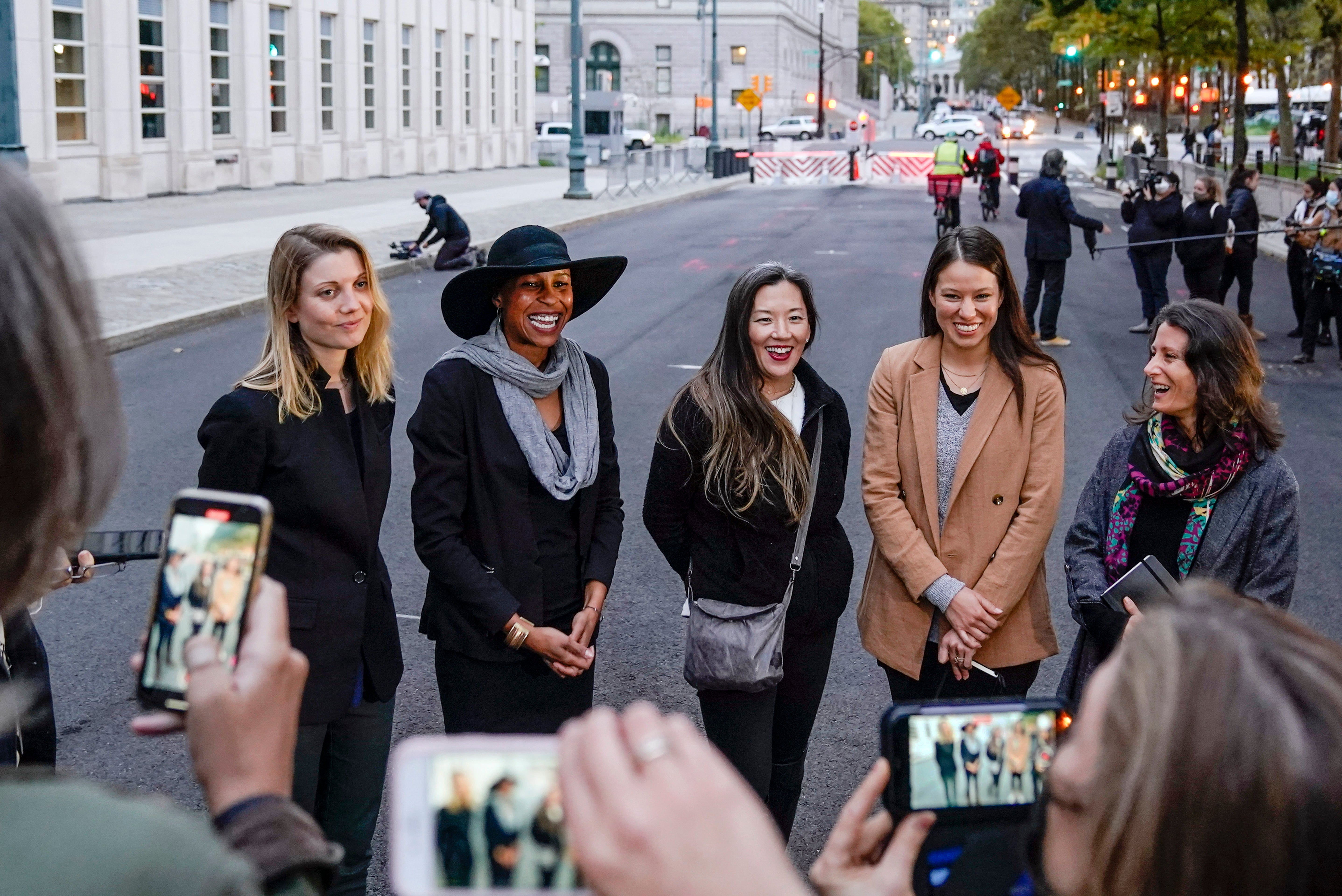
When Nicki Clyne, formerly a member of the NXIVM cult, first heard allegations of sex abuse and corruption against cult leader Keith Raniere, she “believed Keith’s defenses and that the allegations against him were lies, fabricated by his enemies”.
“Many have sacrificed years of their lives, as I did, believing Keith had noble intentions and was a victim of the government, powerful and vengeful enemies, dishonest mainstream media, scorned ex-lovers, and more,” she writes on her website. She details the 30 separate controversies that caused her to start to break from the group, ranging from his clearly false claims of mystical powers, to his close “mentorship” of a 15-year-old girl when he was 45, to his attempts to silence former friends and lovers who criticized him, to his loss of $66 million of other people’s money on the commodities market. It took years of these revelations to eventually prompt her to fully break free from the group (Raniere is now serving a 120-year sentence in federal prison for sex trafficking, racketeering and forced labor, among other crimes.)
The members of NXIVM believed that they were joining a self-help style group that would help them get over childhood abuse, domestic violence and other traumatic experiences. Raniere preyed on the vulnerability of such women and then quickly moved toward abusing them himself, including instituting a regime of tactics designed to weaken their mental resources: ice-cold showers, winter walks at 3am, periods of starvation. They were sent text messages through the night that they had to respond to within 60 seconds or the entire group was punished. And during the day, they were assured that they were in the only place that could help them become mentally healthy again.
How do you provide psychological safety to someone who believes they are in the only place that can help them? It might seem unlikely that we’ll meet someone in a cult as severe as NXIVM over Thanksgiving dinner, but in reality most people want to contribute to a cause. They might believe they are protecting themselves from a terrible fate, or protecting their families from social ostracism or economic downfall; perhaps they believe they’re protecting the country from invasion or the collapse of democracy, or protecting the world from population collapse or environmental destruction. How likely are they to have an open and honest conversation with you if that’s so?
“If you're having a conversation with someone and you're presenting new facts to them, you would probably want to do it in a way so that… they don't feel judged or attacked in particular,” says Bellizzi. It’s important to remain respectful while introducing a new idea, which is hopefully an idea that does connect with one of their core beliefs. Otherwise, that person is put in the position of having to defend their entire belief system, in which case their ability to think rationally is put on hold while they emotionally double down.
“I think we need to empathize with people, especially people who are different from us,” says Daryl van Tongeren, “and by empathy I mean emotionally attuning to what they're going through, and then working really hard to understand the perspective and to see their perspective as valid.” True empathy comes from having contact with people from different groups and from engaging with what they find interesting, he adds. So, if you want to be a truly open-minded person, you need to work hard to diversify the friends you have and to watch the media that you’re disinclined to watch.
“Most people have a particular brand of news that they like to consume, and our algorithms are set to satisfy that that particular proclivity,” he adds. “If we were to actually go seek out other perspectives, but not just to read it so you can roll your eyes and pity the other party and say ‘How could they even believe this?’, but to actually treat them that they're operating out of good faith and that these are genuine concerns that other people that are just like you and I actually have, then you can kind of begin to build and broaden a perspective.” He encourages people to continually ask themselves: “How might I be wrong and what am I missing? What’s the viewpoint I’m not seeing?’”
Being comfortable in your own wrongness is a muscle you can learn to flex — because after all, we’ve all been wrong before. Crucially, we’ve all also changed our minds before.
“When people find out that I study humility, they think: Oh, that's great. That's what my father-in-law needs, not me,” says van Tongeren, with a laugh. “What we actually need to do is say: No, no, this is what I need. I need to practice humility even if other people aren't going to do it. And that's when it can feel a little bit like a prisoner's dilemma, or people worry that they're going to be exploited if they act humbly. But how can we ask other people to change their minds and engage us with decency and respect and with humility if we can't start?”
We can’t expect to never fall into the cognitive traps we’re set up for, but we can force ourselves to think on them, and to think about why they’re so important to us. “I think that so many of us have conflated our worth with being right, that we've totally ignored the fact that all of us are a little bit wrong about everything. All of us,” van Tongeren adds. We should also be aware that even when we acknowledge we have bias, we’re likely to think that we are less biased than other biased people. Acknowledging that you can and will be wrong, often, is a lifelong mental gymnastic feat.
This, too, shall pass — but how?
Sometimes, a little bit of trust goes a long way. Daryl van Tongeren’s primary interest in psychology is humility, and he’s conducted a number of experiments about when people are more likely to be open to people from different political persuasions. One recent example put people together in teams of two, where one person identified themselves as right-leaning and the other left-leaning. The teams competed against one another in a trivia contest, which started out with questions about TV shows: Duck Dynasty (which tends to be watched by a more conservative audience) and Stranger Things (whose audience leans liberal.) Once the pairs realized they would have to trust each other on the answers to such questions, they became more open to honestly discussing other issues. “By working together, you realize: ‘Oh, my — there are things that this person from another group who doesn't share the same political identity as I do might know. I can learn from them’,” says van Tongeren. It’s an intervention strategy that has shown to wedge the door open for truly productive discussion between people who should, by all rights, disagree on everything.
Like many Americans, “I also have family members and friends, um, who don't necessarily align with my political beliefs,” says Keith Bellizzi. “And I can tell you what I do is I really try to focus on the things that we have in common as opposed to the things that divide us. Because the reality is, we have more in common with even those that are on the other side of the political aisle than we do that actually divide us. So I focus on that kind of, that shared humanity… I try really try hard to listen without judgment and ask them questions, so have them question their own beliefs, and ask them to kind of critically evaluate where their beliefs come from, and sometimes in doing so, they might recognize the hypocrisy in their thinking. They might recognize the lack of logic, perhaps, in their thinking.”
Another way in which he connects with those family members is by talking to them about a growth mindset versus a fixed mindset: “If you have a fixed mindset, you kind of see the world in very simplistic ways. Things are black and white. People who live in that worldview really struggle with the gray matter, what's in between. Whereas the growth mindset is that you're always kind of being reflective and open to new ideas and open to new ways of seeing things and open to developing. And I think sharing that with someone who you might be trying to change their mind — showing them how you've grown, how you've changed a particular belief — I think that also could be something that could potentially make it OK for someone to start questioning their own beliefs and opinions.”
Bellizzi has been studying resilience for the past 25 years, and has personally overcome a great deal in his life: he has been diagnosed with cancer on four separate occasions, the first time in 1994 when he was just 24 years old. At that time, he was given a Stage Three diagnosis and a 50% chance of survival. Three months after beginning an aggressive regimen of surgery and chemotherapy, he found out he also had a second, unrelated cancer. Quite literally against all odds, he beat the disease and went into remission for almost 20 years — before being diagnosed with another cancer in 2016, and then again in 2023.
Out of this ordeal, Bellizzi has developed a strong sense of optimism, both in terms of what individuals are capable of overcoming and what he believes is possible for the country.
“I've researched individuals who have overcome all sorts of life challenges, from trauma and loss to life transitions,” he says. What he’s learned, over and over again, is that “people can get through it — you can get through it individually, you can get through it collectively. So I am optimistic and hopeful [when I look at this divisive political moment], and I think this too shall pass.”
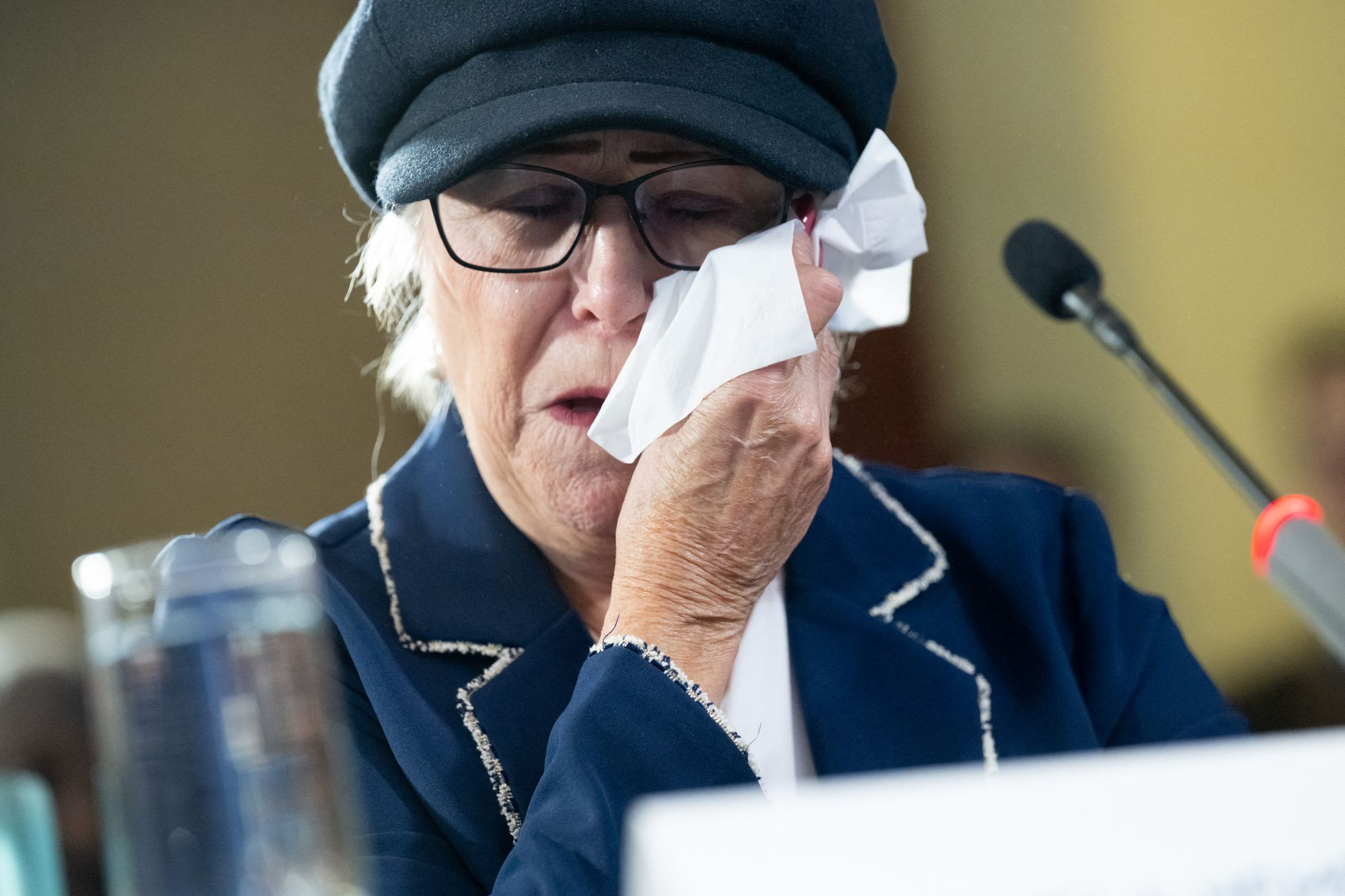
After the death of Daryl van Tongeren’s brother and his subsequent crisis of faith, he came to realize that he would never fully have the answers to why everything had happened, “and so where I eventually came to — and I say eventually, and by that I mean probably 10 years — is now becoming OK with just uncertainty and not knowing and just living in the not knowing,” he says. “So when people say: ‘How can you make sense of your brother's death?’ I can say, ‘I don't know.’ And I'm actually OK with that… I can rest in the trust of not having to know. And so that was a big thing that shifted for me.”
It was not an easy transition and he knows that some people view it as pedantic or unsatisfactory. But he believes that being comfortable in the state of not-knowing has been beneficial to his life.
“The process of getting there was pretty tough and felt very disorienting,” he adds, “and if you probably talked with any of my friends or people close to me, I was probably pretty miserable and unbearable to be around for at least a period of that time. But resting there now actually provides me with a greater sense of authenticity.”
Van Tongeren’s answer to a personal tragedy — “I don’t know” — is not comforting. It offers no villain, no cosmic plan, and no righteous certainty. It offers only the willingness to live without the armor of being right. And of course, in American politics, such humility is not rewarded. It is often mocked, screenshotted, algorithmically punished. It is often seen as weakness. Yet, without “I don’t know,” no belief ever really moves.
“I do think that it, in the current political climate, as certain individuals who are respected among certain groups, as they start to break away for whatever reason that they do, and if that person is a respected person to the individual who's part of that group, that might be an opportunity. That might be a crack,” says Keith Bellizzi. “And then when those cracks do appear, that might be an opportunity for a family member or a friend or a work colleague to step in and allow the individual to process what they're seeing and what they're observing and how they're feeling.”
To get someone to change their political affiliation or to challenge people they previously held in high regard “is challenging. It’s really challenging,” he adds. “I do think that there are things that can be done.” And of course, he is optimistic on a macro scale — “but I think it’s going to take a lot of time and many different cracks to really break it open.”
Join our commenting forum
Join thought-provoking conversations, follow other Independent readers and see their replies
Comments
Bookmark popover
Removed from bookmarks