‘Chains around my waist and feet’: Inside a Trump ICE detention centre
Despite having families and paying taxes, many hardworking immigrants in the US have been arrested in Trump-enforced raids, where officers are sometimes having to meet quotas of up to 3,000 people per day. Here, Luis Martinez tells Alex Hannaford of the terror when it happened to him


What was shaping up to be a mundane Saturday morning in Boston for painter and decorator Luis Martínez* – running errands, picking up some medication for a sick girlfriend back home and accompanying his dad to collect his car – quickly dissolved into a terrifying ordeal. Before the day was out, Luis and his father would find themselves detained by ICE, stripped of their belongings, and imprisoned in a cell and the most recent victims of Donald Trump’s immigration crackdown.
But Luis’s story, marked by 19 days of detention in ICE facilities in Massachusetts last month, encapsulates a broader struggle for due process rights for immigrants across the United States, a struggle that has seen federal judges in the state consistently push back against aggressive deportation tactics.
Last week, a new proposal was launched to tackle the heavy-handed tactics of masked and heavily armed immigration agents who have been snatching people off the streets and taking them away in unmarked cars, in scenes that have shocked many Americans.
Currently, ICE agents are not required to wear body cameras and can cover their faces and don’t have to provide badge numbers or identify themselves. They can arrive in unmarked cars and don’t even need a warrant from a judge to detain someone. The new proposal by the Democrats is looking to change all of that and rein in some of the most extreme enforcement tactics.
While it has been described as a “long-shot” bill, it is nevertheless gaining support among some conservatives as many grow alarmed at reports of over-policing and even ICE impersonators harassing people.


Luis’s story is typical of many. His journey to the United States began almost a decade ago, born out of desperation and hope. In 2015, when he was 16 years old, he arrived alone at the Texas border. Facing escalating gang violence in his native El Salvador, he had made the perilous 2,000-mile journey to find a father he barely knew who had been living in the US for two decades. Since then, Luis has built a life for himself; he was an honours student in high school; he has a girlfriend who is a US citizen and works for his father’s house-painting business.
Then, on 24 May, everything changed.
“I was driving my father’s car and he was sitting next to me,” Luis, who is now 26, says. “We’d only been driving two minutes and had driven about four blocks when an unmarked black car behind me turned on its blue lights and I pulled over immediately.
“Three more cars surrounded me. When I rolled down my window, I saw around eight officers. Most wore masks, dark sunglasses, and black baseball caps. I knew for sure they weren’t police. I wasn’t sure who they were. Bounty hunters? Federal agents?”
Luis said the man at his window asked for his driver’s license as well as his ID from El Salvador. He told the officer he had a work permit and social security number, and that he had paperwork to prove he was in the process of applying for a green card.
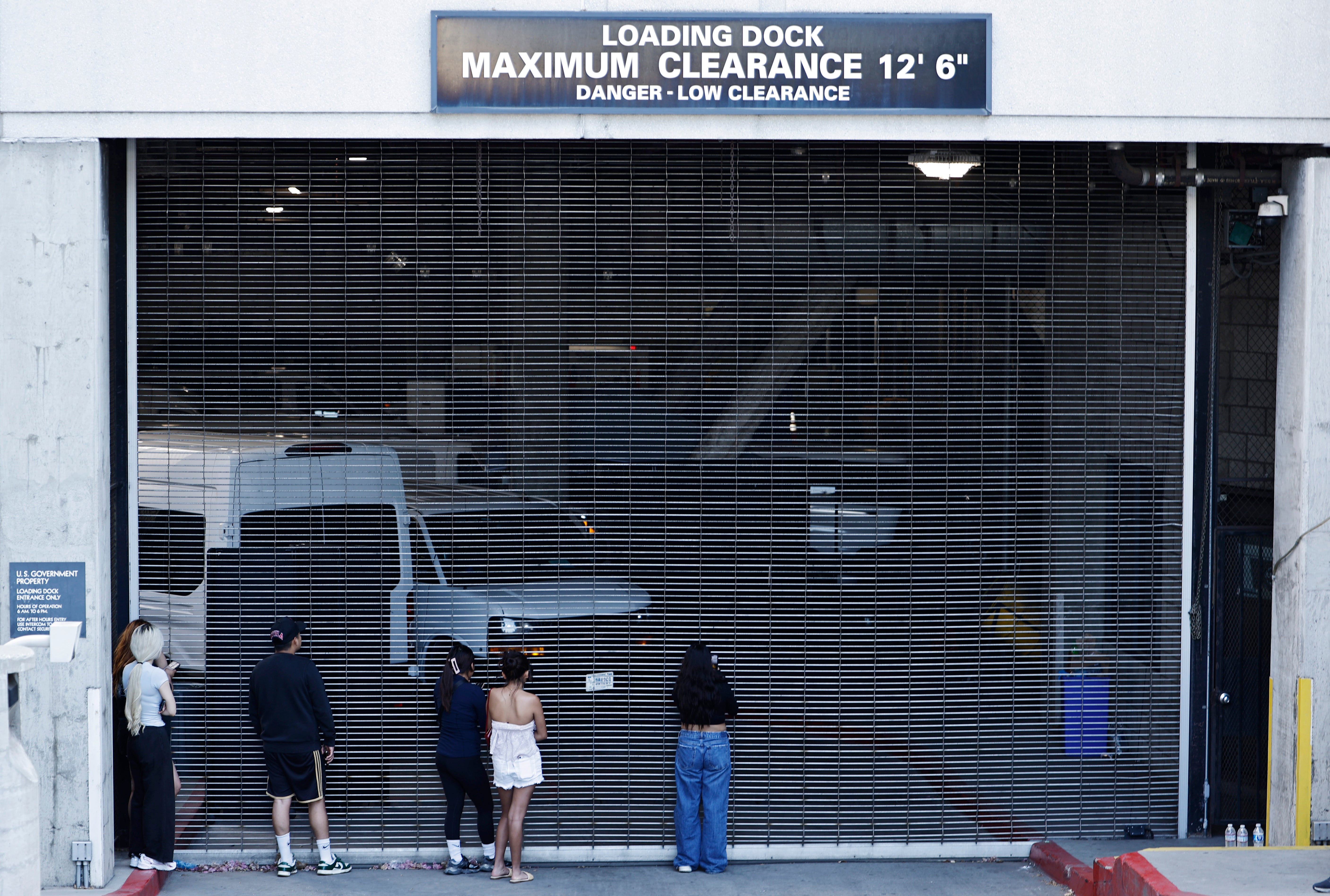
“He said they were looking for someone, and if we weren’t who they were looking for, then we were free to go.” The officer asked Luis’s father for his ID too. Luis said his father was undocumented and didn’t have any legal status in the US. Then the officer began making phone calls.
Luis and his father were both put in handcuffs. Again, they were told that they’d be processed and that he would be free in a couple of days. His father’s future was looking bleaker. “I asked — if I’m not the guy they’re looking for and I was going to be free in a couple of days, why was he arresting me? He said ‘we’re just going to take you in because we need numbers’.”
At an ICE staging post near a cemetery in Lynn, Massachusetts, 10 miles northeast of Boston, Luis saw other cars and vans full of people he assumed ICE had also arrested that morning. “They took all my stuff, my phone, my jewellery, wallet, ID, my shoes. They put chains around my waist and feet. It was crazy.”
Luis and his father were driven 40 minutes to Burlington, to what he later learned was an ICE field office. The conditions there have been described by lawyers as “abysmal” and “unsanitary”, lacking basic amenities like showers or sinks.
They entered through a huge gate at the rear, and once they were inside, they found themselves in a windowless, concrete building and were led to a detention centre.
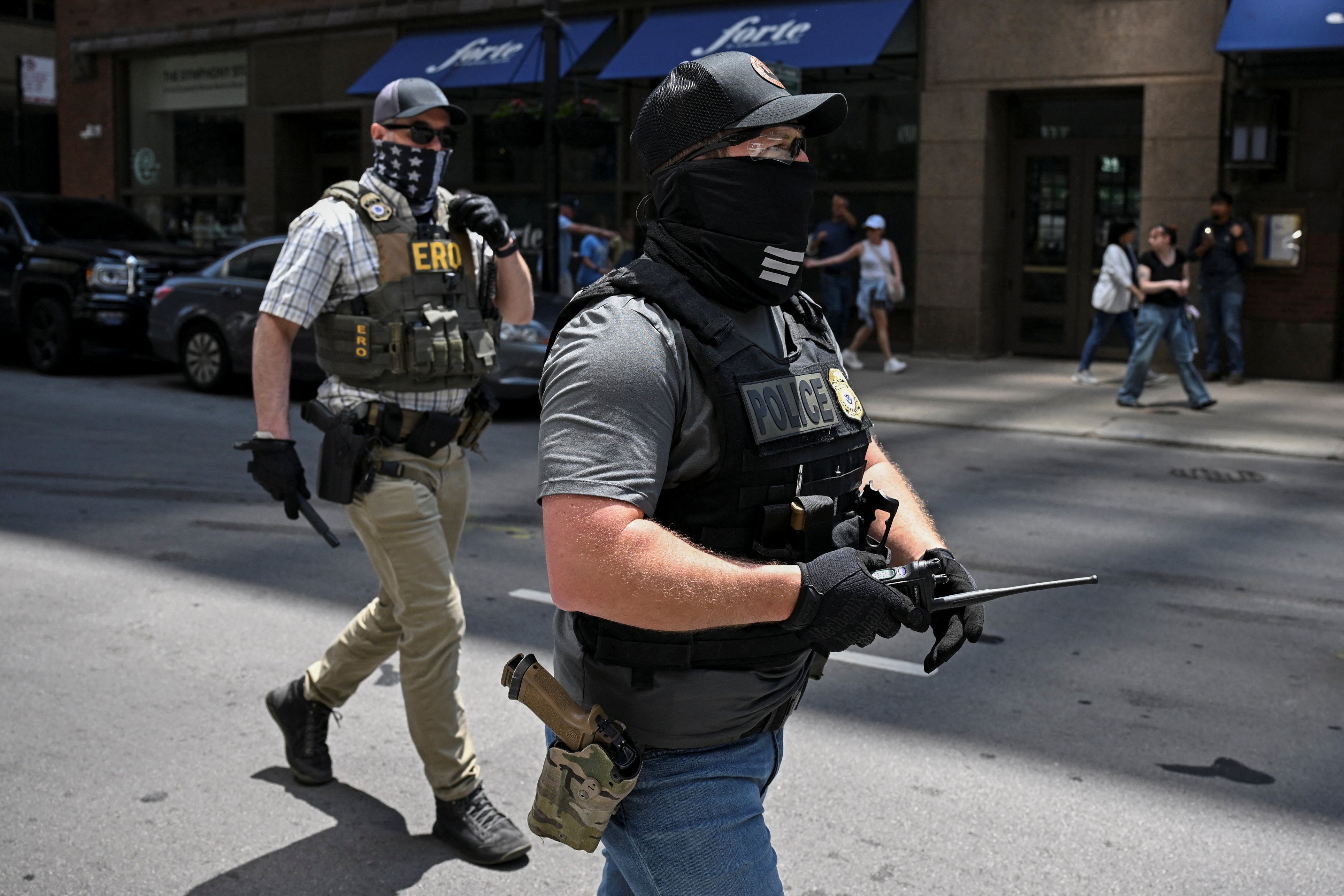
Luis and his dad were placed in a 15 x 15ft cell with 50 other men, ranging in age from 18 to 67.
“We were standing in the middle for hours because there was nowhere to sit,” Luis says. “If you needed to go to the bathroom, you just went in front of everyone.” The only food he was given for the day was a sandwich and a water bottle at 7pm, despite arriving at noon.
Father and son spent that first night on a cold, concrete floor under a tin foil blanket. “Every hour or two throughout the night an agent would open the door, then slam it shut, waking us up,” he says. On Sunday evening, Luis was among the last group transferred to Plymouth County Correctional Facility. Before leaving, Luis said an officer told them they could fight all they wanted, but they would still all be deported.
Luis’s girlfriend found out he’d been arrested via social media. Concerned about her as well as himself, he feared for what might come next. “I was nervous and confused because of what was happening, but I knew I’d never committed a crime. At some point, though, I realised that with the new Trump administration, I could be deported. I don’t have kids yet, but I do have my girlfriend. I have a life that I’ve built over 10 years and there I was in a cell with people hitting their heads against the wall. Almost everyone was crying because they were scared of leaving their families behind.”
Chained once more, Luis and nine others were transported to Plymouth. His father, meanwhile, was transferred to a detention facility in Texas.
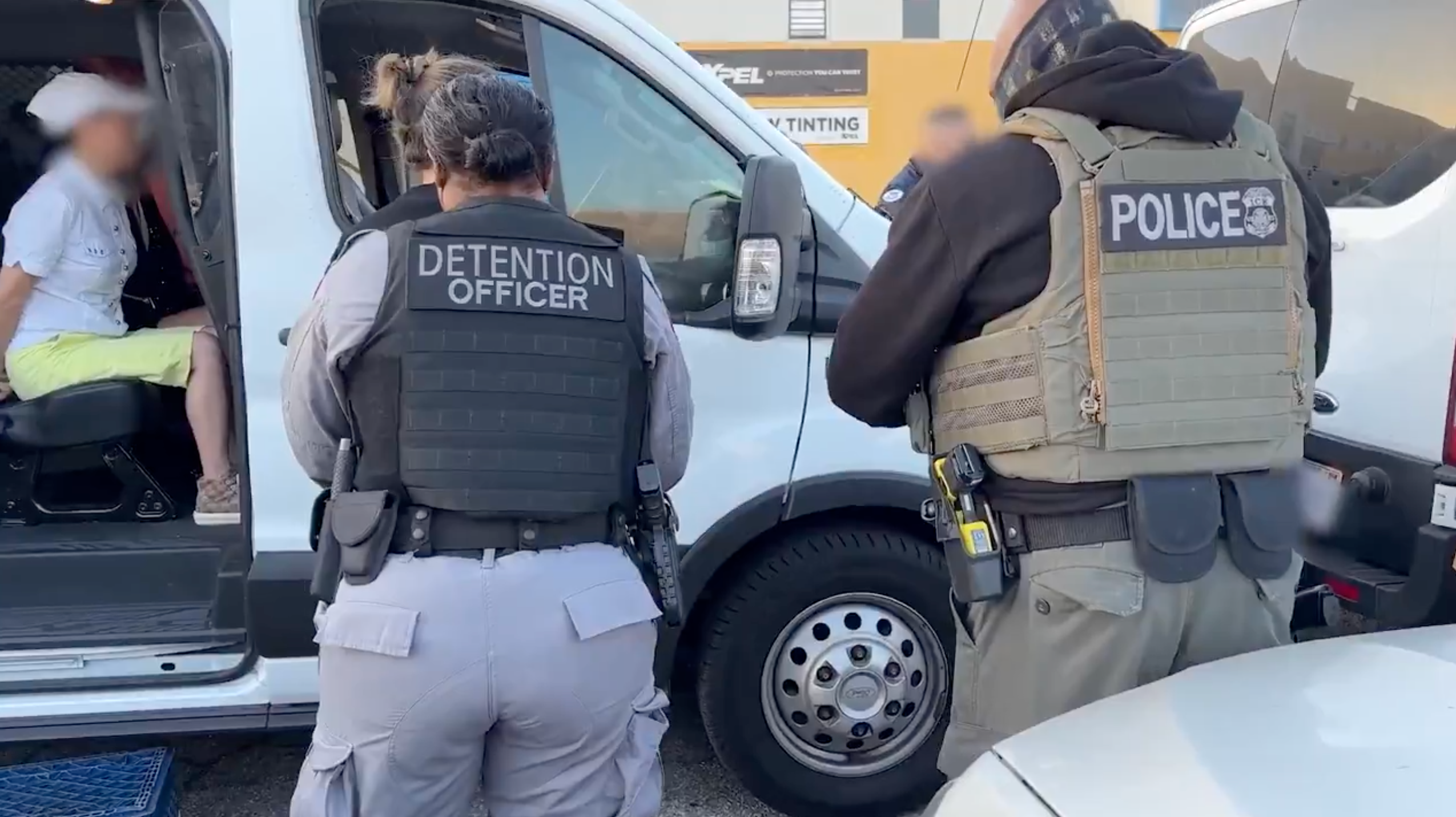
Luis was confined to a cell with just a metal bed and toilet. A structured, if grim, routine began: 4.30am breakfast, 15-minute meal breaks, and limited recreational time. While phone calls were permitted, Luis said there was a bank of nine phones for up to 60 people. Luis spent 17 days locked up in the Plymouth detention facility awaiting his bond hearing.
Meanwhile, a powerful legal pushback was underway in federal courts across Massachusetts. In case after case, 14 federal judges, including three appointed by Republican presidents, began issuing almost verbatim rulings affirming the due process rights of immigrants.
They pointed to a landmark 1982 Supreme Court ruling, which declared, “Even aliens whose presence in this country is unlawful, have long been recognised as ‘persons’ guaranteed due process of law by the fifth and 14th amendments.”
These rulings came as critical relief, often preventing immediate out-of-state transfers or deportations without hearings. Immigration lawyers credit these interventions for providing a crucial “pause” button and have accused ICE of deliberately moving immigrants across the country to disrupt legal challenges and place them under the jurisdiction of more conservative federal courts.
Like many immigrants’ journeys, Luis’s life has been a long one to get legally recognised despite having paid taxes and built a life where he contributes to the US economy and his local community. America has been built on the shoulders and hard work of such immigrants. They start businesses at a higher rate than native-born Americans, and undocumented immigrants paid $96.7bn in federal, state, and local taxes in 2022.

When he arrived in the US a decade ago, Luis voluntarily approached a border patrol officer, beginning a process that would lead him through an ICE facility, a camp for minors, and eventually, reunion with the father he hadn’t seen since he was four.
Paul Hannaford, an immigration attorney in Boston, who also happens to be my cousin, was the first one who told me about Luis’s story. “Back in 2017, we got him the I-360 – which is to apply for special immigrant juvenile status, which you can get if you’ve been abandoned, abused, or neglected by a family member. Once you have that, you can file for a green card.”
In the intervening years, the case has bounced from judge to judge, court to court. Luis’s fingerprints that were taken years ago were apparently unusable and had to be taken again. A judge retired. By any account, it’s been a slog. But by 23 May this year, Luis Martínez was well on his way to being bestowed with the legal right to live and work permanently in his adopted country.
He had no criminal record and had never been detained or pulled over before. But then Trump became president. “They’ve officially changed the policy,” Paul explains. “As of 6 June 2025, US Citizenship and Immigration Services rescinded its policy of automatically granting deferred action to special immigrant juveniles with approved I-360 petitions.” Which meant Luis and others in similar situations were vulnerable to arrest and deportation.
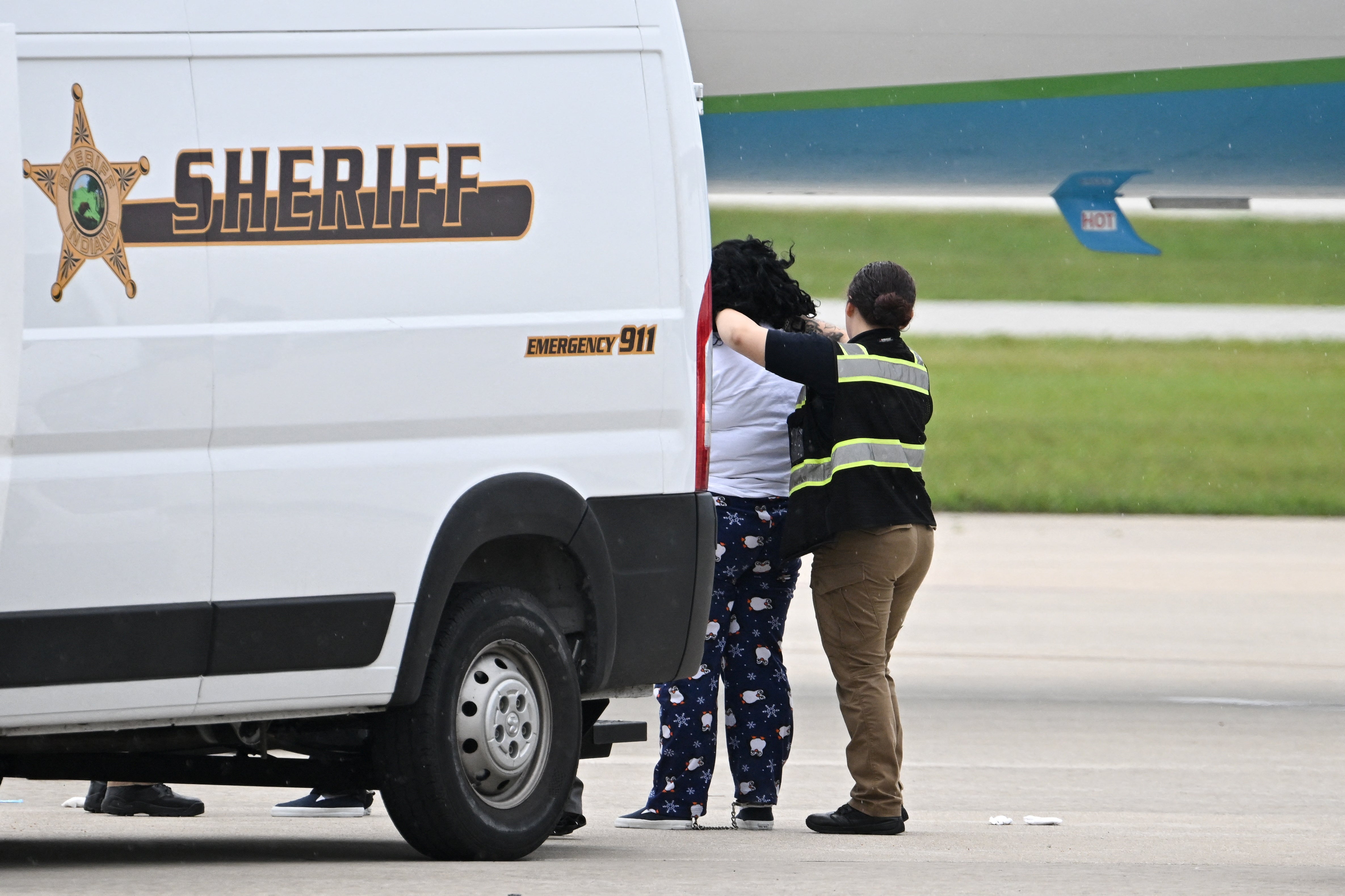
After 19 days in ICE custody, Luis was finally released and was forced to wear an ankle monitor until this week. “My girlfriend was waiting for me when I was released,” Luis tells me. “I was very overwhelmed, lots of emotions and thoughts going through my head.”
Luis knows that his ordeal is far from over. Paul successfully filed a motion to terminate his court case, which meant no more ankle monitor or threat of deportation – for now. But Luis is “back to where he was before they picked him up”. The fear of being taken by ICE again looms large.
“Now, I only go out if I really need to,” he says. “I leave for work early in the morning – around 5.30am when there aren’t many people on the streets. And I always try to get back by 7pm, and I take different routes back. I know a guy who just got arrested for the second time and it could happen to me. I don’t even get to go out with my girlfriend much any more. I’m scared to go out.”
When The Independent reached out to ICE via email, the agency did not respond to a request for comment.
As for his father, he is still being detained in an ICE facility in Texas. He calls Luis at 9am each morning to check in. Neither knows what will happen to him or whether they will ever be able to secure a future in the only country they see as home.
* Luis Martínez is a pseudonym
Join our commenting forum
Join thought-provoking conversations, follow other Independent readers and see their replies
Comments
Bookmark popover
Removed from bookmarks