Will Trump really attack Venezuela? War of words with President Maduro escalates as US sends destroyers to region
The Venezuelan President has threatened to create a 'republic in arms' if the Trump administration takes military action against his country

Venezuela’s president has accused the US of attempting to carry out regime change in the South American country, and warned he will respond in kind to any attack by warships patrolling near its coast.
“In the face of this maximum military pressure, we have declared maximum preparedness for the defence of Venezuela,” Nicolás Maduro said, adding that he would declare a “republic in arms”, without elaborating.
His comments on Monday were in response to the significant build up of US naval forces in and around the southern Caribbean, in a move that has escalated tensions with nearby Venezuela.

The Trump administration said the mobilisation of its warships was part of a broader operation to thwart Latin American drug cartels, but officials in Caracas have questioned the US’s motives and suggested the deployment could be a pretext to a military invasion.
Experts, however, are dubious about those claims.
“The build up is a sizeable force for what’s officially a counter-narcotics mission, much more than you’d normally expect for that role,” Imdat Oner, a political analyst at Florida International University and a former Turkish diplomat who was stationed in Caracas from 2014 to 2016, told The Independent. “It’s a deliberate show of force, but not enough for a full-scale invasion.
“The posture sits in this ambiguous middle ground, enough firepower to keep Maduro guessing, but not so much that it commits the US to a full occupation.”
Why has the US sent a naval fleet to Venezuela’s coast?
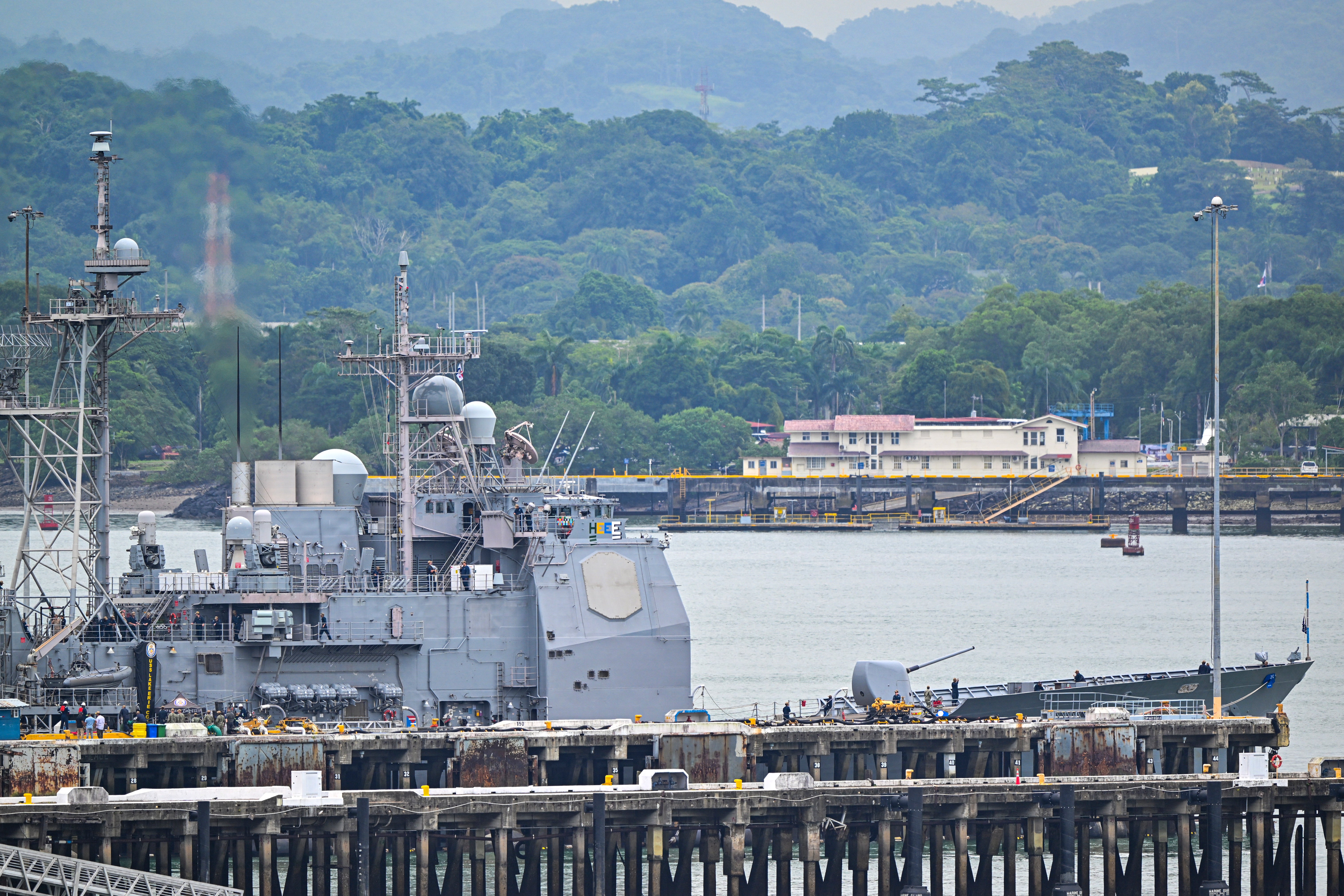
US president Donald Trump has pushed for the military to tackle drug cartels that he blames for the flow of fentanyl and other illicit drugs into the US.
Seven US warships, along with one nuclear-powered fast attack submarine, are expected to be mobilised in the region, along with 4,500 sailors and marines, according to Reuters.
Among the warships are two Aegis guided-missile destroyers - the USS Gravely and the USS Jason Dunham - as well as the destroyer USS Sampson and the cruiser USS Lake Erie, AP news agency reported.
It is unclear how the military presence in the region will disrupt the drug trade. The ships are part of an “enhanced counter narcotics operation” to carry out drug interdiction missions in Latin America, a defence official told The Washington Post last week.
Phil Gunson, a Caracas-based political analyst for the International Crisis Group, believes the operation is “likely to be an expensive failure... since at best it will only temporarily disrupt trafficking in the eastern Caribbean”.
But he added: “There are ancillary goals, including the destabilisation of the Maduro government and possibly even its collapse. That's something US Secretary of State [Marco] Rubio has long promoted, but there appears to be no clear plan as to how to achieve it, and even less of an idea how to deal with the chaos that might ensue.”
How has Maduro responded?

The large US presence in the region has raised suspicion in Caracas that the US might take military action against Venezuela.
Maduro’s government has responded by deploying more than 15,000 troops along the Venezuelan coast and border with neighbouring Colombia, as officials urged civilians and reservists to enlist in a militia to defend the country.
“In the face of this maximum military pressure, we have declared maximum preparedness for the defence of Venezuela,” Maduro said on Monday, characterising the deployment of US warships as “an extravagant, unjustifiable, immoral and absolutely criminal and bloody threat”.
He accused Trump of pursuing a regime change, warning that US military action against his country would “stain (Trump’s hands) with blood”.
Historic tensions between the US and Venezuela
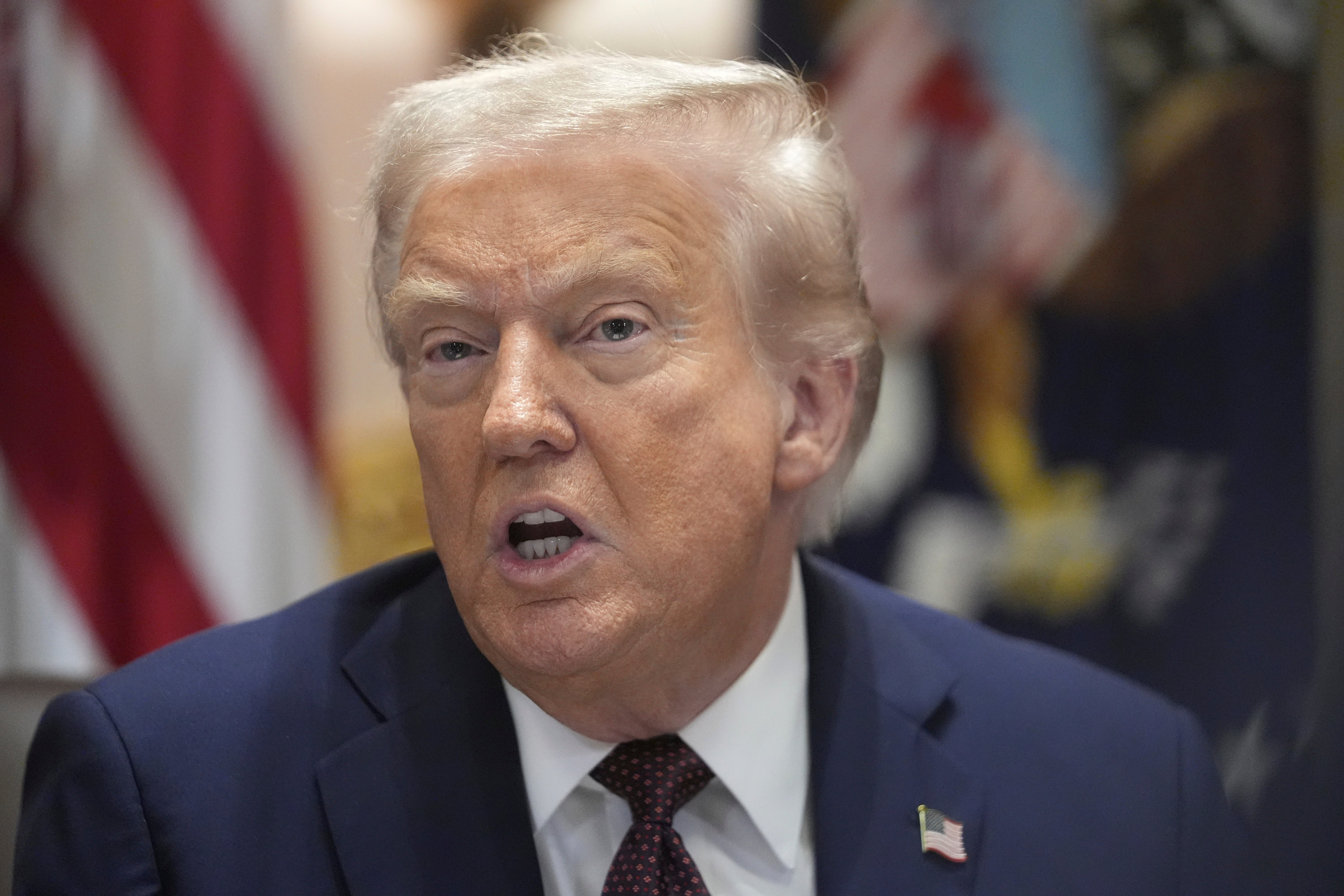
Trump has long blamed Venezuela for a drug epidemic in his country, claiming Caracas is pouring narcotics into the US through illegal channels. Venezuela has denied the allegations, asserting that the vast majority of cocaine produced in Colombia departs through the Pacific.
Maduro is widely considered a dictator and not recognised by the US as Venezuela's legitimate leader. He was sworn in to a third six-year term in January, and he maintains he was the legitimate winner of the presidential election last year.
The opposition, however, said there is credible evidence that its candidate had won the vote, as it urged the US and other countries to ramp up pressure on Maduro to force him out of office.
The Trump administration announced a $50m reward last month for Maduro’s arrest, accusing him of being one of the world's largest drug traffickers and working with cartels to flood the US with fentanyl-laced cocaine. Maduro denies any connection to the drug trade.
Maduro was indicted by a US federal court during Trump’s first presidency in 2020 on charges of narco-terrorism and conspiracy to import cocaine.
The bounty at the time for information that could lead to Maduro’s capture and prosecution was $15m, which was increased by the Biden administration to $25m, the same amount the US offered for the capture of Osama Bin Laden following the September 11 attacks.
Join our commenting forum
Join thought-provoking conversations, follow other Independent readers and see their replies
Comments