Trump administration's attempt to access protesters' private Facebook data limited by judge
A partial victory for privacy advocates

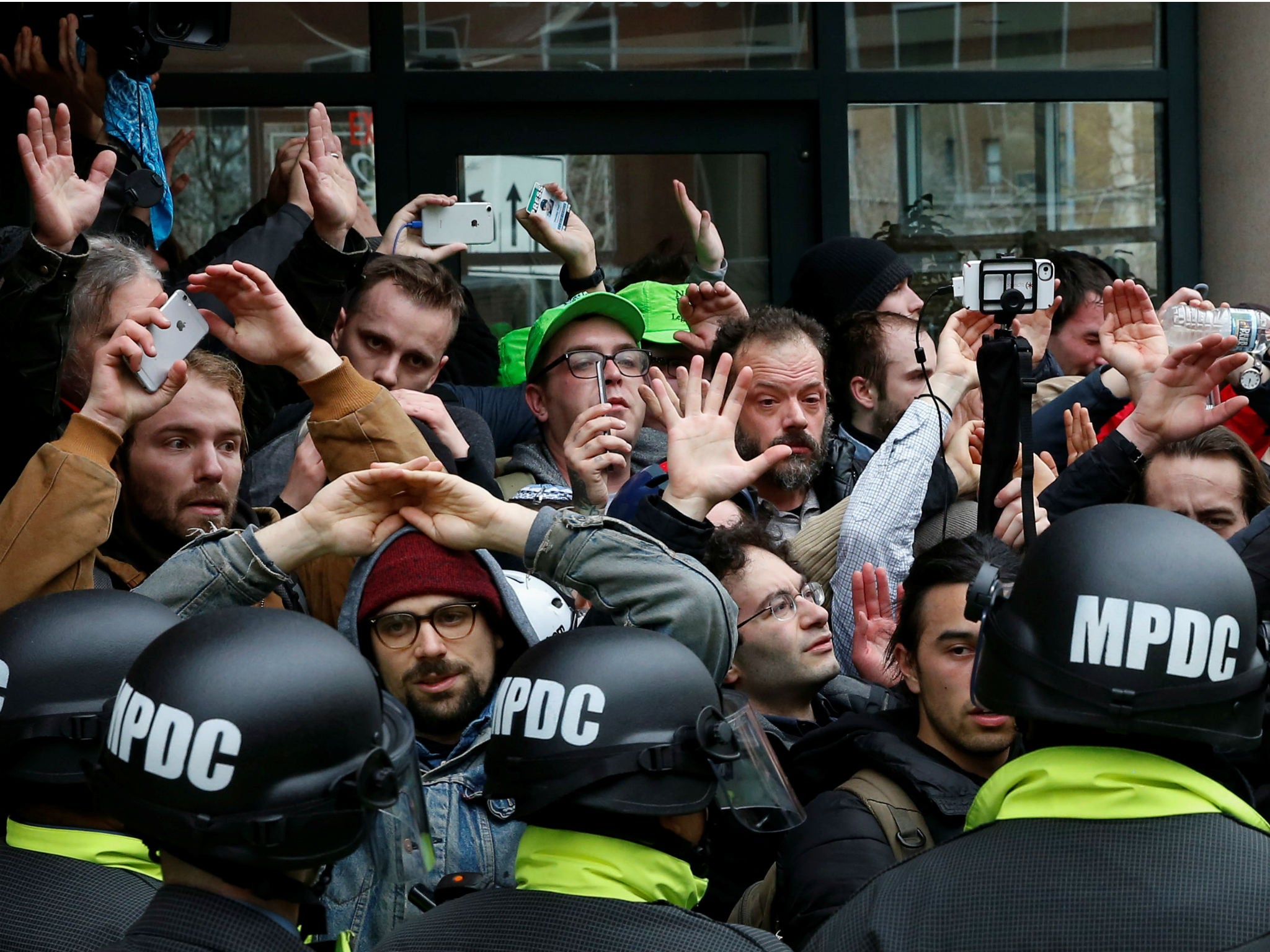
A judge has limited how much information Facebook will turn over to the government after the administration of President Donald Trump issued warrants targeting organizers of anti-Trump demonstrations.
Earlier this year, the Department of Justice asked Facebook to illuminate the online activities of three users who had spearheaded mass protests of Mr Trump’s inauguration in Washington, DC. More than 200 people were arrested, and DOJ issued search warrants asking Facebook to turn over information that could reveal evidence of “rioting or intent to riot”.
After Facebook successfully fought to inform the users they were subject to search warrants, a legal fight over privacy ensued. With the backing of the American Civil Liberties Union, the activists argued that the government’s request would sweep in vast reams of unrelated information about their private lives and about other Facebook users with whom they’d interacted online.
In a ruling that acknowledged the perils of online search warrants sweeping in huge amounts of information, Judge Robert E Morin of the Superior Court of the District of Columbia limited what the government can see. Facebook will redact information about people who liked or followed a protest event page and will obscure information about people who received messages from the individual activists or friended them. In both cases, the government’s access to photos will be limited.
In his ruling, Mr Morin echoed the activists’ warnings that overly broad warrants could pull in “deeply personal information” and detail “protectable political speech and association” that was unrelated to the January protests. He warned the government does not have the right to rummage through the information contained on the Facebook accounts” to learn about “individuals not participating in alleged criminal activity”.
“The risk for disclosure of private political speech and association go innocent persons to the government cannot be ignored and therefore additional protections are necessary”, Mr Morin wrote, adding that “the Warrants in their execution may intrude upon the lawful and otherwise innocuous online expression of innocent users”.
Facebook did not respond to a request for comment. In a statement, an ACLU attorney Scott Michelman praised the new privacy buffers but said the court should have done more.
“Our clients, who have not been charged with any crime, expect that when they send private Facebook messages about, for instance, their medical history or traumatic events in their lives, those messages will remain private unless the government shows probable cause to search those particular messages, which it has not done”, Mr Michelman said.
Join our commenting forum
Join thought-provoking conversations, follow other Independent readers and see their replies
Comments