World Cup war games: Counter-drones, cyberattacks and stadium ICE raids top US security concerns as FIFA comes to town
The U.S. is expecting at least 5 million international visitors, not to mention the millions of soccer fans at home, to be on the move during the six-week tournament
More than half a billion ticket requests have been made for World Cup 2026 games, which will be hosted by cities across the United States, Canada and Mexico, FIFA reported this month.
The U.S. is expecting more than 5 million international visitors, not to mention the tens of thousands of soccer fans here at home, who will not only pack stadiums but also flood fan zones from coast to coast, including in New York, Los Angeles, Kansas City and Atlanta, over the six-week tournament, which kicks off on June 11.
This once-in-a-generation opportunity also brings a nationwide, multifaceted rollout of security measures to prepare for potential threats ranging from drone incursions to cyberattacks.
However, some human rights advocates have expressed fears that the Trump administration will use law enforcement operations around the World Cup to target migrants as part of the White House’s aggressive deportation policy.
“Under the Trump administration’s policies, immigration enforcement at major sporting events can tear families apart and could expose people fleeing persecution to life-threatening danger,” Minky Worden, director of global initiatives at Human Rights Watch, said in a statement.
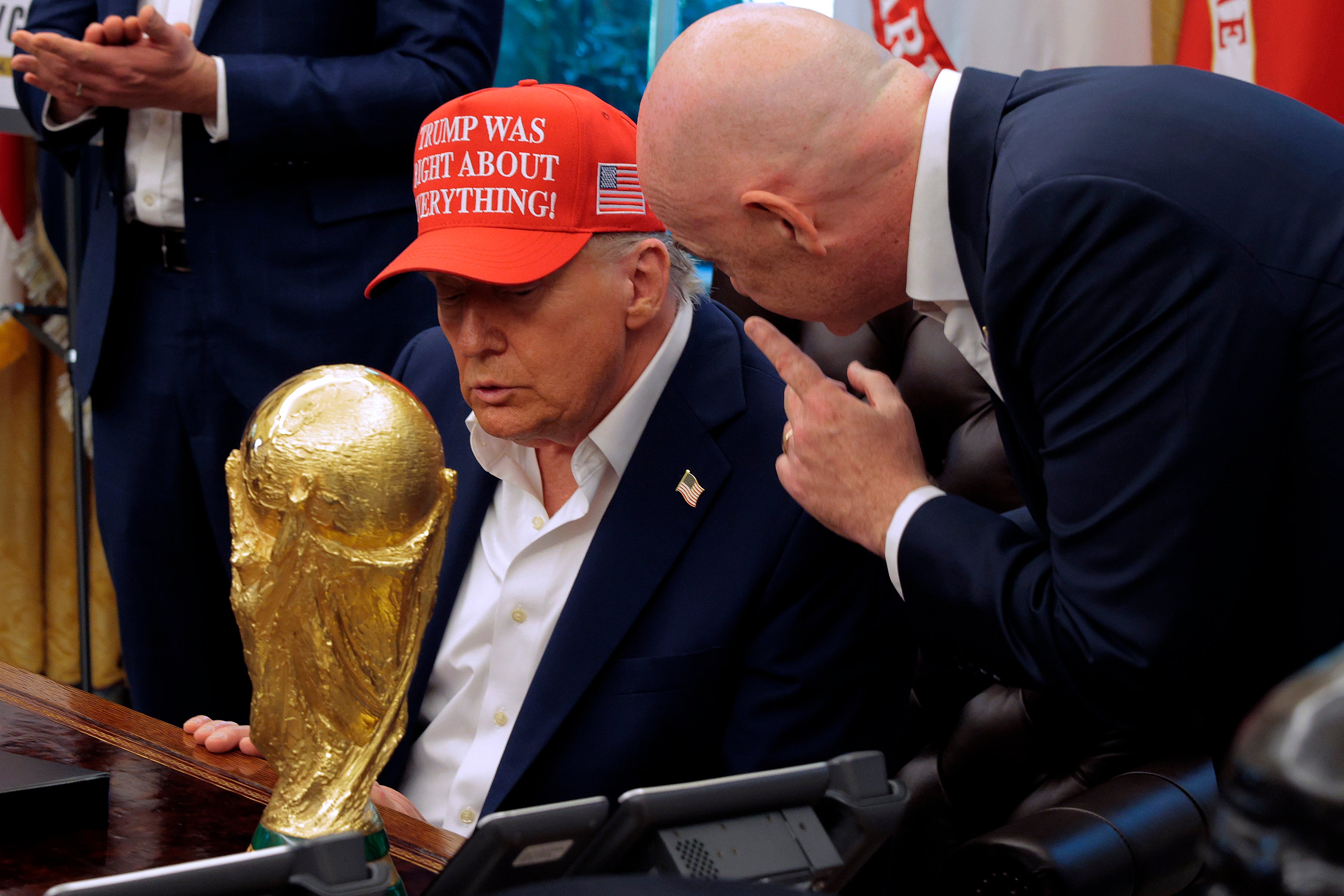
And there is also trepidation from fans traveling from abroad after the Trump administration broadened its visa ban to 75 countries.
Despite announcing the FIFA Priority Appointment Schedule System, or FIFA PASS, which will expedite visa processing for individuals cleared by the Department of State, FIFA fans from around the world are still questioning whether or not they’ll be allowed to enter and travel within the U.S. without federal harassment, according to the BBC.
Threats from the sky
The Department of Homeland Security announced earlier this month that it plans to invest $115 million in counter-drone technologies to protect World Cup games, and also events celebrating the country's 250th anniversary this year.
The funds will be managed by a new DHS office that will focus on buying and deploying drone and counter-drone tech.
“Drones represent the new frontier of American air superiority,” Homeland Security Secretary Kristi Noem said in a statement.
FEMA, which is under the umbrella of DHS, said in December that it had allocated $350 million to the 11 states hosting World Cup matches. That money is earmarked for the purchase of counter-drone tech.
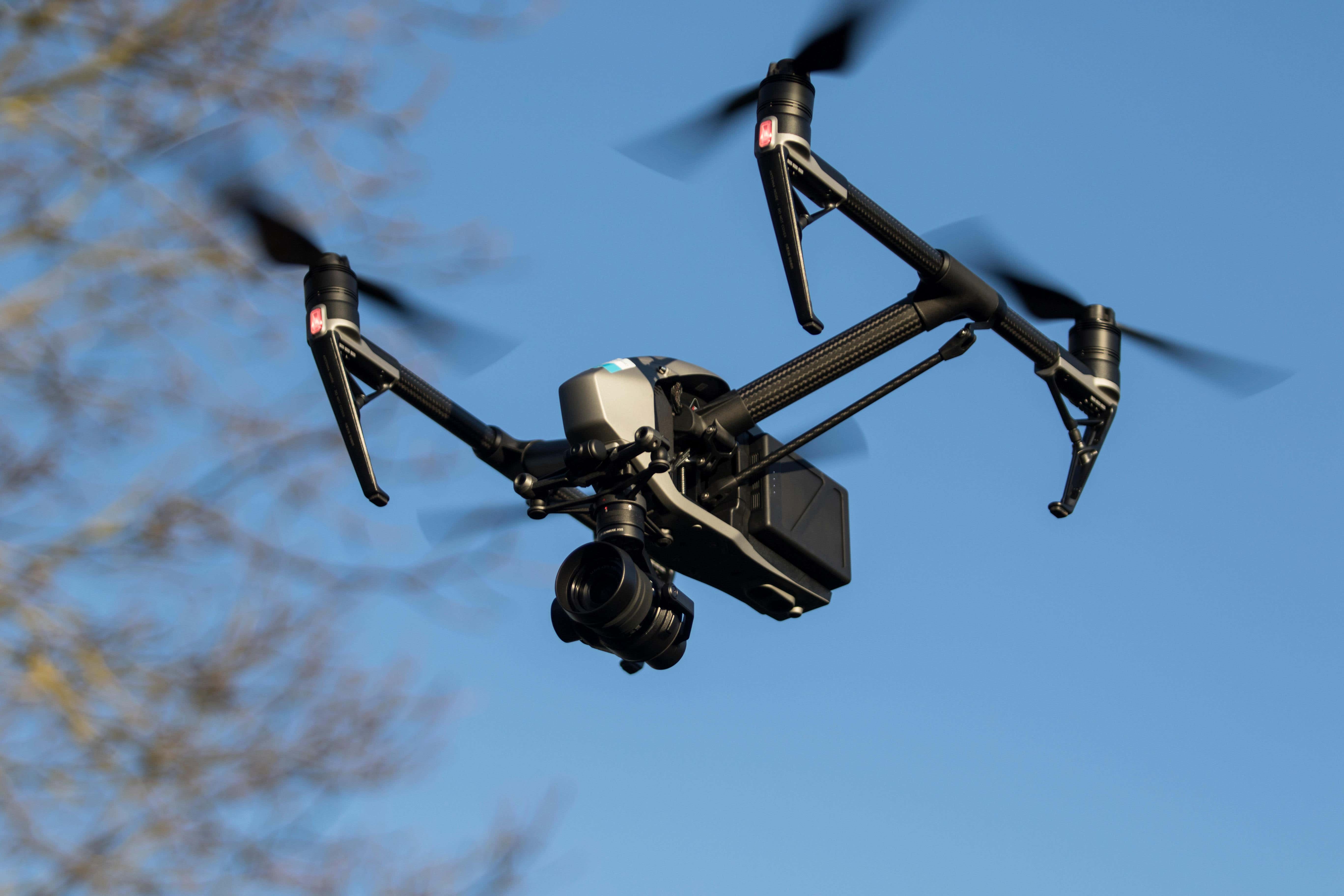
While most drones are more disruptive than they are overtly dangerous — though there have been cases of falling devices causing serious injury to people on the ground — the war in Ukraine has proven that even relatively inexpensive, commercially available racing drones, outfitted with explosives, can be used as potent weapons.
U.S. officials reportedly see the potential threat of a drone attack as more than a fringe possibility.
Last week, leaders from the military, law enforcement, and local governments gathered to participate in "tabletop exercises overwhelmingly focused" on drone attacks at World Cup events, where large numbers of people will be gathered in places at predetermined times.
Politico reported about the war games that local and state law enforcement agencies in the U.S. have been “encouraged to purchase equipment that can jam inbound drones or redirect them to their origin," and to seek reimbursement for their purchases through a $500 million federal grant program.

Threats from the Net
The World Cup is larger than it has ever been. In all, 48 teams are competing in more than a dozen cities across three North American countries. Like the rest of the world, the World Cup relies more on automated systems and digital technologies today than it ever has in the past.
That means that cyberthreats are more of risk factor than ever before.
"The more we build out these things and automate and scale larger — more days, more games, more teams — the more we have to find a way to do that efficiently, and they're not scaling out the human labor force to do it," Chris Grove, director of cybersecurity strategy for Nozomi Networks, a provider of cybersecurity for operational technology told Dark Reading, a cybersecurity news site.
"They're building with technologies and processes and things, automated ticketing access controls, and being able to do a lot more with less."
Digital threats aren't just a theorized vector for malicious behavior; there is precedent. Following the 2022 World Cup in Qatar, analysts found a router that had been compromised and could have been used to disrupt communications during the games, including all streaming services carrying the events.
In 2024, the Olympic Games in Paris were subject to at least 140 cyberattacks, but thanks to French preparation, there were no outages to the games, according to Dark Reading.

Grove warned that this year, as a result of heightened political polarization in the U.S., there will likely be an increased likelihood of "hacktivists" targeting the World Cup to make statements.
"I think there's more potential and concern for disruption around hacktivists this time around than four years ago," he says. "Four years ago was just a different political and social landscape."
Donald Lane, a former Secret Service agent, told the U.S. Sun that while physically attacking an event has become more difficult thanks to increased surveillance and threat-detection technology, malicious actors have found plenty of vulnerabilities through the use of remote access.

“Bad actors are realizing they can cause a lot of destruction by accessing these things remotely, which can be just as devastating as a physical attack," he told the outlet.
Targeting systems that manage electricity, gas, and water are all possible options for potential bad actors.
Little information has been released about the specific steps to ramp up cybersecurity ahead of the World Cup but a House Committee task force — focused on the World Cup and 250th anniversary celebrations — has indicated that it is among the chief areas of concern.
Threats on the ground
Last summer, Andrew Giuliani, who is leading the White House Task Force on the World Cup, announced that the federal government was pouring more than a billion dollars into security for the tournament, calling it "one of the largest commitments of safety resources ever made for a single event."
"This includes $625 million through the FIFA World Cup Grant Program and is directed to support law enforcement, supporting everything from training and exercises to cybersecurity and emergency response,' he said.
Securing the physical locations of games will fall largely to a combined force of federal, state and local law enforcement.
Kansas City has already started its preparations, naming Kyle Postell, as the city’s director of safety & security. Postell is a former Secret Service agent and will oversee security preparations alongside local law enforcement.
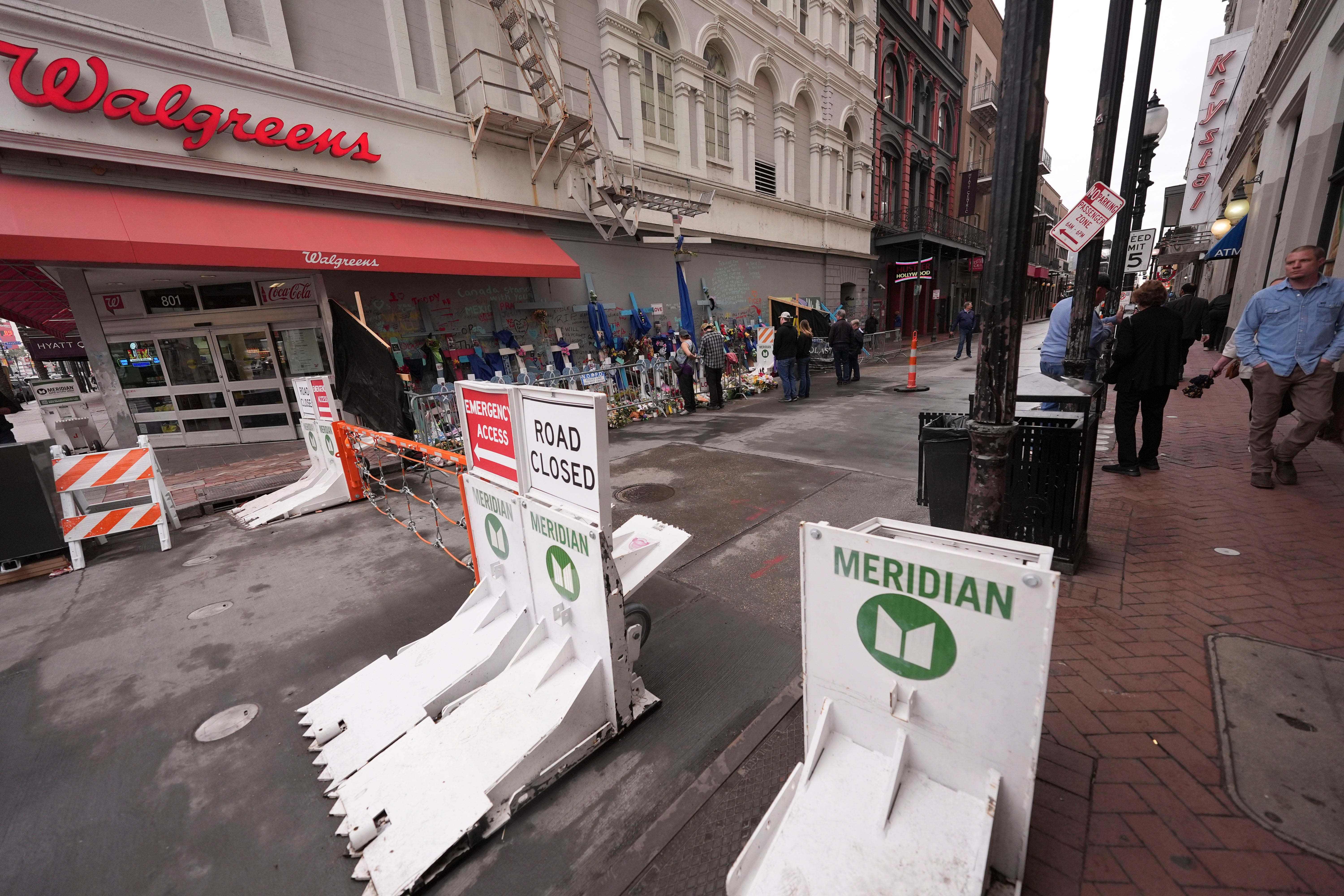
World Cup hosting cities will likely see increased police presence, controlled traffic corridors, and the presence of state and federal law enforcement as has been seen before during major events like the Super Bowl.
After a New Year’s Day vehicle attack in New Orleans that killed 14 people in 2025, police used reinforced “drop and stop” metal barriers ahead of the Super Bowl in the city.
The barriers used in New Orleans advertise the ability to stop a 2,430 pound (1102 kg) vehicle moving at 30 miles per hour (48 kph) without the need for an anchor.
Cities across the U.S. have been investing in similar barriers since the New Year’s Day attack. West Palm Beach spent $800,000 in 2025 to protect its pedestrian-heavy downtown events, according to WPTV. San Antonio did the same in 2025, but used two-ton stone barriers to block vehicle entry to its Market Square, News 4 San Antonio reports.
In addition to securing the actual venues, the U.S. is also preparing for non-American travelers who come from cultures where public transportation is more the norm. Giuliani said that the federal government is working with public and private partners to ensure foreign visitors have safe and reliable transportation to and from events.
"The Department of Transportation is very aware that Americans travel differently from Europeans and South Americans, and we are working shoulder-to-shoulder with FIFA, host cities, airlines, Amtrak, rideshare companies, and public transportation networks to keep fans moving safely and efficiently," Giuliani said in December.

Michael Donnelly, Georgia’s TSA federal security director, said officials at Hartsfield-Jackson International Airport, in host city Atlanta, are preparing for a massive influx of foreign and domestic travelers.
"It's going to be an extremely, busy time when we have games," he told Fox 5 Atlanta. "So we'll be preparing like every game is a Super Bowl."
He said that the TSA would be utilizing unspecified "new technologies" to help with screening and expedite wait times as travelers arrive.
Threats from the White House
The Trump administration’s aggressive anti-immigration policy – which has seen nearly 3 million people deported and thousands arrested by masked ICE agents and held in detention centers – appears to have left foreign visitors wondering what welcome awaits them in the U.S.
In December, Giuliani was asked by reporters if Trump will rule out ICE raids at World Cup games. He said Trump would not.
“The one thing, and I’ve known the president for 25 years, the president has not ruled out anything that will make American citizens safer,” he said.
In January, Lebanese diplomat and FIFA fan Mohamad Safa, announced he’d canceled his World Cup tickets because of the Trump administration’s draconian anti-immigration policies.
“I cancelled my World Cup tickets. The ICE may decide that I am a gang member, and I'll be locked in prison for a year with no charges, no hearing, no trial, no right to consult a lawyer, no phone call,” he wrote in a post on X. “The US is not safe to visit.”
The Department of Homeland Security proposed a rule in January that would expand the personal and social media information travelers are required to provide DHS officials when traveling to the U.S. on the waived visa program.
The waived visa program applies to citizens of many European countries and other American allies. The DHS proposal means those visitors may be subjected to expanded scrutiny.

If implemented, the new proposal would give Homeland Security the ability to screen travelers' social media posts for any sign of "anti-American" sentiment, even if they aren't seeking long-term stays in the U.S.
Trump has said that he "can't wait to welcome soccer fans from all over the globe” but has already banned visa applications for visitors from 21 nations including Iran, Brazil, Colombia, and Egypt — which all have teams in the World Cup or competing to qualify for the event.
While exceptions have been made for World Cup teams, their immediate families, and coaching staff, the same cannot be said of their supporters.
Secretary of State Marco Rubio warned soccer fans that just because they bought a ticket to a game doesn't mean they're getting into the U.S. “A ticket is not a visa and it doesn’t guarantee admission to the U.S.," he said.
Trump’s immigration crackdown is a concern for domestic fans as well. In July, an asylum seeker in the U.S. took his children to a Club World Cup soccer tournament final and was arrested by ICE, detained for three months, and was then deported to a country where he felt he could be killed, according to Human Rights Watch.
In May, two months before the incident, HRW sent a letter to FIFA asking for “immediate action” to address potential risks to fans posed by U.S. immigration policies.
FIFA responded on June 3 that it “expects … host countries take measures to ensure that any eligible persons who are involved in the Competition are able to enter the respective countries,” and “is actively working on this matter with relevant authorities.”
Join our commenting forum
Join thought-provoking conversations, follow other Independent readers and see their replies
Comments
Bookmark popover
Removed from bookmarks