Will Japan become the latest country to fall to the populist right?
Japan’s right wing Sanseito party made surprise gains in Sunday’s election after running an anti-foreigner campaign

Japan’s prime minister Shigeru Ishiba suffered a bruising upper house election defeat at the weekend, leading to questions over his future.
Ishiba’s Liberal Democratic Party, in power for most of the past 70 years, lost its coalition in the election. It is the latest blow for the party, having lost its majority in the more powerful lower house, the House of Representatives, last year.
The right-wing Sanseito party saw a surge in popularity after winning 14 seats, up from one, in the 248-seat upper house on Sunday.
Sanseito, which has called for a crackdown on ‘excessive acceptance of foreigners’, became the fourth largest opposition party in parliament.
It has taken inspiration from Donald Trump’s Make America Great Again (MAGA) messaging, using slogans like “Japanese First”.
So, will Japan become the latest country to embrace to the populist right? The Independent takes a closer look below.
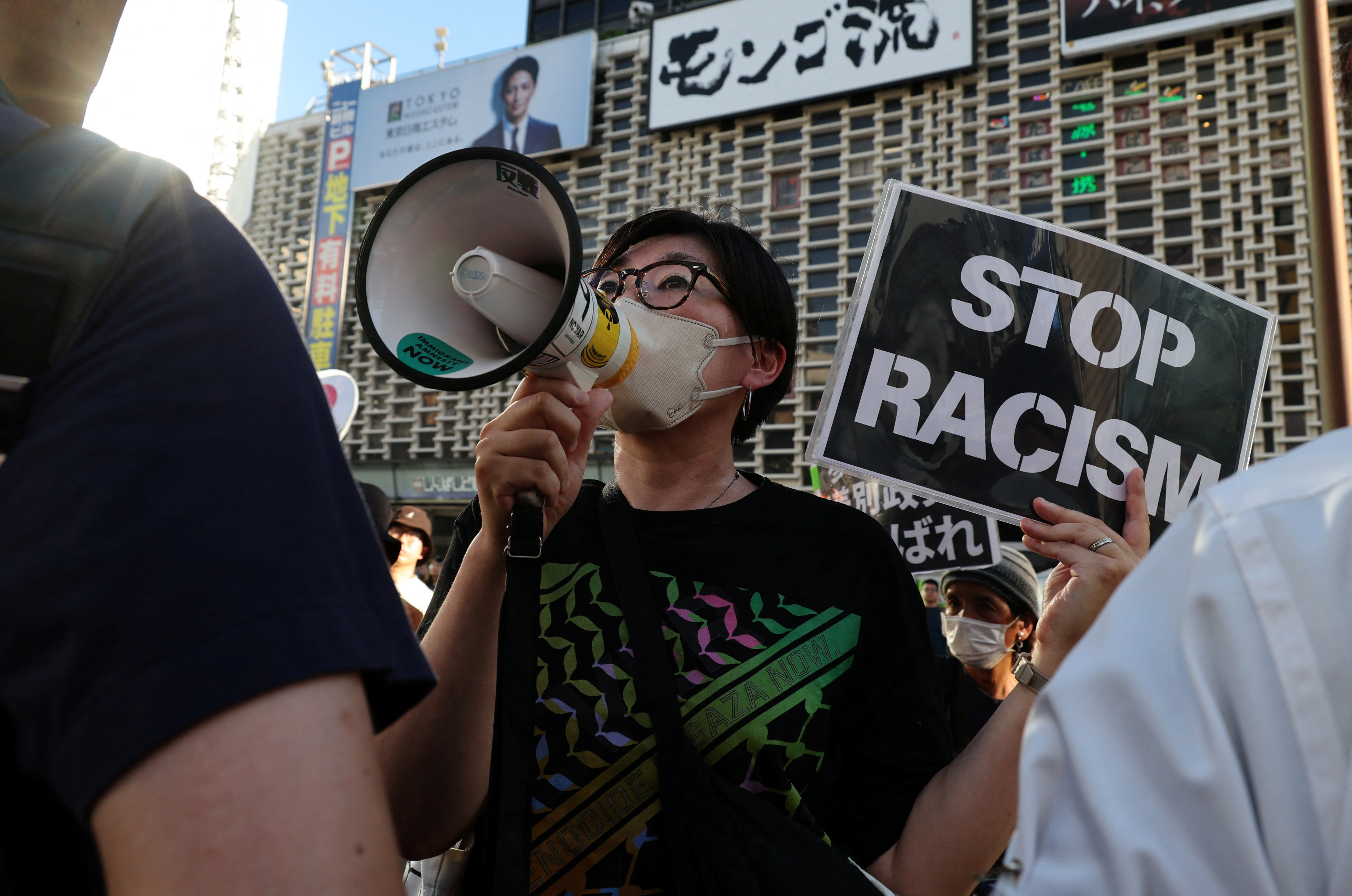
What is Sanseito?
Sanseito was created in 2019, emerging from an ultranationalist YouTube channel. The party's "Japanese First" pitch is that the country is under cultural and economic threat from outsiders.
It has proposed "loyalty checks" for foreigners, as well as the suspension of social services to foreign residents and strict limits for hiring them.
The party rallies against globalisation, much like the US Republican Party, claiming that foreign ownership of once-public utilities drives up prices.
Will Sanseito take power?
So far, Sansetio has 14 of 248 seats in Japan’s upper house. This is compared to Japan’s Liberal Democratic Party’s 47.
The Constitutional Democratic Party, the main opposition, came in second with 22 seats. Jeffrey Hall, a lecturer in Japanese Studies, said support for more right wing parties had cut into the LDP's conservative support base.
“Prime Minister Ishiba is considered not conservative enough by many supporters of the former Prime Minister [Shinzo] Abe,” he told BBC News.
“They think that he just doesn't have the nationalistic views on history, he doesn't have the strong views against China that Abe had.”

What other countries have seen surges by the right?
In Germany, the Alternative for Deutschland (AfD), a right-wing, anti-globalist challenger to long-established parties, made gains in this year’s election.
It took just over 20 per cent of the vote, becoming the country’s second strongest political voice in February. For many, it was seen as a sign to crack down on illegal migration across Europe.
In the US, Donald Trump won re-election in 2024 on an America-First, anti-immigration platform. And in the UK, Nigel Farage’s Reform UK is polling at around nine points ahead of Labour at 34 per cent, according to recent tallies.
Join our commenting forum
Join thought-provoking conversations, follow other Independent readers and see their replies
Comments
Bookmark popover
Removed from bookmarks