Austrian climber guilty of manslaughter after girlfriend froze to death on mountain
Kerstin G died of hypothermia after being left alone on Austria’s highest peak
An Austrian court has found an amateur mountaineer guilty of manslaughter over his girlfriend’s death near the nation’s highest summit, where he had left her to fetch help, local media reported.
The court in the western city of Innsbruck on Thursday gave Thomas Plamberger a five-month suspended prison sentence and a fine of €9,400 (£8,200) for causing the woman’s death in January 2025 by gross negligence. The offence carries a maximum jail sentence of three years.
Plamberger, 37, who pleaded not guilty, told the court he was “terribly sorry”.
The victim, named during court proceedings as Kerstin G, 33, died of hypothermia just metres below the summit of Grossglockner, which rises 3,798 metres in the Hohe Tauern range and is considered one of the most demanding winter ascents in the Alps.
“I loved Kerstin,” Plamberger said, “we always made decisions together on the mountain.”
The case is unusual because while climbing accidents are common, prosecutions over them are rare, even in situations where various mistakes are made.
The trial raises questions about the extent of legal liability in the high mountains, an inherently dangerous environment that climbers generally explore at their own risk.
Legal experts say the proceedings effectively test Austria’s “duty of care” doctrine, under which a person who assumes responsibility for another in a hazardous situation can be held criminally liable if they fail to act appropriately. Prosecutors argued that Plamberger, as the more experienced alpinist, bore that responsibility during the climb.

After a day’s climbing in which they fell behind schedule, the woman was exhausted and unable to go. She stopped about 50m below the Grossglockner summit on a freezing winter night, the court heard.
The defendant left his girlfriend exposed to strong winds, without wrapping her in her emergency blanket or bivouac bag for reasons he could not fully explain, to fetch help in a shelter on the other side of the summit. The equipment stayed in her rucksack.
Austrian media reported that wind speeds reached about 74kmph and temperatures dropped to around -8C, with wind chill making it feel closer to -20C. Rescue workers later told the court that when they recovered Kerstin’s body, she was still wearing her rucksack, her gloves were off and her boots open.
A short call to the mountain police did not trigger a search because, the police said, Plamberger did not make clear they needed rescuing, and he failed to answer calls back or WhatsApp messages asking if they needed help.
The defendant said his phone had been in airplane mode to save battery.
Prosecutors said a police helicopter had flown over the area earlier in the evening but did not spot any distress signals.
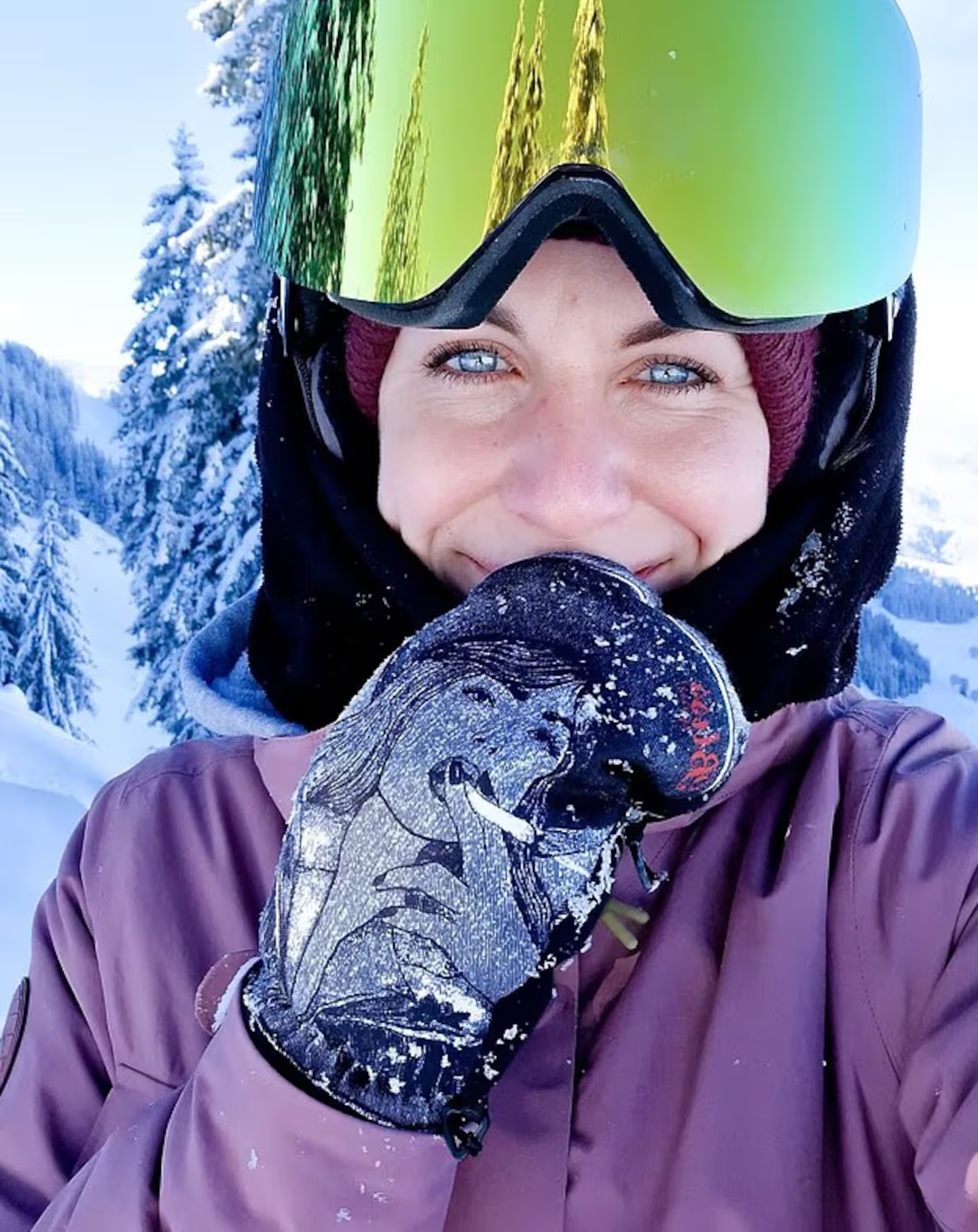
Webcam footage shown in court captured the couple’s headlamps near the summit late at night and the defendant’s light descending alone in the early hours.
During the trial, an ex-girlfriend testified that Plamberger had left her alone during a previous ascent of the same mountain in 2023 after an argument over the route. She described feeling dizzy and frightened in the dark after her headlamp failed, The New York Times reported.
The defence objected to suggestions that the earlier incident demonstrated a pattern of behaviour.
The presiding judge, Norbert Hofer, himself an experienced mountaineer and rescuer, said he did not consider the defendant a murderer but found that he had failed to properly assess his partner’s limits in extreme winter conditions.
“You have borne an incredible burden – you lost a person,” Mr Hofer told Plamberger. “You are an excellent alpinist, but someone who finds it very difficult to make the switch between your own limits and those of others.”
The court said mitigating factors included the defendant’s previously clean criminal record and the personal loss he had suffered. The verdict is subject to appeal.
Bookmark popover
Removed from bookmarks