Ships forced to leave cargo behind as heatwave hits one of Europe’s longest rivers
Temperatures peaked at 35 degrees in Budapest this week as much of Europe baked in an early summer heatwave

Europe’s second-longest river is experiencing unusually low water levels in Hungary, severely impacting shipping, agriculture, and local ecosystems amidst an early summer heatwave.
The critical situation on the River Danube has forced cargo ships to operate at a mere 30-40 per cent capacity, leaving more than half their cargo behind, according to Attila Bencsik, deputy president of the Hungarian Shipping Association.
He warned that shipping rates could surge by as much as 100 per cent due to surcharges imposed when vessels cannot sail fully loaded.
Temperatures in Budapest peaked at 35 degrees Celsius this week, as a heatwave across Europe has been linked to at least eight deaths.
Attila Szegi, a deputy spokesman for the Hungarian General Directorate of Water Management, noted that while low water levels have been recorded on the Danube previously, they typically occur later in the year, in August.
Szegi said that rain was expected in the Danube catchment area next week, which should lead to a slight rise in water levels and an improvement in the shipping situation.
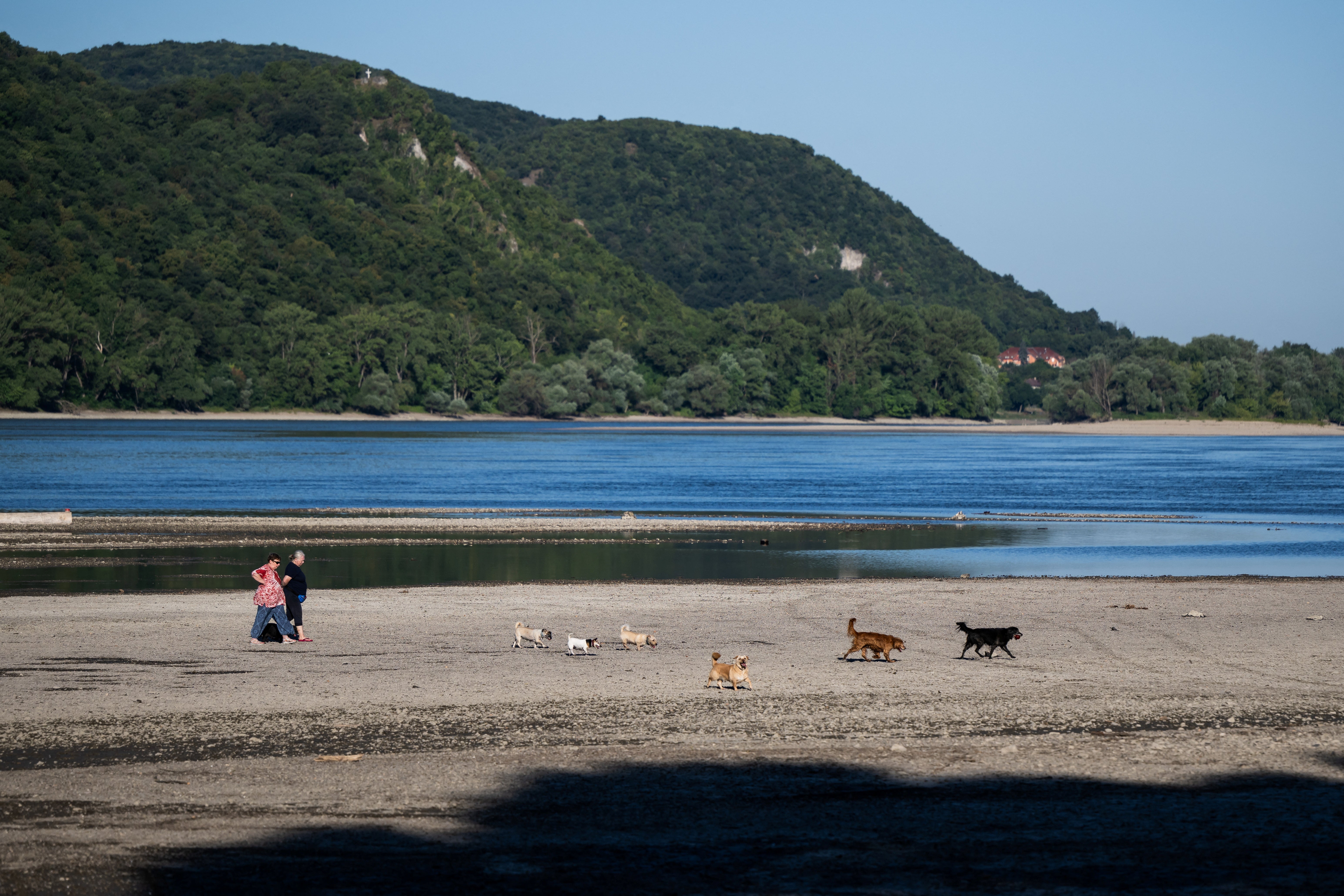
The Hungarian state meteorological institute HungaroMet said that rainfall in June was only 17 per cent of the average for that month, making this June the driest since 1901.
"June is one of the most rainy months of the year in our climate, and now we have this low water level," Gyorgy Matavovszki said, as he stopped with his kayak on a sandbank at Szob, a town north of Budapest.
"It has its beauty because the water is clear, it is easy to paddle in it ..., but it is worrying."
The Vistula river was at a record low in Warsaw, and the Rhine in Germany was also unusually low.
Michał Sikora, a meteorologist and hydrologist at Poland's IMGW, said that the Vistula River reached a record low level of 19 centimetres (7.48 inches) on Friday, adding that it is expected to decline further in the coming days, possibly to below 15 centimetres.
Join our commenting forum
Join thought-provoking conversations, follow other Independent readers and see their replies
Comments
Bookmark popover
Removed from bookmarks