A new pest threatens Italy’s risotto dish: the flamingo
Local growers patrol the rice fields day and night, blaring horns and banging barrels
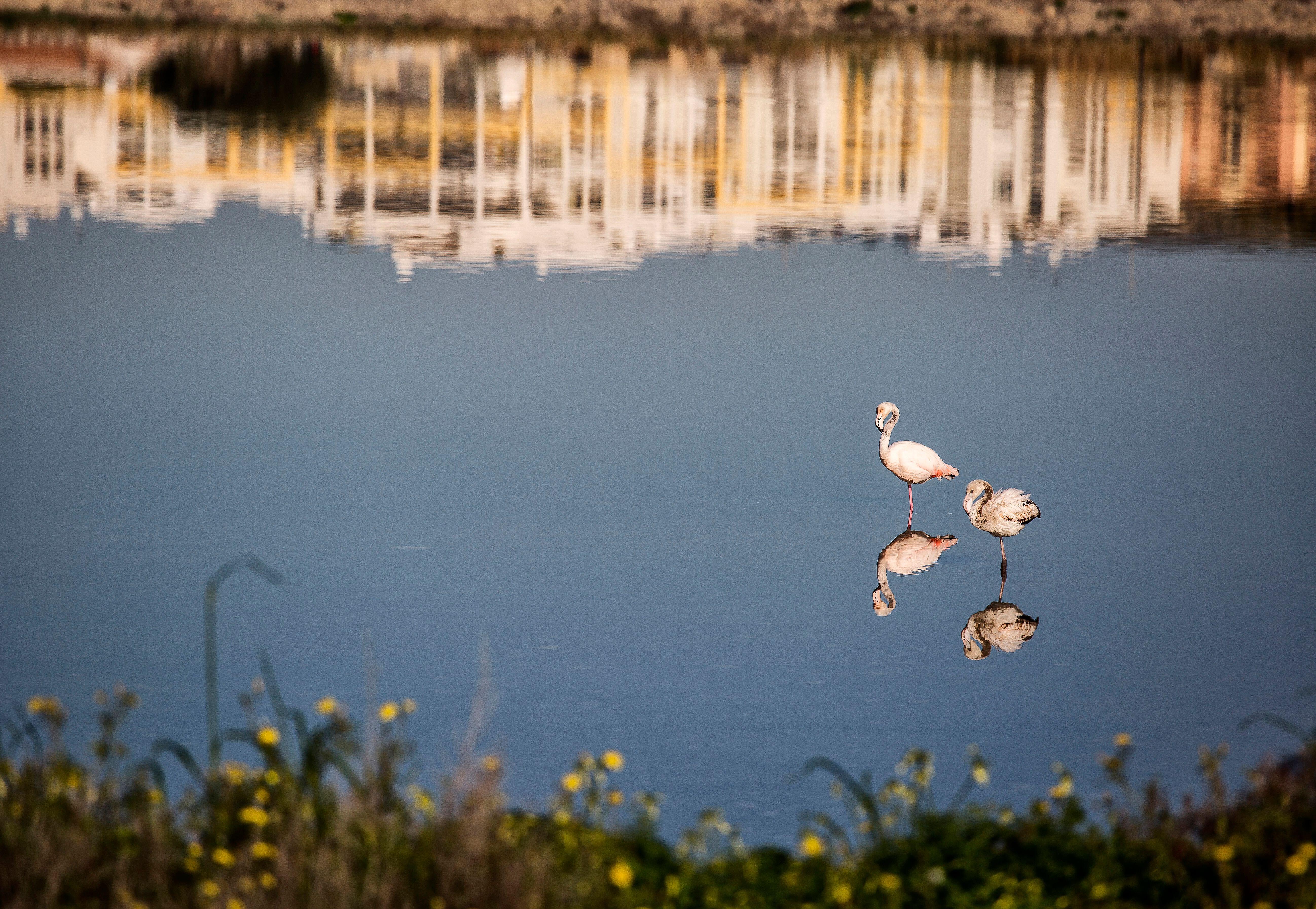
Farmers in northeastern Italy are grappling with an unexpected and colourful adversary: flamingos.
The recent arrivals are wreaking havoc on rice fields in Ferrara province, a key area for risotto rice production.
They do not consume the seedlings, but use their webbed feet to churn up the soil, dislodging mollusks, algae, and insects from the shallow waters. The rice crop is collateral damage.
Local growers patrol the fields day and night, blaring truck horns, banging barrels, and deploying small gas cannons that emit thunderous booms.
But these desperate efforts largely prove futile, merely sending the flocks to another nearby paddy to continue their destructive foraging.
Enrico Fabbri, a local grower, has reported production losses of as much as 90 per cent in some of his planted areas.
“These are new things that have never happened before. You invest so much time and care into preparing everything," Mr Fabbri, 63, said beside one of his paddies on the outskirts of Jolanda di Savoia.
"Then, just as the crop begins to grow, it’s like having a newborn child taken away. That’s what it feels like."

The flamingos appear to have come from their prior nesting grounds in the nearby Comacchio Valleys within a reserve on the coast, just south of where the Po River – Italy’s longest – flows into the Adriatic Sea.
The birds have been there since 2000, after drought in southern Spain sent them searching for nesting grounds further east, said Roberto Tinarelli, an ornithologist and president of the Emilia-Romagna Ornithologists Association.
Previously, they had been confined to lakes in North Africa, parts of Spain and a bit of France's Camargue region, Mr Tinarelli said.
There have not yet been any studies to determine why these flamingos started seeking food further inland, where farmers flood their fields from late spring to early summer as a means of germinating newly planted rice seeds.
Until the paddies are drained after a few weeks, the flamingos are a threat.
“Obviously, we are looking for answers from those who have to deal with the problem. From an environmental point of view, all this is beautiful, but we must keep in mind that rice cultivation is among the most expensive, extensive crops," said Massimo Piva, a 57-year-old rice grower and vice-president of the local farmers’ confederation.
“They are beautiful animals, it’s their way of moving and behaving, but the problem is trying to limit their presence as much as possible."
Mr Tinarelli suggested several solutions to fend off flamingos that are more humane and effective than the horns and gas cannons. He said paddies could be surrounded with tall trees or hedges, and water levels of freshly planted paddies could be reduced to between 2 and 4 inches (5 and 10 centimetres), instead of 12 inches (30 centimetres).
“This is sufficient for the rice to grow, but decidedly less attractive to flamingos, which must splash around in the water,” he said.
Bookmark popover
Removed from bookmarks