How robots are breathing new life into Pompeii’s shattered treasures
Many of the artefacts were damaged by bombing in the Second World War
A pioneering robotic system is set to revolutionise the painstaking task of reassembling Pompeii's ancient Roman frescoes, offering a new lease of life to artefacts shattered and buried for centuries.
Developed under the EU-funded RePAIR project, the technology combines advanced image recognition, AI-driven puzzle-solving, and ultra-precise robotic hands.
It aims to significantly accelerate the traditionally slow and often frustrating work of archaeological restoration.
Launched in 2021 and coordinated by Venice's Ca' Foscari University, the initiative was showcased in Pompeii on Thursday.
The archaeological site has served as a crucial testing ground for international research teams involved.
The experimental project "actually started from a very concrete necessity to recompose fragments of frescoes that had been destroyed during the Second World War", the site's director Gabriel Zuchtriegel said.
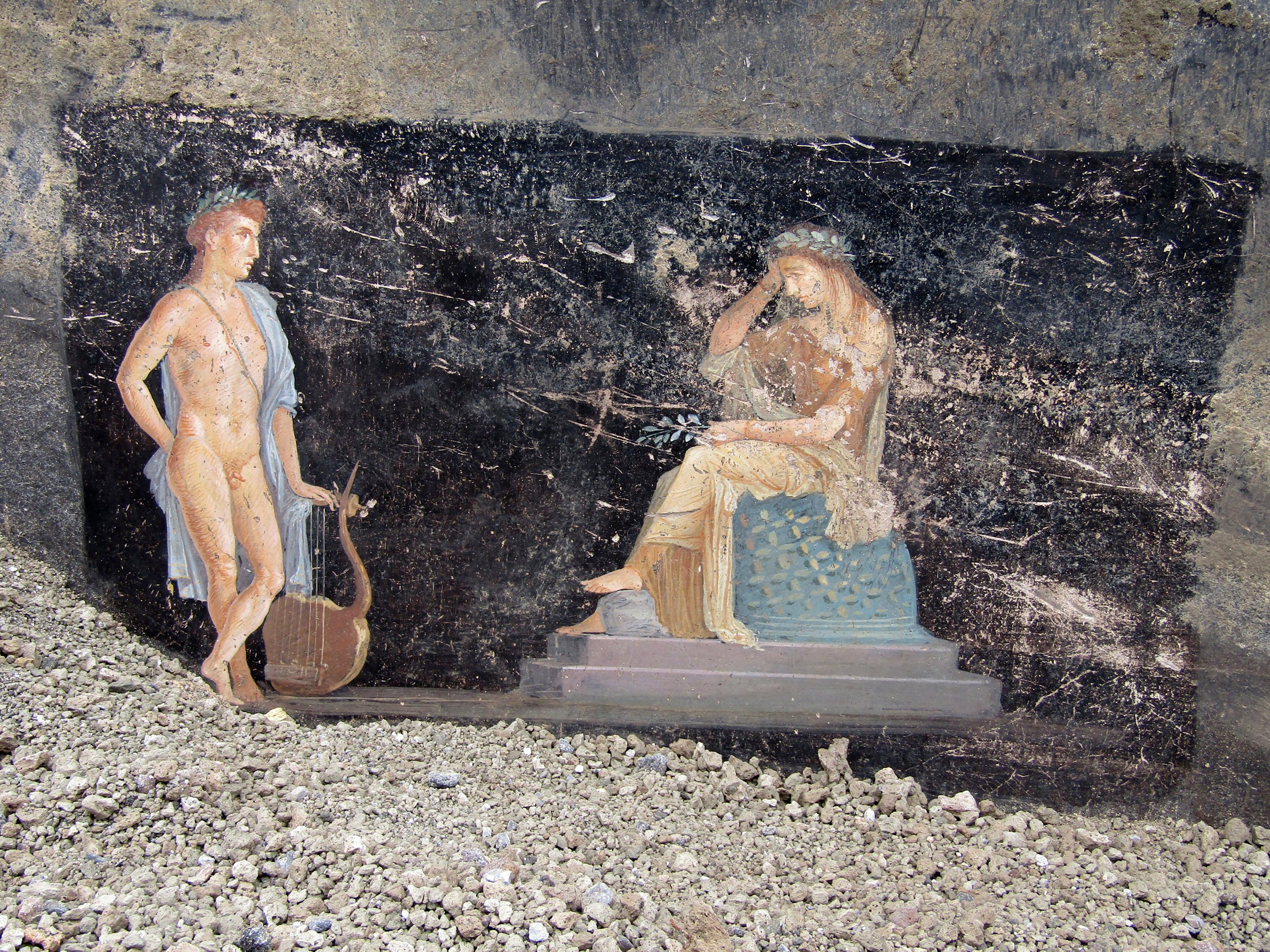
Researchers believe the technology could transform restoration practices worldwide.
The robot uses twin arms equipped with flexible hands in two sizes and vision sensors to identify, grip and assemble fragments without damaging their delicate surfaces.
The once-thriving city of Pompeii, near Naples, and its surrounding countryside were submerged by volcanic ash when Mount Vesuvius exploded in AD 79.
Researchers focused on frescoes preserved in a fragmentary state in Pompeii's storerooms – two large ceiling paintings which were damaged during the initial eruption and later shattered by bombing in the Second World War, and frescoes from the so-called 'House of the Gladiators' which collapsed in 2010.
Replicas were created during this initial testing phase to avoid risking the original pieces.

While the robotics teams worked on designing and building the system, experts in artificial intelligence and machine learning developed algorithms to reconstruct the frescoes, matching colours and patterns that may not be visible to the human eye.
Experts say the task is similar to solving a giant jigsaw puzzle, with extra difficulties such as missing pieces and no reference image of the final result.
"It's like you buy four or five boxes of jigsaw puzzles," said Marcello Pelillo, the Venice university professor who coordinated the project.
"You mix everything together, then you throw away the boxes and try to solve four or five puzzles at the same time."
Join our commenting forum
Join thought-provoking conversations, follow other Independent readers and see their replies
Comments