Germany raises alarm over Russia tracking army satellites as war expands to space
Germany’s defence minister warned conflicts of the future ‘will be fought openly in orbit’ after Russia was accused of tracking satellites used by the German military
Germany has raised the alarm on the growing threat posed by Russian space activities, warning that Moscow is using satellites to shadow those used by the German military and others.
Boris Pistorius, Germany’s defence minister, said two Russian Luch Olymp surveillance satellites were tracking Intelsat satellites, which are also used by other governments.
He stressed the need for talks on developing offensive capabilities in space as a deterrent, saying that Russia and China have “expanded their capabilities for warfare in space rapidly over the past years”.
“They can disrupt satellite operations, blind satellites, manipulate or kinetically destroy them,” he told a space industry conference in Berlin on Thursday.
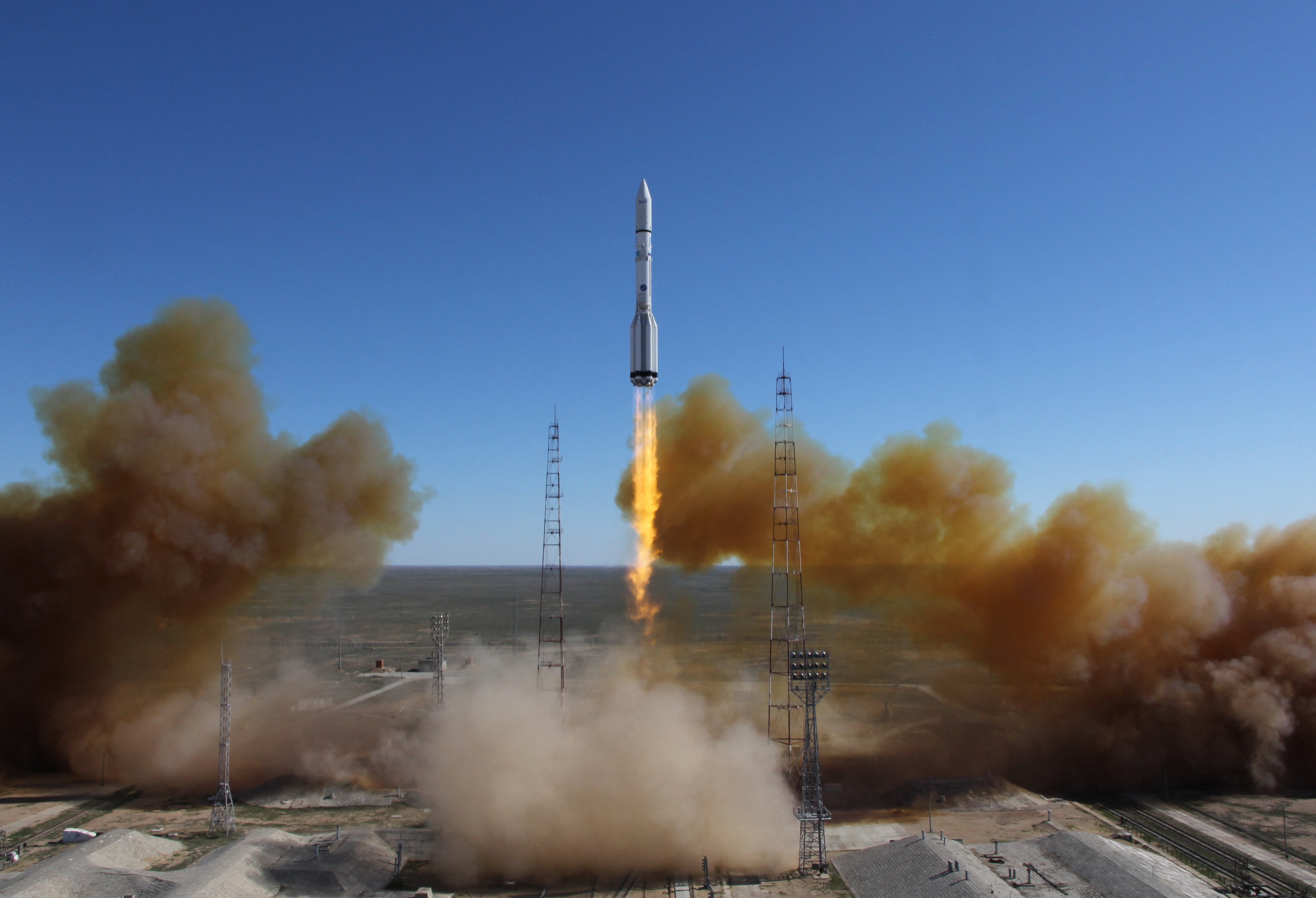
“Satellite networks are now the achilles heel of modern societies. Attacking them can paralyse entire countries.
“We know that the conflicts of the future will no longer be confined to the Earth. They will also be fought openly in orbit.”
Bleddyn Bowen, associate professor in astropolitics and space warfare at Durham University, said the two Russian satellites - one of which was launched in 2014 - have long been badgering British, American, German and French satellites.
He commented that Pistorius’s remarks sought to explain and justify why Germany - but also Nato on the whole - is investing more in space security.
“The language is quite a departure for Germany, France and Britain that have not really talked about these things in a public and explicit way, whereas 20 years ago it was only the Americans that were talking about space and the threat to their space systems,” Professor Bowen told The Independent.
“Now, they are all talking in the same way because they all can see the threats that the Russians and Chinese are posing. It is also why Nato declared space an operational domain back in 2019.”
Pistorius’s warning follows a series of security incidents across Europe linked to Russia’s war in Ukraine.
Denmark reported drones flying over multiple airports, forcing temporary shutdowns in Copenhagen, Aalborg and Billund. Danish defence minister Troels Lund Poulsen described the incursions as the work of a “professional actor” in what he called a “hybrid attack”.
Poland, Estonia and Romania have also reported breaches of their airspace in recent weeks, with Russian drones and jets entering Nato territory.
Nato warned it would use “all necessary military and non-military tools” to defend its airspace against such provocations, with some European leaders and US president Donald Trump suggesting members could shoot down Russian aircraft.
Western defence officials have increasingly identified space as a critical battleground, with satellites playing a vital role for military communications, navigation and intelligence.
Russia has not publicly responded to Pistorius’s allegations, but has previously been accused of moving its satellites alarmingly close to other satellites, and has long been suspected of developing anti-satellite weapons. China has also demonstrated similar capabilities.
Pistorius announced that Germany will invest €35bn (£30.6bn) on space security by 2030 to ensure “both protection and effectiveness” to counter Russia and China.
Pistorius told the conference that as he was speaking, “39 Chinese and Russian reconnaissance satellites are flying over us”, with their observations being transmitted in real time.
“So be careful what you say,” he said.
Join our commenting forum
Join thought-provoking conversations, follow other Independent readers and see their replies
Comments
Bookmark popover
Removed from bookmarks