How big is Ukraine’s corruption problem? The $100 million energy scheme scandal explained
Anti-corruption investigators continue to topple senior Ukrainian officials as part of a massive graft probe. James C. Reynolds reports
Ukraine’s anti-corruption agency has accused a former energy minister of laundering millions of dollars.
German Galushchenko, who led the department from 2021 until 2025, was detained by border guards on Monday as he tried to leave the country on a train, officials said.
Investigators said the charges were related to an alleged scheme involving offshore companies benefiting his relatives. Galushchenko - also known as Herman Halushchenko - has denied wrongdoing.
The arrest is the latest high-profile move under Operation Midas, a sweeping probe into allegations of graft around state nuclear power company Energoatom that has rocked the government at a critical time for diplomacy.
Anti-corruption investigators have rebounded after a law that would have limited their independence was scrapped under public and foreign pressure last year. But Ukraine still has a long way to go to fully rid itself of corruption, experts say.
What is Operation Midas?
Anti-corruption investigators announced Operation Midas last November as they identified a large-scale corruption scheme in the country’s energy sector. Midas takes its name from the king of Greek mythology, who turned everything he touched into gold.
Behind the probe was the National Anti-Corruption Bureau of Ukraine (NABU) and the Specialised Anti-Corruption Prosecutor's Office (SAPO), who said their discovery was the result of 15 months of wiretapping work and cited 1,000 hours of audio recordings and more than 70 raids.
At the heart of the probe was $100 million in funds that NABU said had been laundered by an alleged criminal organisation consisting of current and former energy officials, government ministers, a former deputy prime minister, and a businessman.

The accused are said to have manipulated contracts at Energoatom, Ukraine’s state nuclear energy company, to take kickbacks - secret payments, like a bribe, made in exchange for a favour.
NABU said the group took bribes from contractors worth some 10-15 per cent of each contract’s value.
Crucially, some of these contracts were handed out to build up fortifications against Russian attacks on energy infrastructure.
Meanwhile the winter - Ukraine’s coldest in more than 15 years - has hit hard as Russian strikes have left millions without power.
Who has been affected?
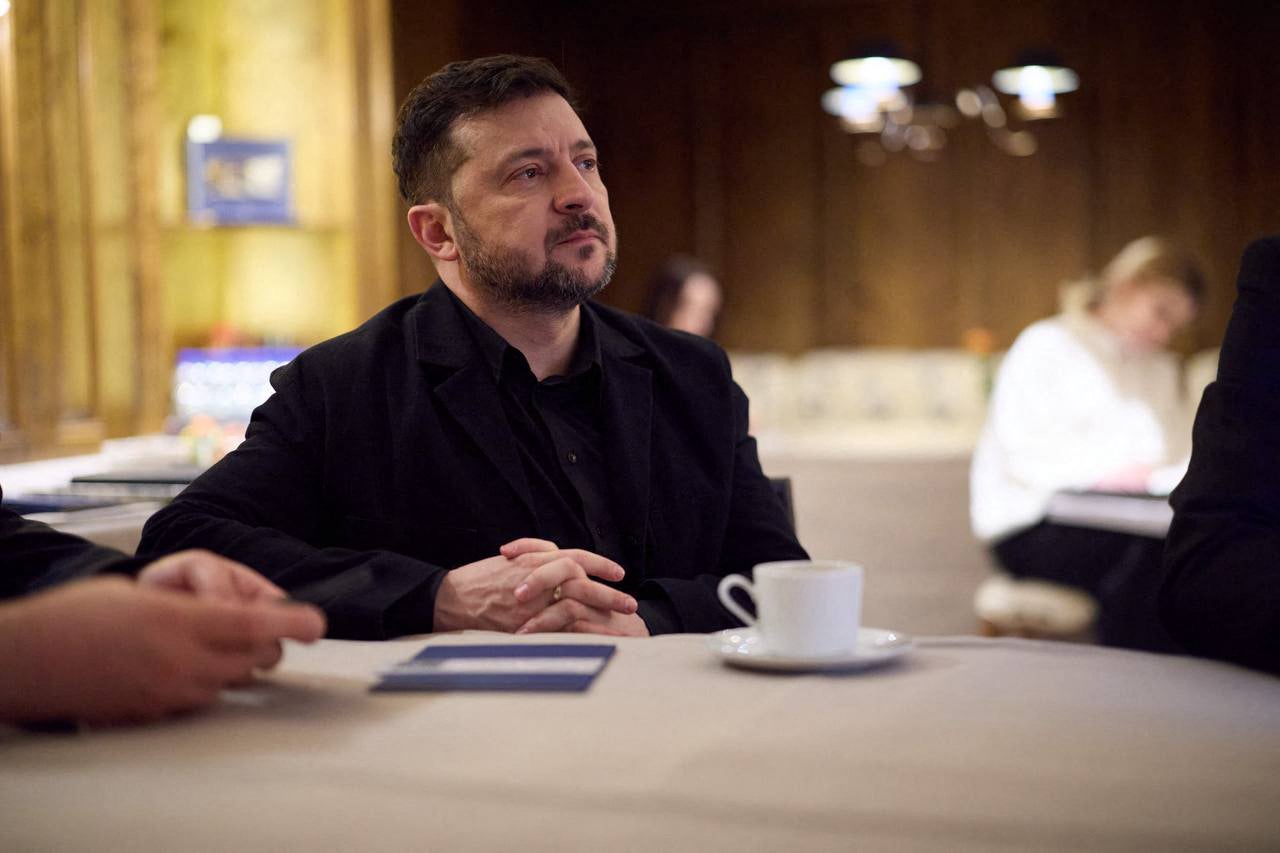
Investigators claim to have traced the scheme to Timur Mindich, a film producer and co-owner of Ukrainian president Volodymyr Zelensky’s former TV studio, Kvartal95.
The two were close until at least 2021, when Mindich held a surprise party for Zelensky at his flat, during the lockdowns.
Mindich fled Ukraine in the night of 10 November 2025, just hours before NABU enforcers raided his home.
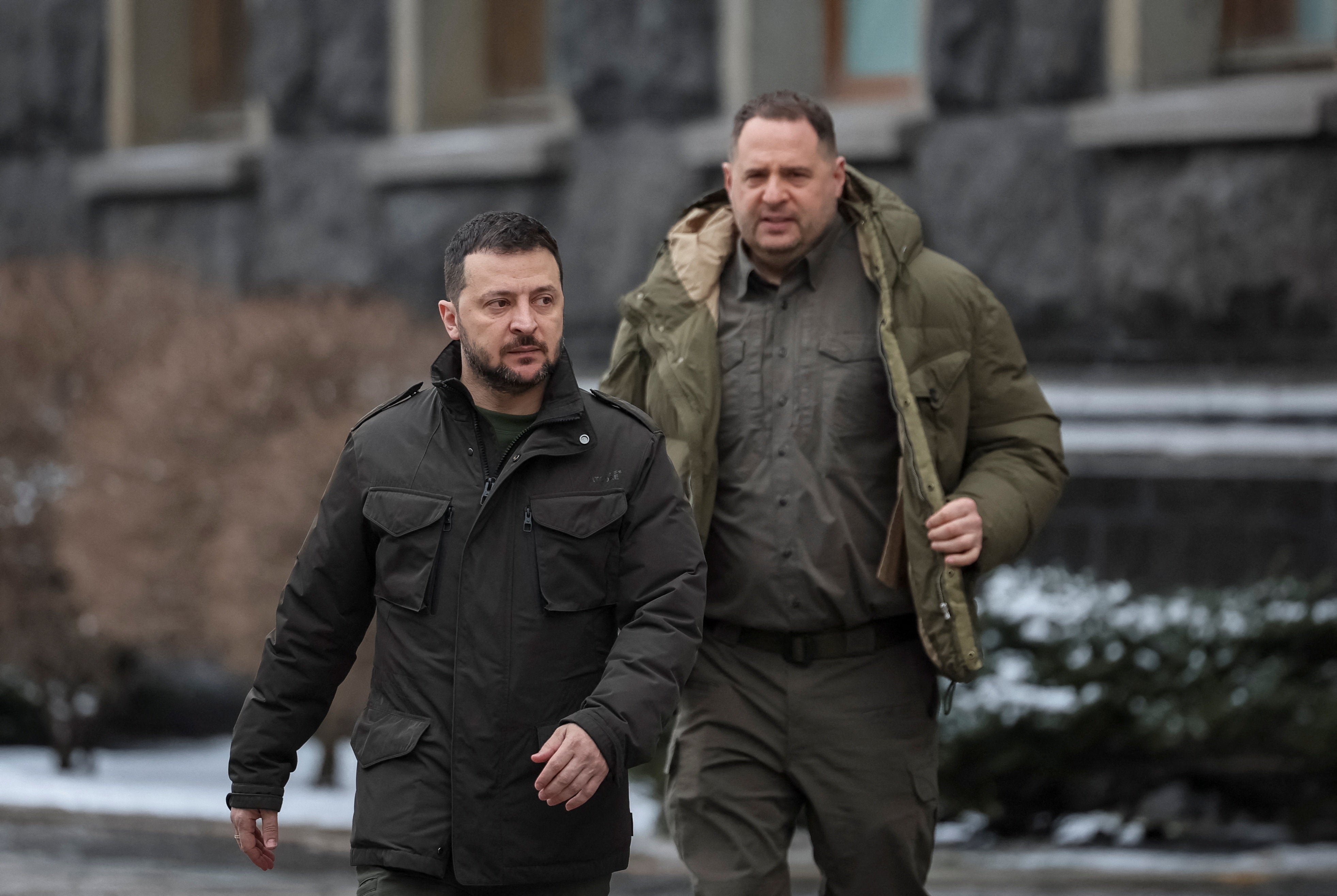
The case had continued to shake Ukraine’s top leadership and last year led to the resignation of Zelensky’s chief of staff, Andriy Yermak, following a raid on his home. He was not accused of wrongdoing, and said he would cooperate.
.jpg)
Prosecutors also claimed that Rustem Umerov, former defence minister and current secretary of Ukraine’s State Security and Defense Council, was pressured to buy cheaply made Chinese bulletproof vests at extortionate rates.
He has not been charged and has denied wrongdoing, saying the contract was terminated due to the product’s failure to meet requirements.
Investigators have made strides in their work since the government relented on a law that would have limited their independence last summer.
Ukraine saw the first major protests in the streets since the 2022 invasion in July after Zelensky suggested reining NABU and SAPO in to “cleanse” them of what he called “Russian influence”.
How widespread is corruption in Ukraine?
Ukraine inherited a legacy of corruption when it gained independence from the Soviet Union in 1991. Despite the considerable strides of NABU and SAPO since 2015, corruption remains endemic.
Today, 87 per cent of Ukrainians perceive corruption as a widespread phenomenon, according to a survey of more than 1,000 respondents last summer.
This is more sharply felt in rural communities. But only seven per cent of respondents believe corruption has improved as a whole since last year.
Last year, Transparency International - an organisation monitoring corruption around the world - gave Ukraine a score of 36 out of 100 in the Corruption Perceptions Index, with a lower score reflecting higher rates of corruption.
The UK, by comparison, received a score of 70 in 2025, reflecting a steady backslide from 82 over the last decade.
Andrii Borovyk, executive director at Transparency International Ukraine, said that despite limited improvements - such as a push for greater transparency on the handling of seized assets - reforms have been overshadowed by efforts to limit the independence of the anti-corruption agencies, until they collapsed under public and international pressure.

“Thanks to those protests, we were able to defend the independence of the anti-corruption bodies, and the resulting +1 point in the Corruption Perceptions Index can be viewed as a positive sign,” he said.
“This is the result of the work of the HACC, the NABU, and the SAPO—and the result of society’s efforts in defending their independence.”
Ukraine has a “concrete reform plan” available, the group assessed in its 2025 summary, but “did not demonstrate real progress or readiness to implement it”.
Battling corruption remains a key priority in Ukraine's reform effort as it eyes membership of the European Union, which requires the country shake off the decades-old scourge of graft.
As Operation Midas now continues to rock Ukraine, Energoatom CEO Pavlo Kovtonenko said last week that the company had taken a number of steps to prevent the recurrence of corruption schemes in the future.
Join our commenting forum
Join thought-provoking conversations, follow other Independent readers and see their replies
Comments
Bookmark popover
Removed from bookmarks