The US peace deal for Ukraine is just setting the scene for Putin’s next war
Ukraine is being asked to give up land and forget the appalling violence that it has suffered, writes Bob Seely. But peace is the last thing on Putin’s mind – winning in Ukraine and then humiliating the West remain his goals


Occasionally, I look back with curiosity at articles I wrote as a young foreign correspondent. One in particular from November 1994 caught my eye recently. I’d just spent four years living in Ukraine, and I was warning of what might go wrong.
I didn’t get it all right. But I did warn even then of the danger that Russia “relapses into imperial adventure”. Tragically, for a million people now dead and injured in the Russo-Ukraine war, and for wider European peace, that risk has become an appalling reality.
Let’s be clear: no one foresaw the scale of the disaster now unfolding in Ukraine, but there were a few of us who, even back then, saw the Russian bear unwinding its claws. We feared that Russian reform would stall. We feared, in some vague way, that a new visceral anger would replace that reform and combine with a desire to reconquer lost territories.
By reform, one wasn’t just talking about policy changes, but about a profound historical shift from a totalitarian society to an open one, from a planned economy geared to military production to one that produced goods and services that people wanted. Fundamentally, change would, at some deeper and permanent level, mean Russia having to confront its past, recognising the great, overwhelming moral crimes committed against millions of citizens by the Soviet Union.

Russia’s reform failed. It wasn’t inevitable, but it happened. In the chaos of the 1990s, Russians became disenchanted. Organised crime became powerful. The FSB, the renamed KGB – an organisation which employed and co-opted millions of Russians – remained in the shadows, and then reasserted itself towards the end of the decade.
In Vladimir Putin, the dark forces that controlled Russia found a man to reassert their interests. Once Putin was ensconced as prime minister, the country was immediately hit by a bombing campaign that killed hundreds, which provided the excuse to start a second Chechen war. That bombing campaign was very probably engineered as a false flag operation by the FSB itself. Whilst morally debased, the FSB know human nature well. They are experts at psychological manipulation. Chechens were blamed. A new war was started. Putin appeared as a source of strength and won the presidency easily. Those who tried to look into the bombings died mysteriously or were arrested. The FSB – along with organised crime – were back in power.
From then, and under Putin’s leadership, Russia has recreated a new form of integrated, permanent conflict. I tell the story of that new warfare in my book, The New Total War. In it, I make a series of arguments which were once controversial, but which are now increasingly accepted. One is that Russia’s war against Ukraine, and by proxy against the West, has been going on for longer than we think.
First, however, a brief description of this new theory of conflict: Putin’s Russia has invented a new form of total conflict, integrating all the tools of state power. The first characteristic of this style of warfare, as stated in Russian doctrine, is the integration of military and non-military tools – political, economic, information and “other”, within military doctrine. We may not think of some of these tools as the tools of conflict, but that’s not the point. It’s not our opinion that matters here, but that of Russia’s leaders. Russian doctrine sees non-military tools of state power as tools of conflict.

Ask most people when the Ukraine war started and some will say 2022, others who remember the first invasion might say 2014. Both are wrong. Using Russian doctrine to guide us – and in Russia doctrine is important as a statement of policy and intent – the Ukraine conflict started in 2005, after “pro-democracy” demonstrations.
The evidence and testimony I have seen and heard has convinced me that at that point Putin gave the order to use non-military tools of conflict to bring Ukraine back within Moscow’s sphere of influence. That non-military stage, from 2005 to 2013, was the first in this war. The 2014 invasion until early 2022 was the second stage, and the full-scale invasion from 2022 the third. At every stage, Putin has escalated when his previous strategy failed.
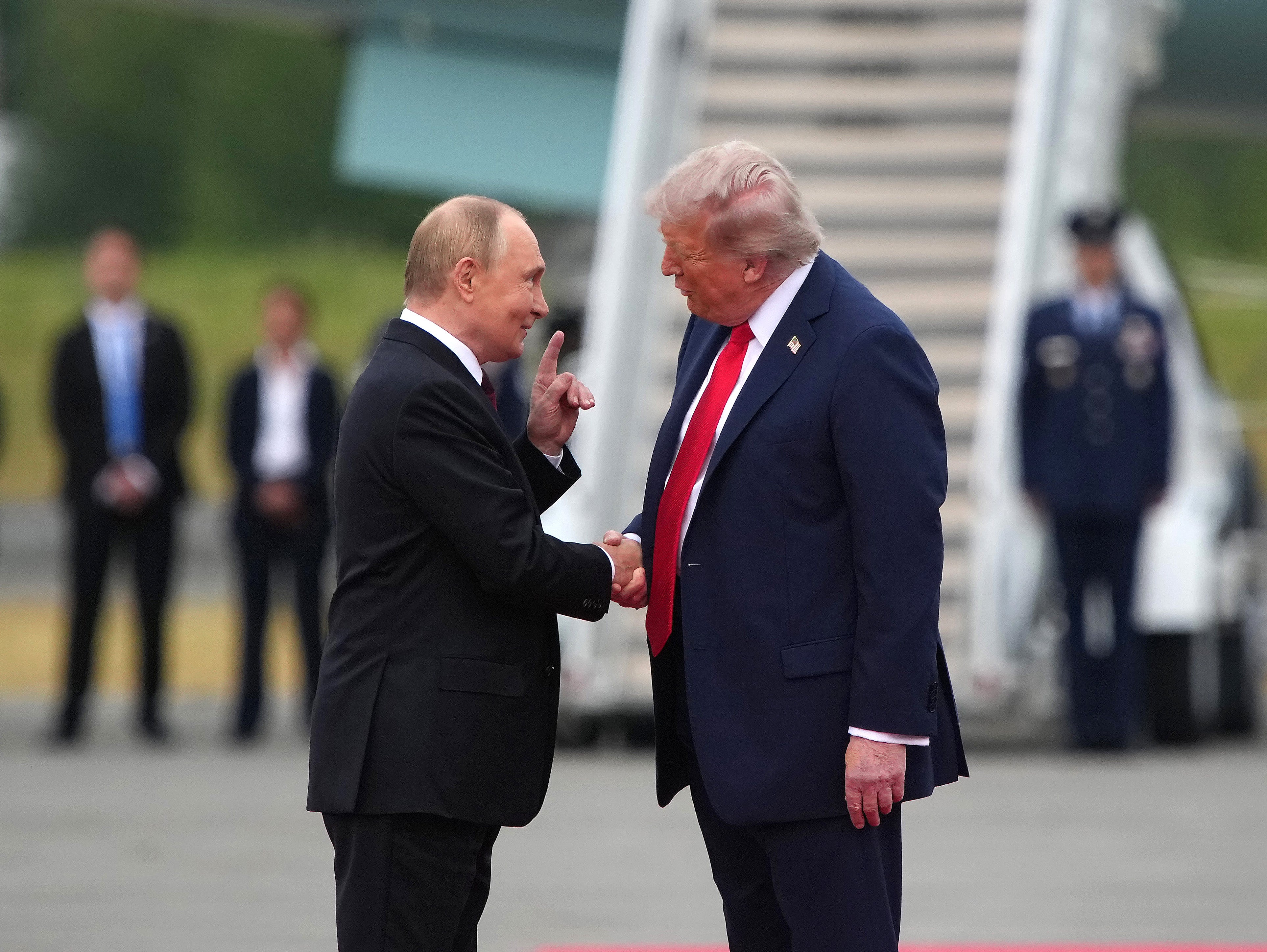
Similarly, shortly after the first phase of the conflict against Ukraine began, Putin tore up the post-Cold War settlement with the West. He did this in his speech at the 2007 Munich Security Conference. The tools increasingly being used against Western targets, especially in Eastern Europe and the United States, are disinformation and propaganda, manipulation of politicians, assassinations, and also sabotage. Just this week, railway lines in Poland were damaged. MI5 are picking up Russian agents in the UK regularly. Russia conducts GPS spoofing, whereby it broadcasts false global positions, endangering aircraft in the Baltic.
Perhaps the greatest damage being done to Ukraine now is by the “peace” being discussed between Russia and the United States. Don’t get me wrong, it’s up to Ukraine to decide when to agree peace, and on what terms. But we should be under no illusions: the US is sadly now trying to force Ukraine into a humiliating deal that will set the terms for future war. Volodymyr Zelensky, Ukraine’s president, understands the risks and has said his country faces a "very difficult choice: either losing [its] dignity, or risk losing a key partner", in an apparent reference to the US.
Ukraine is being asked to surrender land it has not yet lost, to give up on people living under appalling conditions, to forget the murder of its citizens and to accept the loss of tens of thousands of children stolen by the Russian state. These talks are not only – or even primarily, designed to bring peace, but to destabilise Ukraine and create conditions whereby political consensus breaks down. That, combined with Russian demands that Ukraine shrink its armed forces, will simply make future rounds of war more likely and more winnable for Russia. These peace talks are a shaping operation for the next stage of the war. Peace is the last thing on Putin’s mind. The defeat of Ukraine and then the humiliation of the West remain his goals.
Putin has three aims in his political life. Recreate Russia as a virulently anti-Western country, destroy Ukraine, and break Nato. He has achieved the first, he is working on the second, and he is making progress on the third, by driving a wedge between the US and Europe, using US and European politicians to achieve his aims.
There is a final reason I wrote The New Total War: our leaders struggle to grasp some of the aspects of this new form of conflict. My book is a warning. We should be in no doubt, Russian conflict is a blueprint for the wars of the 21st century.
It is a toolkit for authoritarian powers to weaken open and free societies. If we can grasp the nature of modern conflict and react to it, the West, and the international order we originally created, will survive. If we fail, the next few decades will bring the twilight of democracies. My work, my book, is intended to be an investigation into the style of conflict that will be, at least in part, waged to undermine our beliefs, our power and our influence.
Bob Seely is a former journalist and soldier and was the MP for the Isle of Wight from 2017-2024
Join our commenting forum
Join thought-provoking conversations, follow other Independent readers and see their replies
Comments
Bookmark popover
Removed from bookmarks