Rocket strikes, prayer and nightly calls from the Pope: Inside Gaza’s only Catholic church at Christmas
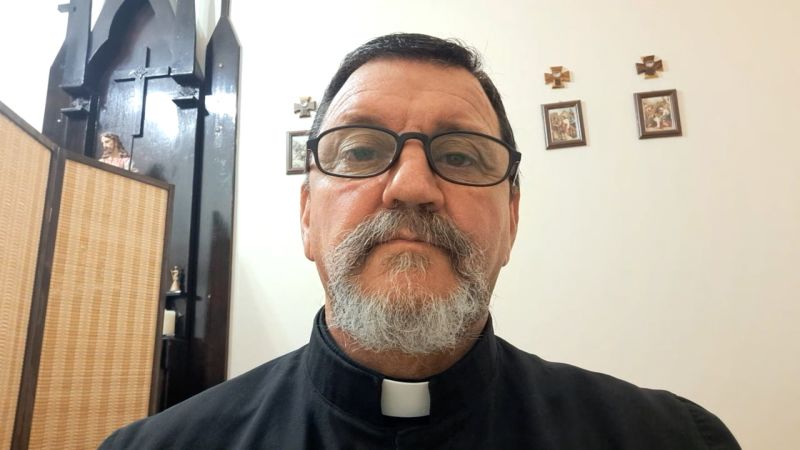
As Catholics in Gaza gather for Christmas, Father Carlos Ferrero tells Bryony Gooch how they have maintained faith in the face of widespread devastation
Of the 2.2 million people living in war-torn Gaza, fewer than 100 are Catholics.
But while small in number, their faith in the face of devastation remains strong and the strip’s only Catholic church plays an important role in the community.
Father Carlos Ferrero, the superior at the Holy Family Church in Gaza City, said the congregation has continued to worship through the worst times, even when the walk to the place of worship became a gauntlet of stray bullets and bombs.
“Yesterday and the day before there was a lot of bombing and shooting,” he told The Independent. “When you walk from the house to the church, you have to be careful that nothing falls on your head.”
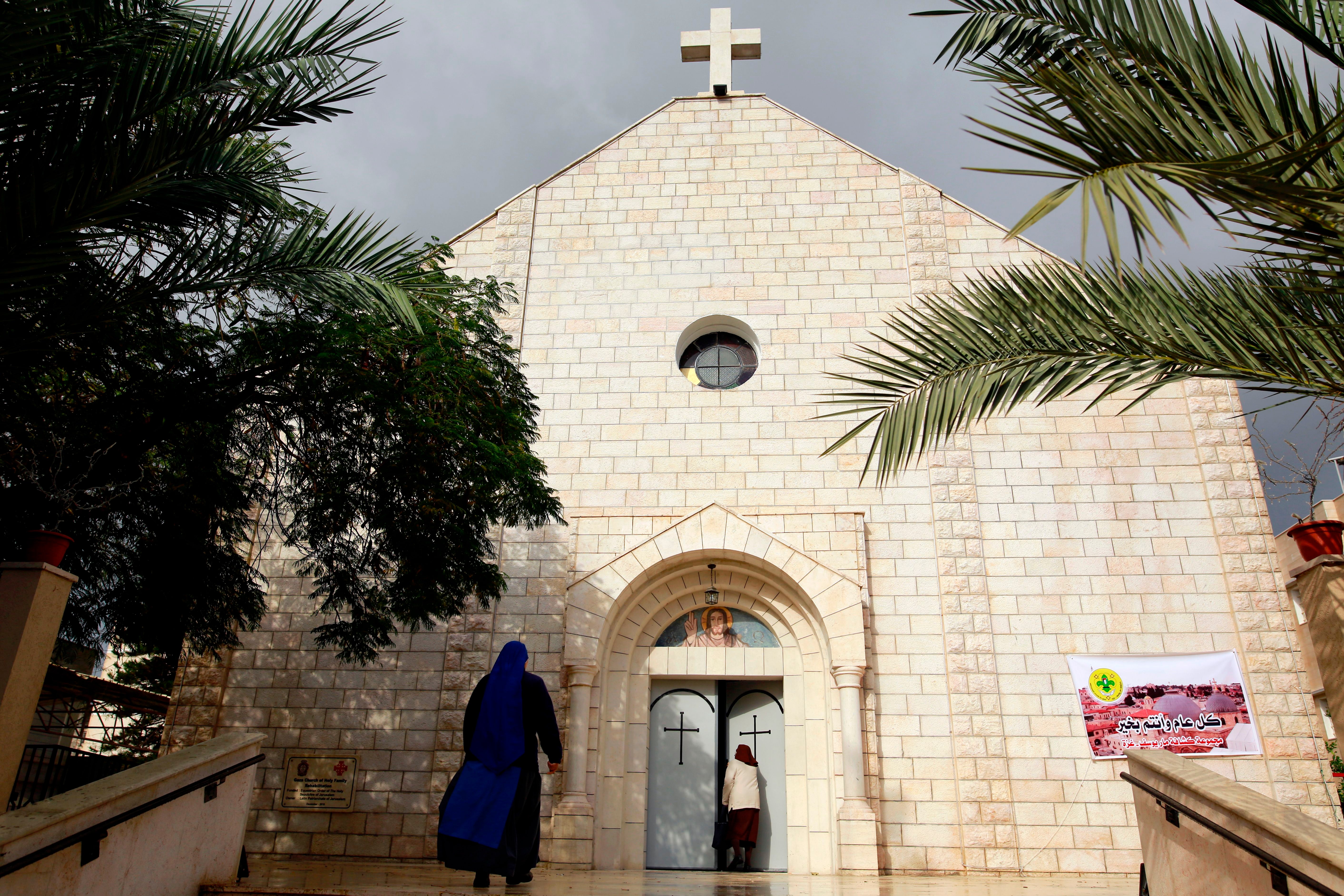
The church building itself has survived too, despite a strike in July which killed three and injured 17, including Father Gabriel Romanelli. A rocket came through the roof, which has since been rebuilt, but the cross that stands atop the front facade remains untouched.
“That was a very big sign for us as well – they couldn’t break the cross,” Father Ferrero said. “When the bombs are strong and near, the house shakes like in an earthquake. I don’t know if you have experienced earthquakes, but I have, and it shakes like an earthquake, but the church seems to be standing very strongly.”
When asked if he felt divine intervention played a part in the building’s survival, he replied: “God is always there.”
Since the Hamas attack on Israel in October 2023, more than 70,000 Palestinians have been killed, according to Palestinian health authorities.
Two years ago, there were 140 Catholics living in the strip, within a mixed Christian community of around 1,000, including Lutherans, Orthodox and Baptists. Now only 90 Catholics remain, and fears for the future continue despite a US-brokered ceasefire that began two months ago.
“Since the agreement, every day we hear shootings and bombings,” Father Ferrero said. “Every day, every night, during the day, any time. But not as many or as much as before, you understand, so... people can move a little more freely than before.”
Father Ferrero entered the war-torn strip in the middle of the conflict last year as part of a pastoral trip organised by Jerusalem Patriarch Pierbattista Pizzaballa in which he and Father Romanelli were both given permission to stay. Yet, despite the ceasefire, Father Ferrero remains reticent about the prospect of peace in Gaza as conflict continues.
“For us who are inside here, it is not clear how long it will take, what is the intention, how much good will they have really. We don’t see any machines coming to clear the rubble.
“There’s no intention to go to the second phase of the agreement. We hope it will happen. We pray that it will happen, and as much as we can, we ask everybody to push that way. But we are not sure about the future really.”
As war has raged, the church transformed from a place for worship and education to a refuge, and up to 400 refugees continue to stay.
Last June, it was forced to close its school, considered one of the best in Gaza, due to relentless bombing of the neighbourhood. Classrooms were transformed into sanctuaries for the refugees, with 12 to 15 people staying inside each room.
The school has since reopened, much to the joy of parents in the local area looking for a semblance of normality, but despite the ceasefire, there continues to be very little aid brought into Gaza.
“The help comes in but very little,” said Father Ferrero. “It’s not enough for the whole population. And something that strikes me really is that for business, there are things, for buying and selling, there are items, but for giving out relief, it is not arriving the same way. Maybe in the south there is more, but I live in Gaza City. When we get something that is bigger, we distribute [it] among the people around us in the neighbourhoods,” he added. “The people know that. So it’s not so easy, but everybody tries to cooperate.”
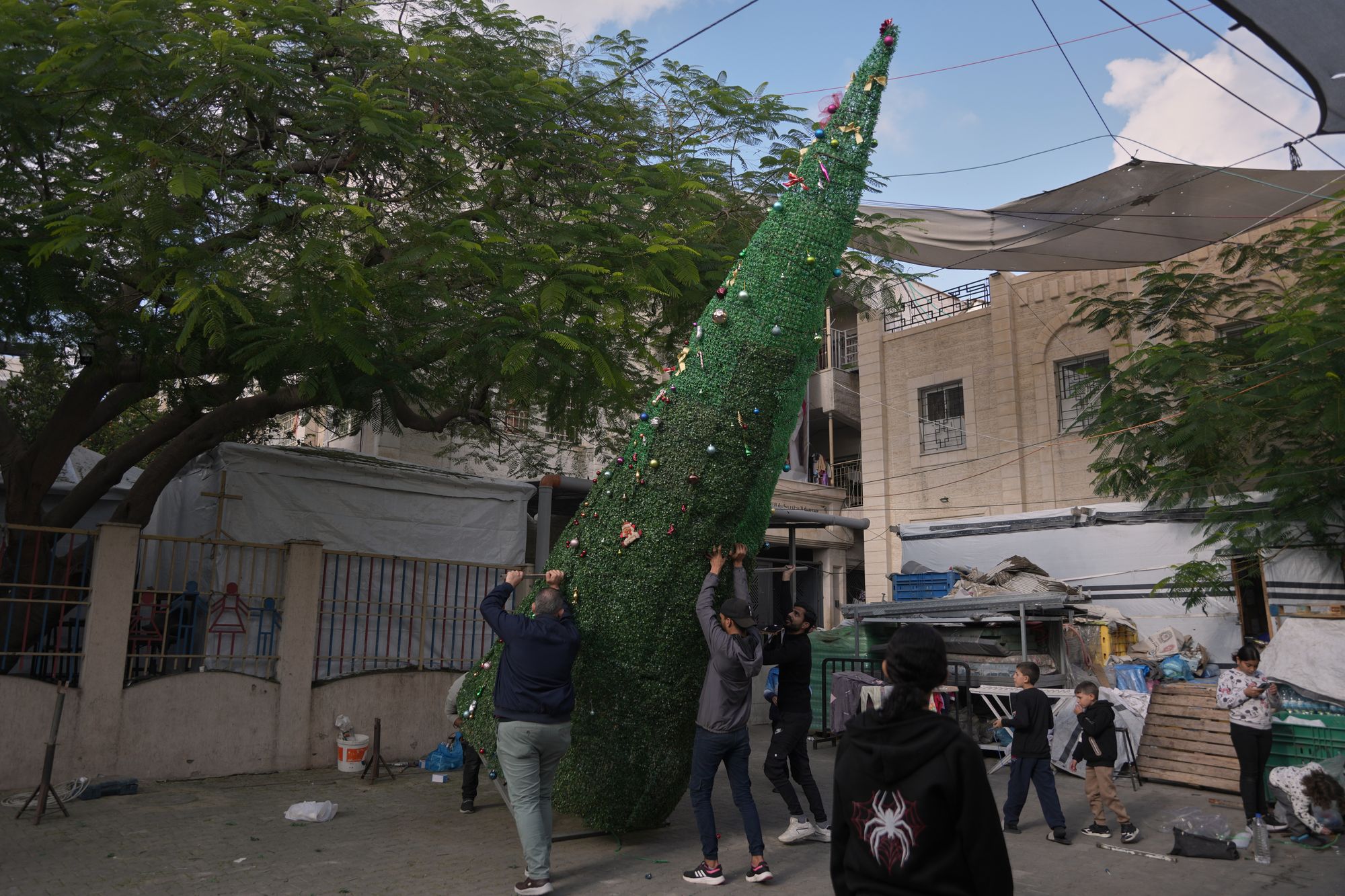
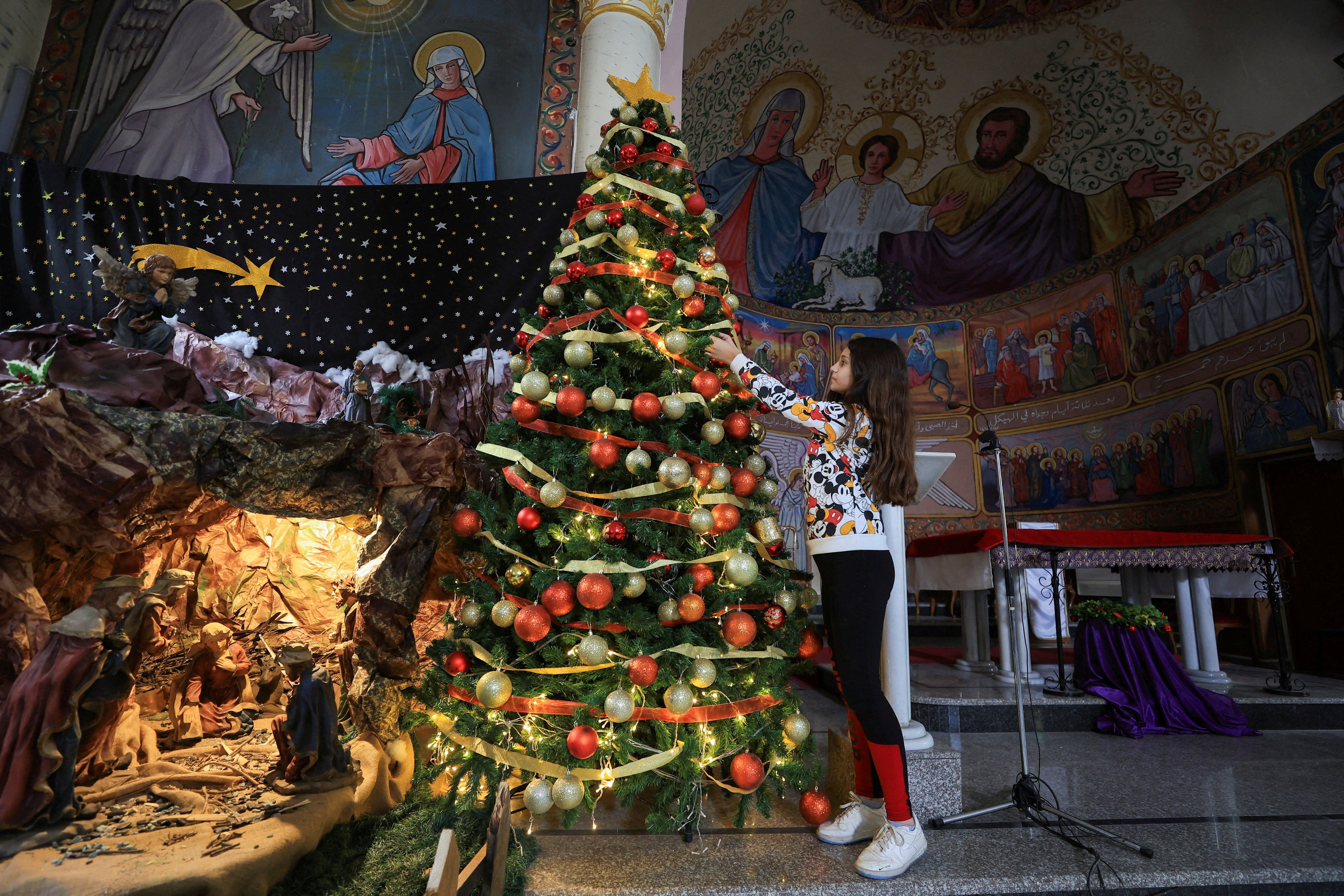
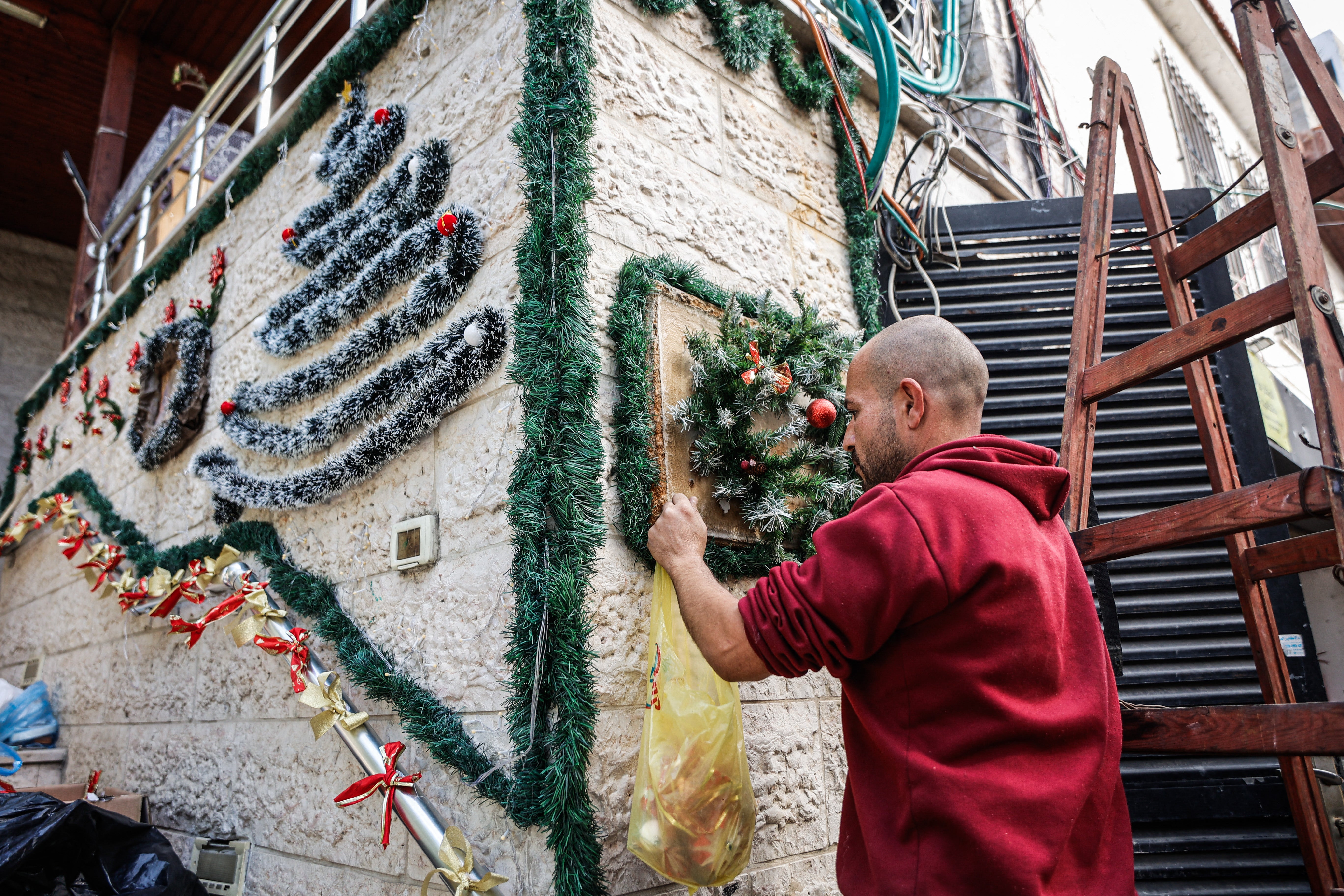
After two years of conflict and an uncertain future, the church’s Christmas will be a toned-down affair. Before the war, they used to put up a big tree outside the front. Last year, they didn’t put one up and Father Ferrero had expressed doubt that they would do it this year due to the ongoing suffering. However, pictures from Zeitoun showed Palestinian parishioners putting up a large Christmas tree at the entrance.
“We try to keep everything as normal as possible because that gives us hope. That keeps the spirit up, you know. So we need to do our best.... Christmas is always Christmas.”
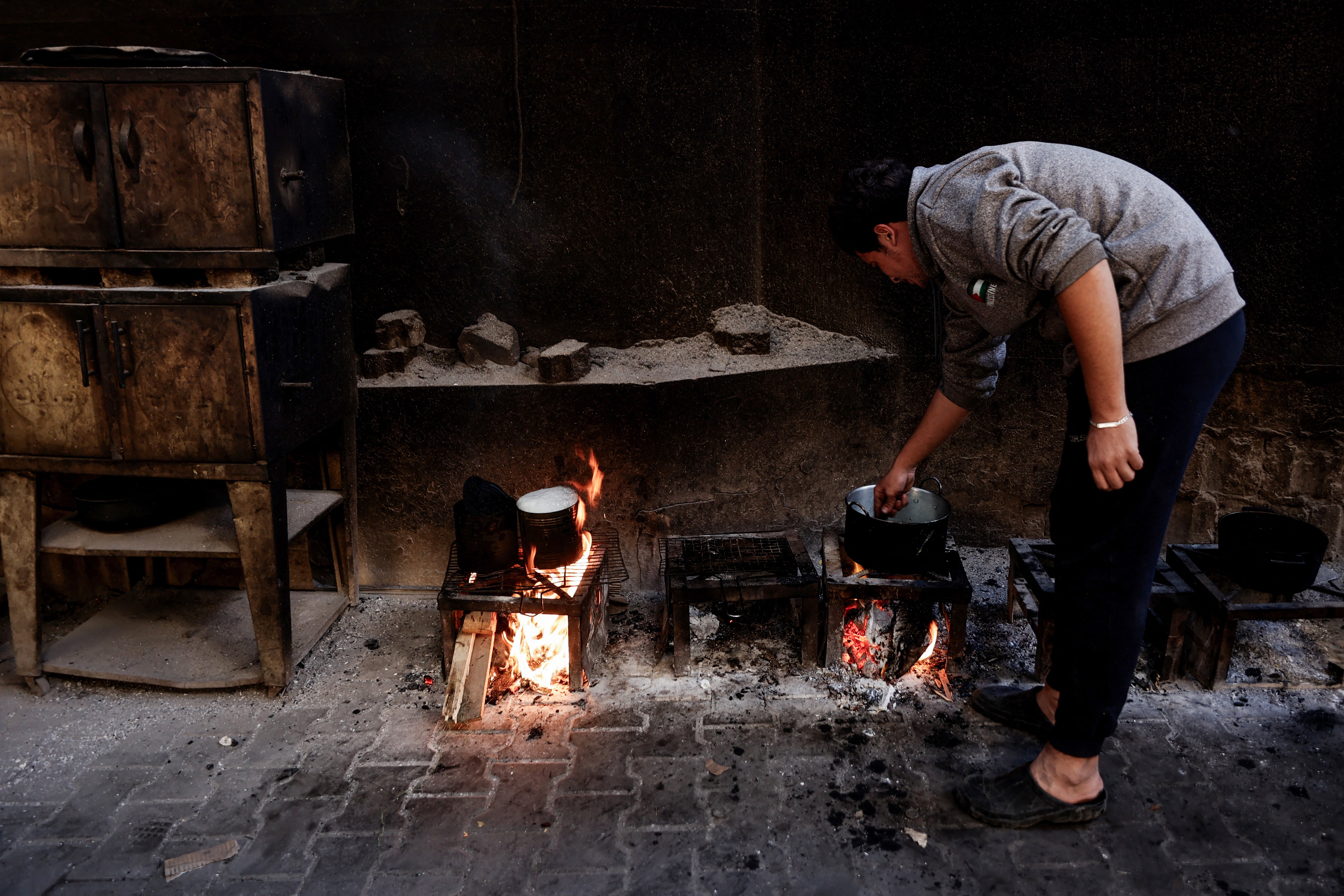
A spotlight fell on the congregation when it emerged that the late Pope Francis would call fellow priest Father Romanelli every night during the war.
Pope Leo XIV, who took up the papacy from Francis, has been in contact with the Gazan congregation and continues to show his support, albeit not as often.
“He’s not calling every day because that was really extraordinary,” Father Ferrero said. “The pope is new and has so many things to deal with that we understand very well he cannot be calling us every day. But he is in touch.”
Join our commenting forum
Join thought-provoking conversations, follow other Independent readers and see their replies
Comments
Bookmark popover
Removed from bookmarks