Syria’s mass graves haunt loved ones a year on from fall of Assad, as hunt for clues finally gets underway
Syria has not yet begun a wide-scale search for those missing after the country was gutted by autocratic rule, civil war and crippling sanctions, writes chief international correspondent Bel Trew in Sayyida Zeinab, southeast Syria
Anywhere you dig, you will stumble upon a body. That is the warning Hamza, 42, gives as he tentatively examines a bone he has just walked over. It looks like it might be part of a hip.
The Syrian father-of-three spent 11 years as a political prisoner, disappeared in the dungeons of Bashar al-Assad’s prisons during the bloody civil war.
Then, in December 2024, rebel forces led by Islamist fighter (now president) Ahmed al-Sharaa tore open the jails and set him free.
Hamza’s first act of freedom was to come to this patch of wasteland in his hometown near Sayyidah Zeinab, southeast of the capital Damascus. The local community believes as many as 1,000 bodies of people killed by regime fire or forces were hastily dumped across three mass graves here.
Together with a former cellmate Fouad Naal, another political prisoner swallowed by Assad’s prisons for 21 years, they founded an association of freed detainees and their families to try to seek justice. Step one is identifying the dead.
“Of course we don’t know who many of them are or who their relatives might be,” Hamza says, explaining how they have already documented and reburied 400 people in long lines at one corner of the field.
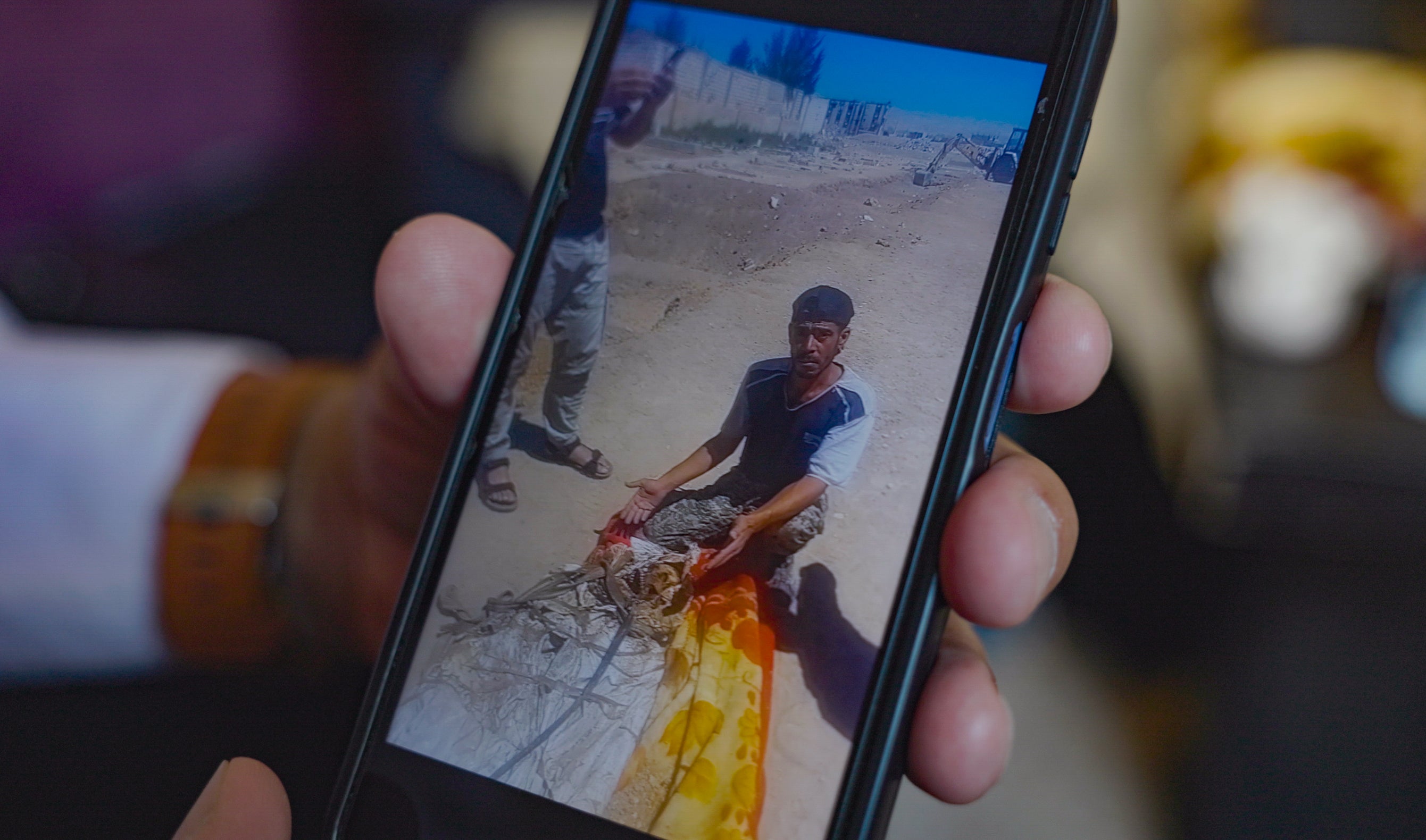
And they keep finding more. Just a few days before our arrival, they had stumbled upon the latest body in a blood-smeared body bag.

It held the corpse of a man, his femur snapped, his teeth smashed in, an electrical cable wound around his neck: telltale signs of torture and execution.
All they could do was take photos, perform funeral prayers and notify the authorities.
“Some of the families of the missing are, even now, clinging on to the hope that their loved ones are still alive and just being imprisoned somewhere else,” Hamza adds in desperation.
“What I saw in prisons was an indescribable number of people dying or being murdered.”
It has been a whole year since Bashar al-Assad, who ruled Syria with an iron grip for decades, was ousted from power. According to the Syrian Network for Human Rights, at least 181,000 people remain unaccounted for.
Many are thought to be buried across hundreds of mass graves, which still need to be unearthed, documented and recorded. That is a Herculean task in a country so gutted by 13 years of civil war, hefty Western sanctions and decades of authoritarian rule that the World Bank estimates it will cost over $216bn to rebuild.
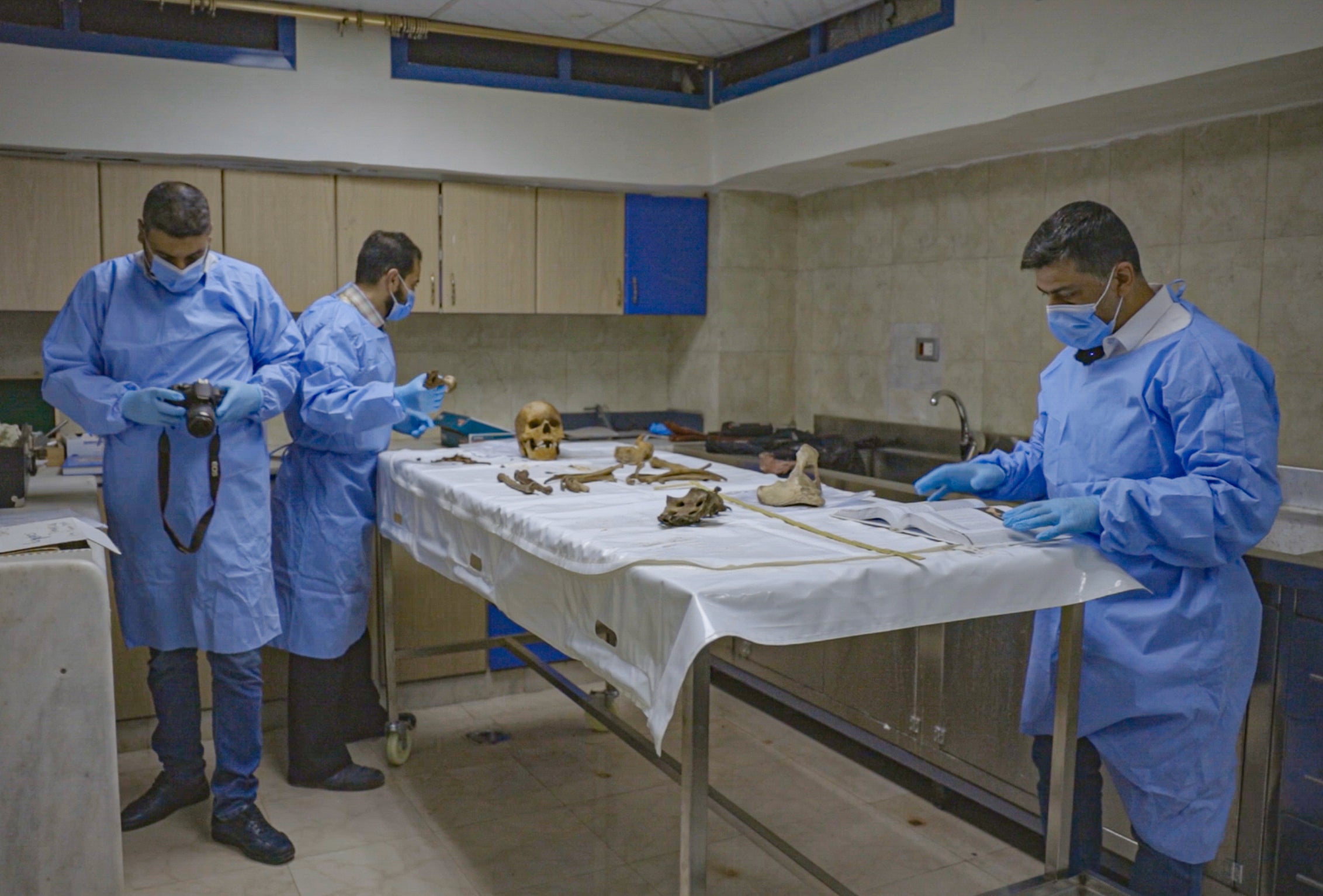
Dr Anas al-Hourani, a forensic dentist and head of the Syrian Forensic Identification Centre in Damascus, says these reasons mean they lack the proper equipment and mechanisms.
He has cupboards full of skulls and bones retrieved from across the Damascus region. In the first six months alone, the centre has received more than 150 bodies.

Because Syria has yet to begin the wide-scale exhumation of mass graves, Dr Harouni’s team has been working on bodies that have been found dumped above ground.
“We also have a problem with the retrieval process. It’s not being done scientifically. The body parts are mixed up,” he explains.
He says the International Committee of the Red Cross has helped provide tools, like dissection tables, kits for comparing bone types and photographic equipment.
But the key to truly finding the missing is DNA testing centres, which do not yet exist.
For now, they rely on more analogue alternatives like examining jawbones or ribs.
“But at least this is a glimmer of hope for the families of the missing. They are starting to believe it’s possible,” he says as he works his way through the latest skeleton.
“Just finding the remains or the grave of a loved one is like a new life for these families, who have been waiting for even the smallest piece of news for years.”

For more than half a century, the Assad family ran an industrialised system of disappearing, detaining, torturing and summarily executing its critics. This happened across a dizzyingly complex network of “Château d’If” prisons.
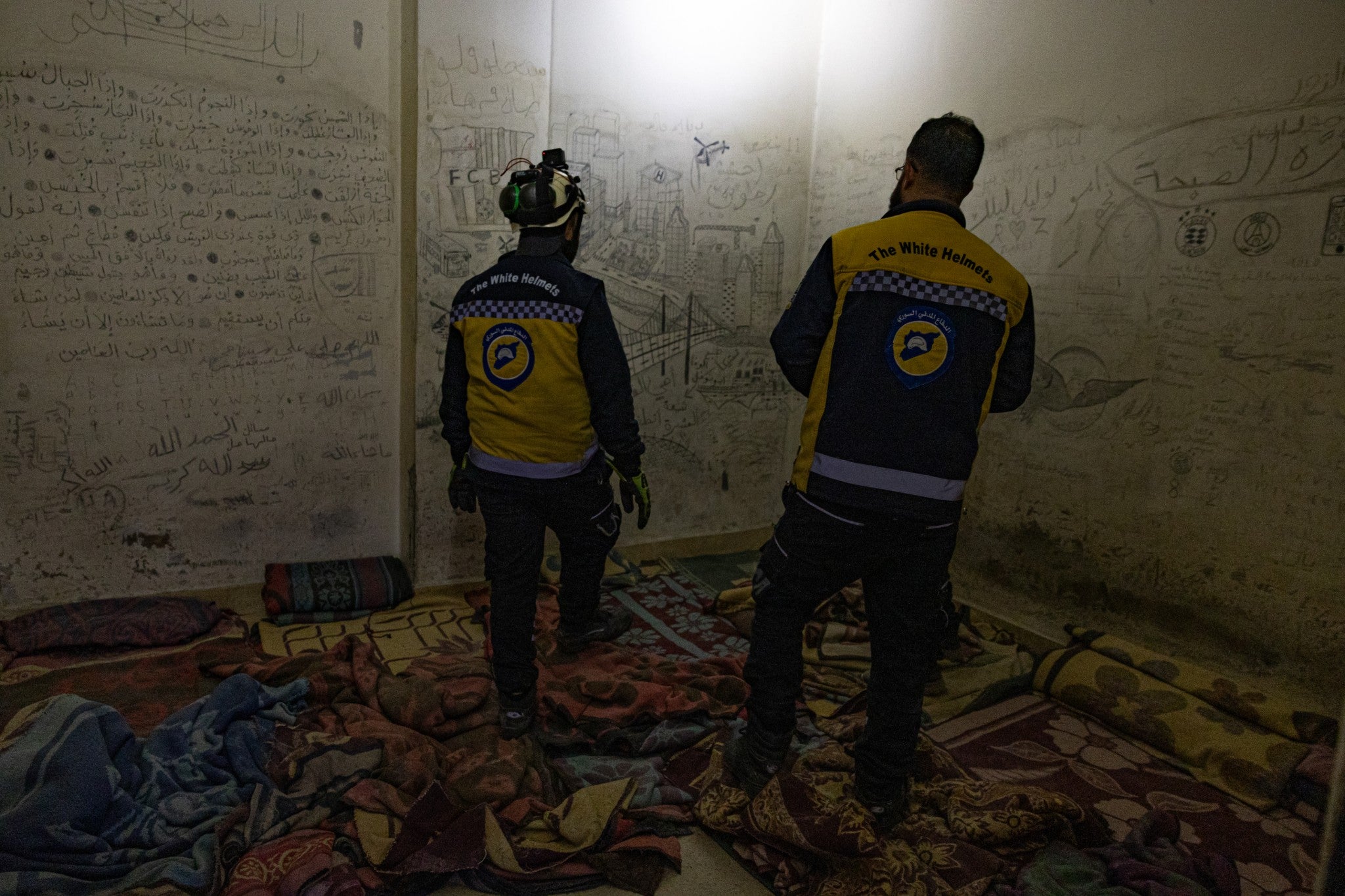
In half a dozen facilities visited by The Independent, evidence of torture remains visible. There are countless windowless solitary confinement cells not big enough to lie down in.
The regime often painstakingly documented the atrocities it committed. A military photographer and defector, codenamed Caesar, photographed 11,000 bodies of detainees showing signs of torture, illness and starvation between 2011 and 2013. The photos were so gruesome that, in 2019, they led US president Donald Trump to enforce crippling sanctions on Syria.
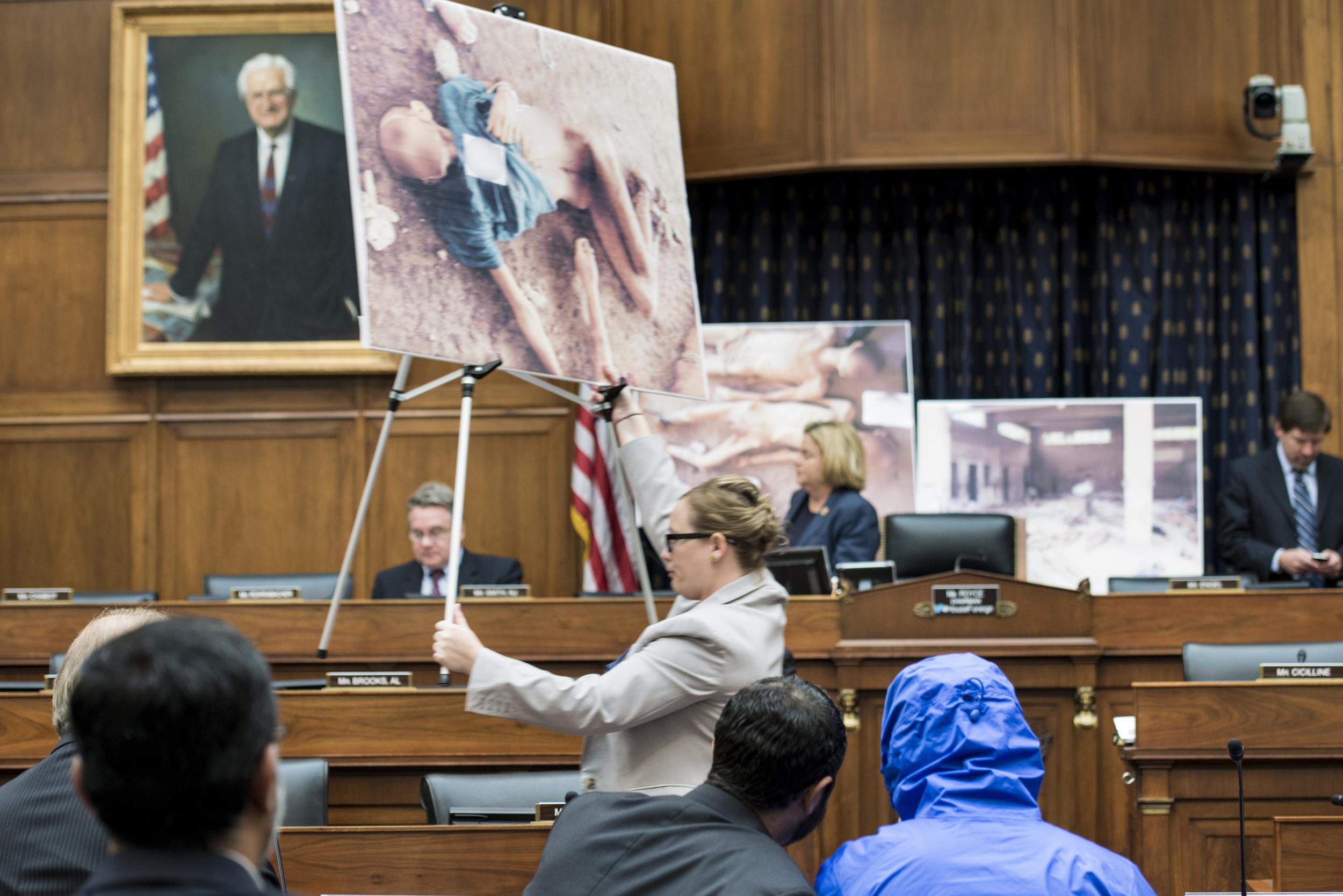
Since Assad’s fall, those sanctions had been temporarily suspended but were not fully repealed until earlier this month. “Being in Caesar’s shadow” has crippled the work of key international organisations, explains Mouaz Moustafa, from the Syrian Emergency Task Force (SETF) that originally helped smuggle Caesar out of Syria.
“It has prevented the high technology needed, the companies coming to clear rubble or do forensic analysis. It prevents long-term financial commitments,” he adds.
The SETF has worked on repealing these sanctions they helped push through originally. In December, the US Senate voted to permanently remove them. A day later, Trump signed the final repeal.
This will hopefully remove some of the roadblocks to moving forward with finding the missing.
In the interim, the country under its new ruler has tried to start identifying the dead.
In May, the new administration formed a National Commission for Missing Persons, tasked with gathering evidence of enforced disappearances under Assad.
The commission’s media adviser, Zeina Shahla, has admitted it has been slow but that the process is complex.
The commission has met Syrian advocacy groups and some families. In November, it signed a cooperation agreement with the ICRC and the International Commission on Missing Persons, which have global expertise on the issue.
Next year, Shahla told Reuters, the commission hopes to launch a database of all the missing using documents from prisons and other locations. But exhuming mass graves requires more technical expertise and probably will not happen until 2027, she added.

Fouad says in tandem, Assad’s victims want special courts affiliated with the United Nations to be created.
“If you want a country based on law and justice, there must be proper trials, there must be rights,” he explains.
Fouad’s own story is unimaginable. He was arrested in the early 2000s for criticising the state.
Regime interrogators abducted his four-month-old daughter and wife, held them and used them as a torture device against him to get him to sign blank confessions. He broke when they made him listen to his baby girl cry all night, after she was left hungry and freezing in a solitary confinement cell next door. He was brutally tortured for years.
“The most painful thing about prison is missing your children growing up. For 21 years, I couldn’t hold or see my kids,” he says, breaking into tears.
“I’m not going to forgive what happened to me but I’m not going to take revenge either,” he continues. “Everyone who has blood on their hands must face trial.”
Back in Sayyidah Zeinab, Hamza continues on the mission to identify the dead in the mass graves his community knows of. He says if they had access to the right equipment and team they could find “more than 1,000 buried here alone”.
“Those people have names, they have families, they have someone who cares. They need to have closure,” Fouad adds, as he looks out at the trenches behind him.
“We need justice in the new Syria.”
Join our commenting forum
Join thought-provoking conversations, follow other Independent readers and see their replies
Comments
Bookmark popover
Removed from bookmarks