Syrian rapper Al Darwish returns home to perform for first time in 13 years
‘Never in my wildest dreams did I think I could ever return to Syria,’ says the musician who fled his country in 2012
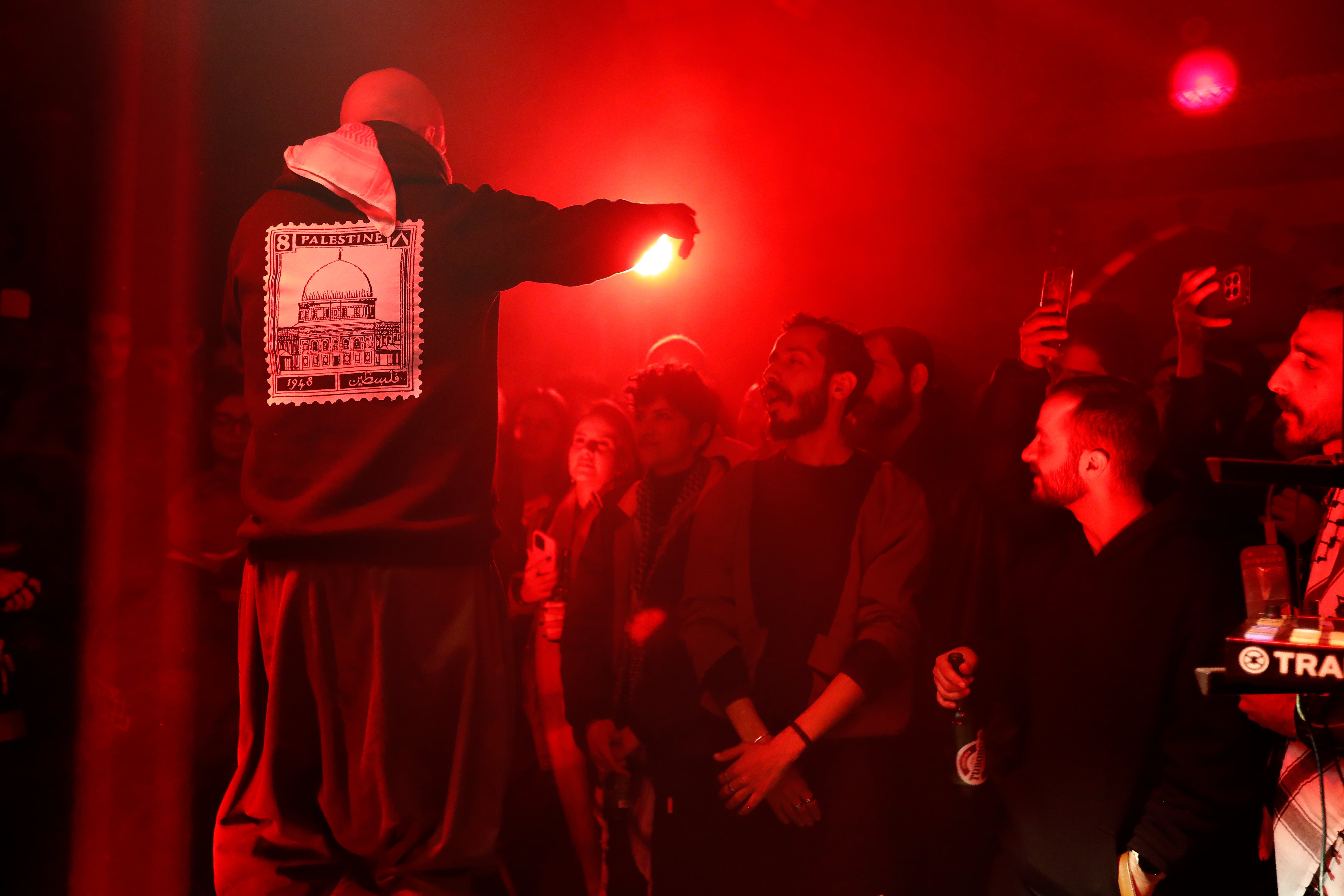
Hani Al Sawah, the rap artist known as Al Darwish, recently walked the streets of Damascus, Syria’s capital, with a profound sense of excitement. It had been 13 years since he last set foot in his homeland. That same night, he would perform his unapologetically political songs on Syrian soil for the first time since the Assad dynasty fell.
The musician could barely contain his emotions. "Never in my wildest dreams did I think I could ever return to Syria," he told The Associated Press after a sold-out show on 16 January, followed by another the next day. The audience sang along to every lyric, making it difficult for him to hear himself. "I have this weird feeling that I never left, or that I left a part of me here that I was able to find again," Al Sawah reflected.
During the 2011 uprising, before he fled Syria to neighbouring Lebanon in 2012 and later Germany, Al Sawah’s fiery lyrics about mass protests defying dictatorship illuminated a rap scene few imagined existed. His music also paid tribute to other anti-government protests across the region, and he witnessed months-long demonstrations in Lebanon shortly before his departure for Europe.
After leaving home, Al Sawah amassed a significant online following, with many Syrians both at home and abroad finding resonance in his music throughout the country’s devastating civil war.
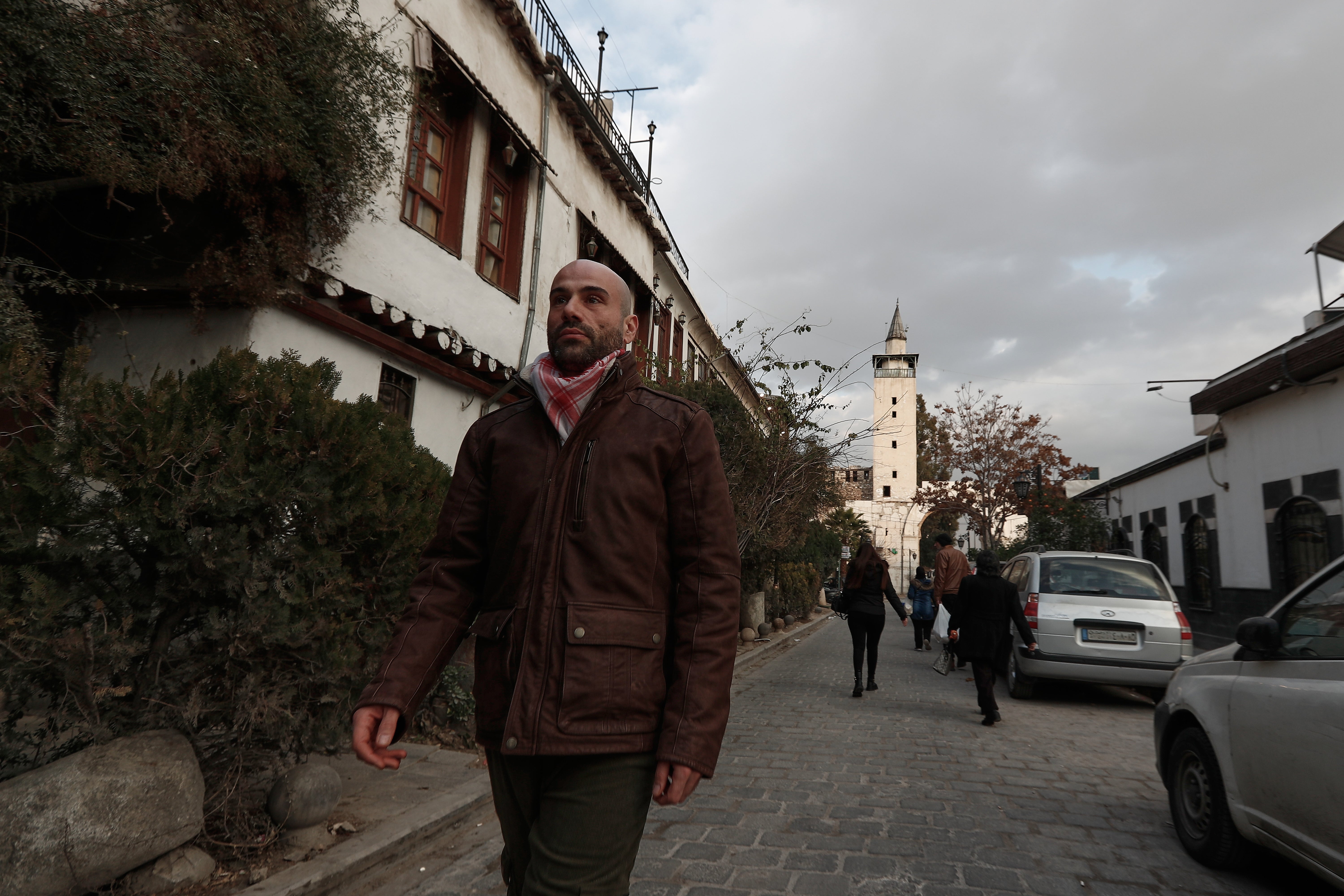
From his upbringing in Homs, Al Sawah has always possessed a rebellious spirit. Discovering rap music in 2001, he quickly realised it offered a powerful avenue for self-expression. He became part of an underground scene where he and fellow artists exchanged songs and ideas. "We had a nice scene at the time in Homs, of course everything was underground and nobody knew anything about us and that we were rapping," he said. Authorities frequently stopped him and his friends, questioning their attire, which they claimed resembled "devil worshippers."
Others dismissed the hard-hitting genre as representing Western culture and imperialism. "There was the saying: Eat what you want but dress as the people want," he recalled.
Al Sawah was elated and inspired by the uprising against Syrian President Bashar Assad and his government, particularly when mass demonstrations swept through Homs. He secretly attended these protests, defying his father’s orders, who feared for his life.
Though more than a year has passed since a lightning insurgency in December 2024 brought down the Assad dynasty’s half-century rule, Al Sawah only visited last month. While hopeful that the new rulers in Damascus will build a just and prosperous country, he remains concerned about incidents of violence that quickly turned sectarian.
Al Sawah felt compelled to return home, to see his father and to witness life in this new chapter of the country’s history. "What happened here were fast and sudden changes, and we’re only talking about Damascus," the rapper observed after a stroll on a boulevard in the capital. "Sure it changed, but not like my city of Homs, Aleppo, or any of the cities where two-thirds or three-quarters of it were destroyed."
Speaking with friends and others, Al Sawah was surprised by a palpable fear of criticising the new authorities, something he described as "inherited" from decades of living under Assad and his family’s extensive security apparatus. "If we want to say that the regime really did fall, then so should this fear," he asserted.
This lingering fear does not diminish his joy at Assad’s departure, but online, he has spoken out against sectarian violence and how some who would oppose it under other circumstances attempted to justify it. He referred to a government counteroffensive against armed Assad loyalists of the Alawite religious minority along the coast, which later escalated into widespread revenge attacks targeting the community.
Last summer, government forces intervened in the Druze-majority province of Sweida, ostensibly to halt clashes between Druze militias and armed Bedouin tribes, but clearly siding with the latter. Both incidents resulted in hundreds of civilian deaths.
"If you can justify what happened on the coast — which of course you can’t — by saying they were armed (Assad) loyalists and so on, then you cannot justify what happened in Sweida," he stated, calling it a "fatal error" in the Islamist-led government’s efforts to win the support of minorities and unify the country.
During his performance, Al Sawah paid tribute to the coastal province and Sweida in one of his songs, admittedly nervous about the crowd’s reaction. To his surprise, they cheered and applauded, a response that filled him with hope. "This is the reaction I was looking for," he said. "It’s what encourages me to come back."
Join our commenting forum
Join thought-provoking conversations, follow other Independent readers and see their replies
Comments
Bookmark popover
Removed from bookmarks