Hitting Poland with drones is just the start – these countries will worry about what comes next
The Nato response to Russian drones targeting Poland must go beyond diplomatic disapproval – and result in real action, writes Keir Giles. Failure to do so will encourage Putin to test the West’s resolve in yet more countries


Poland is in crisis mode after a mass Russian drone incursion into Polish airspace. How Europe and Nato respond is vital not just for Poland itself, but also for any other country that needs to see Russia deterred instead of emboldened.
This is not the first time Russian drones have entered Polish airspace, but the Polish response makes clear that this is an entirely different situation from previous incidents that could have been explained away as unintentional. Poland’s unequivocal designation of the incident as an act of aggression leaves no room for misinterpretation.
That also means that the incident is a test for Nato. Article 5 of the North Atlantic Treaty is famously vague both about what constitutes an “armed attack” and what Nato member states must do in response to it. But the one entirely clear thing is that an attack on Poland has to be treated as though it were an attack on every Nato member state. That means that if called upon, countries like the UK, France, and even the United States are treaty-bound to respond to this incident as though they were the victim as well as Poland.
For the time being, Poland has not raised the issue of Nato responding under Article 5. Instead, it has invoked Article 4, which provides for consultations between Nato member states in response to a crisis. That’s a softer option for Poland, for Nato, and for Nato allies that may still be hesitant about confronting Russia.
Based on the consistent pattern to date, Russia can be fairly confident that the United States under Donald Trump will not respond in any meaningful way. But Russia’s plans for Europe depend on Trump remaining as compliant and passive for the continent as a whole as he has been over Ukraine. Russia needs reassurance that the United States will not respond – and incidents of this kind, together with the recent attack on a US-owned factory in western Ukraine – are a means of providing it.


That’s of critical importance for Poland’s neighbours – and not only those in Nato – who will fear that what’s happened overnight is just the start of more Russian probing and testing of other countries. Latvia and Lithuania may be particularly worried about what comes next.
The role of Belarus is now in sharp focus. A “large proportion” of the 19 drones that crossed into Poland came from Belarus territory. Officials there have said that this was accidental and the result of navigational jamming. They add that Belarus was in communication with Poland throughout the incident.
Belarus is often caricatured as a helpless tool of Moscow, with no capacity to act independently. The regular Zapad Russian-Belarusian military exercises are about to begin. That’s always a time for heightened attention to what Russia could potentially do to European neighbours from Belarusian territory – including Poland, Latvia and Lithuania. But that doesn’t necessarily mean Belarus is about to be part of a land attack on Nato. It’s not in Belarus’s interests to be dragged into the Ukrainian conflict any deeper than it has to be – still less if it involves its European neighbours.
There’s circumstantial evidence to suggest that Russia’s original plans saw Belarus taking a much more active part in the invasion of Ukraine, but the Belarusian armed forces refused. It’s unlikely that this will be confirmed or denied beyond doubt in the foreseeable future.
Meanwhile, the “accident” version of events presented by Minsk does give Russia an opportunity. If Moscow feels that now is not the time to escalate with Nato – or if Europe offers a robust response – it can use this as a means of defusing the situation. In any event, the strikes on Poland provide Russia with a useful opportunity to probe and test the resolve of Nato and the United States.
Polish airports were closed during the incident, as all Ukrainian airports have been since February 2022. It’s a tiny sample of the kind of disruption that Russia can inflict even on countries that it is notionally at peace with – and if not adequately deterred, there is little doubt Russia can and will do more.
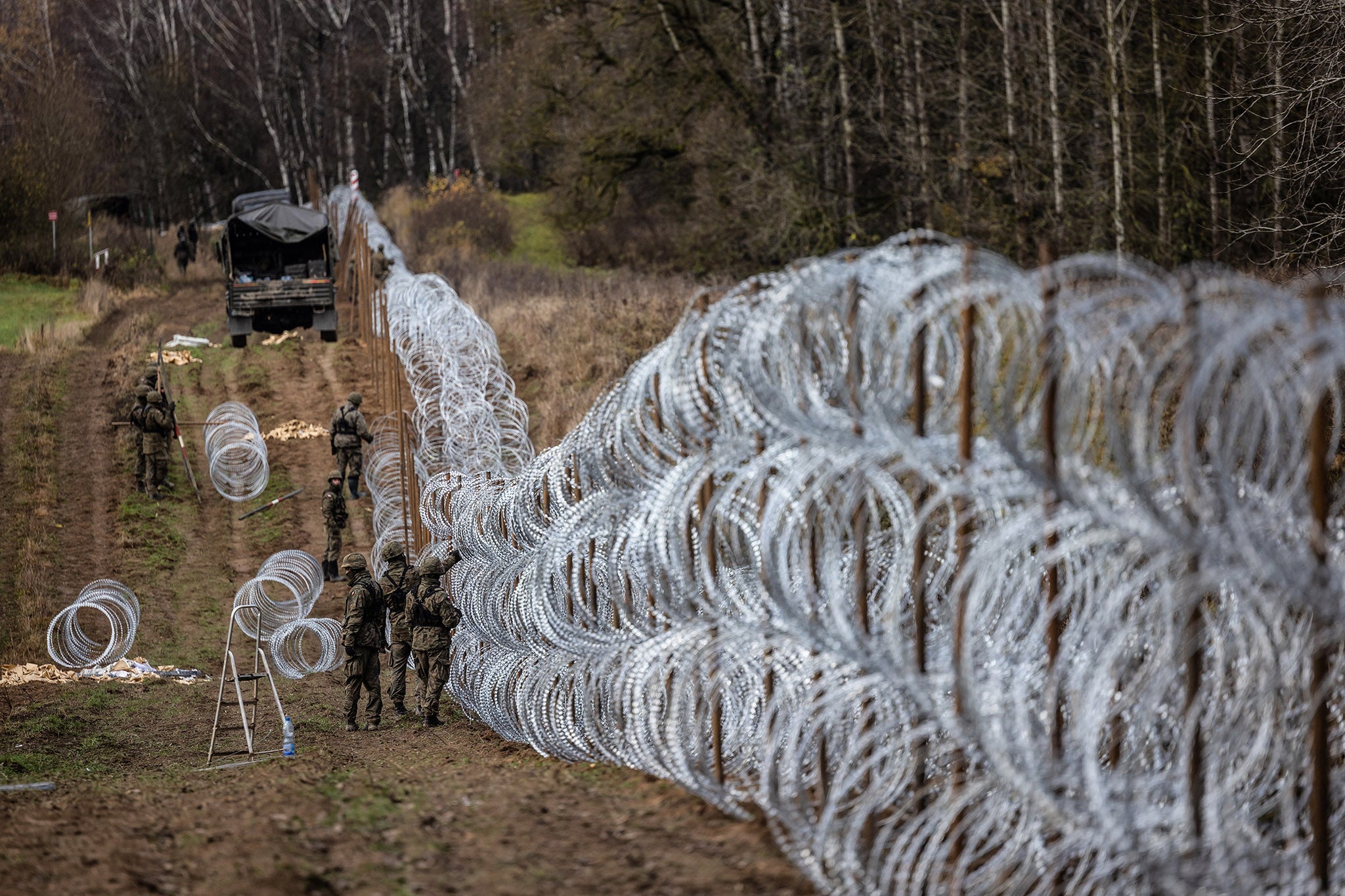
This incident continues the pattern of Russia testing boundaries and exploring just how much it can do before the victim country or countries respond. That’s often been called “salami tactics”, normalising a state of war, a slice at a time. The key question is when the target decides to recognise the process, and Poland has clearly decided that the time is now.
The incursion also provides Russia with useful information on Poland’s capacity to respond, as well as the rules of engagement that have been set for Polish and Nato aircraft – in other words, when exactly they are allowed to open fire on a threat from Russia.
Poland says it has shot down up to four of the 19 drones currently thought to have entered its airspace. That’s not a high proportion, even if some of the drones were assessed not to be worth intercepting.
Ukraine has had years to put in place a system both to detect and intercept incoming threats and to protect its population against them. Other European countries are urgently preparing, but lag far behind. The UK has supposedly started the process of rebuilding homeland defences and provision for the civil population, but with no publicly visible effects to date.
In the best case, the incident could spur the “coalition of the willing” – set up supposedly to enforce peace in Ukraine – to recognise that the task is the defence of Europe as a whole, ideally with US backing.
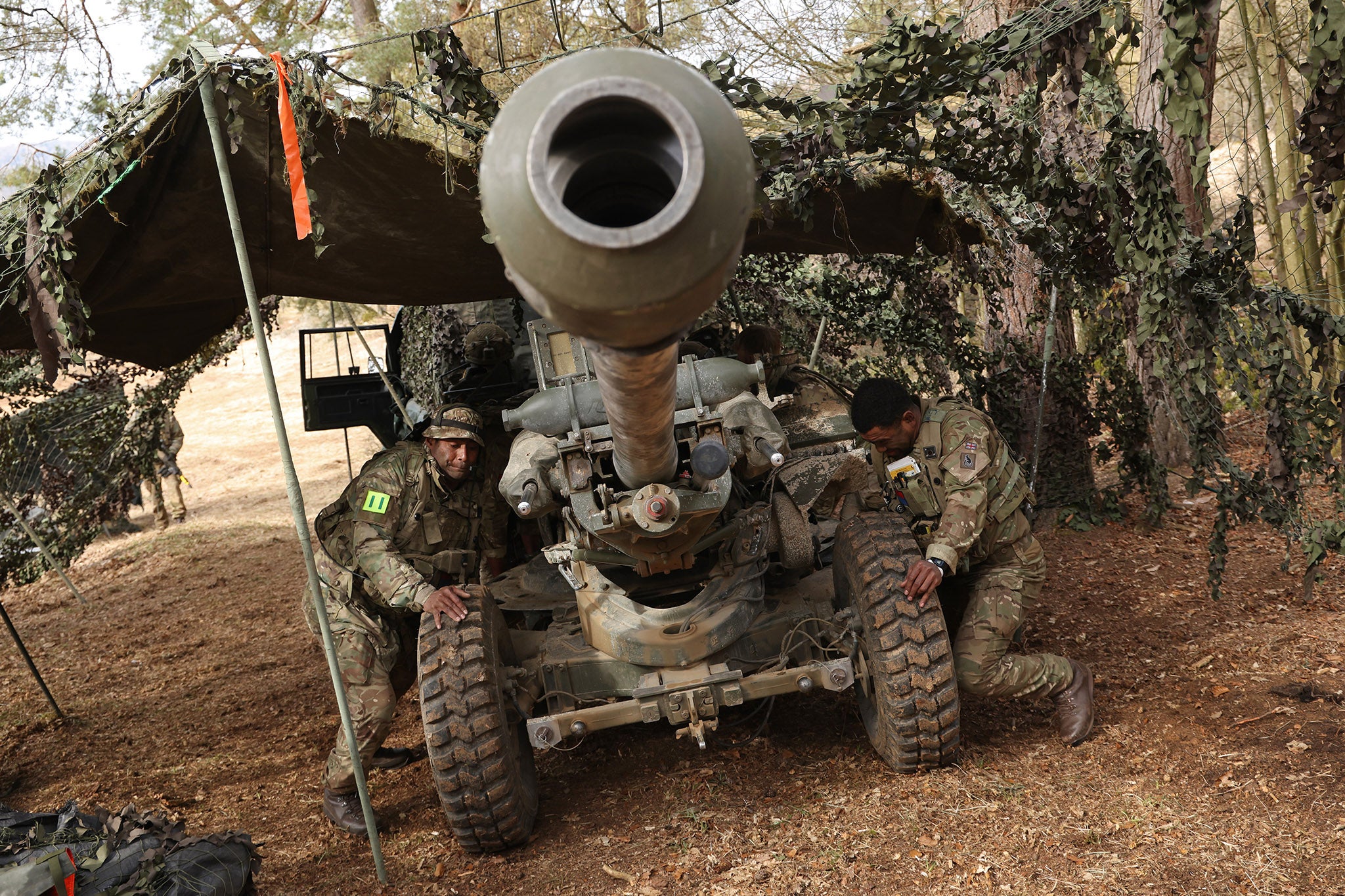
British troops are already in Poland, some of them as part of the longstanding Nato contingent there. There is also a much larger US troop presence, still currently in place despite initiatives from Trump-installed Pentagon officials to curtail US support for Europe.
The obvious response – and thus one that probably won’t happen – is to defend forward, so neighbouring countries intercept drones and other threats before they reach their airspace, not after they get there. That’s the key point of the longstanding Sky Shield plan for Ukraine’s backers to protect the airspace over the west of the country, far behind the front line, to prevent exactly the kind of incident that has affected Poland now.
Choosing to implement Sky Shield would both demonstrate to Russia that it cannot attack without consequences and offer specific protection to Russia and Belarus’s other neighbours against similar threats in the future.
But it is equally likely that EU and European leaders will limit their involvement to expressions of “concern”, or possibly even “deep concern”. That’s a response whose futility has been the object of longstanding parody. Any response to Russia that is less than robust – in terms that Russia understands as costly, rather than expressed in diplomatic niceties – will mean that Europe has failed this latest test just as it failed so many before.
Join our commenting forum
Join thought-provoking conversations, follow other Independent readers and see their replies
Comments
Bookmark popover
Removed from bookmarks