Scientists create huge catalogue of stars where we might find aliens
Smaller cousins of our Sun could be harbouring their own extraterrestrial life
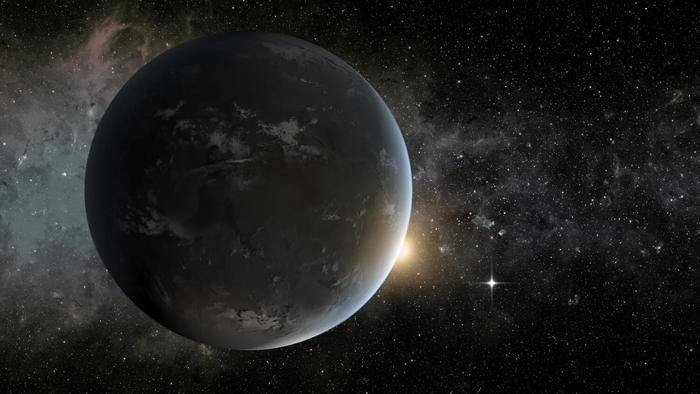
Scientists have assembled a catalogue of more than 2,000 stars that could be supporting alien life.
Researchers behind the study hope that it could provide a foundation for the study of those stars, and examination of whether they might support alien worlds. Eventually, the stars and the planets around them could be the target of spacecraft sent from Earth, they suggested.
It is a full accounting of so-called K dwarfs, which are lower-mass cousins of our own Sun that could be harbouring their own inhabited planets.
They are common throughout space, and offer a long-term and stable environment that could nourish life on the worlds that surround them.
The new study brings together more than 2,000 of those stars, all of which are closer than 130 light years from us.
It was conducted using two observatories, one in the Chilean Andes and another in souther Arizona. Since they are located on two hemispheres, they can get a full look at the sky around us, letting us see all of those K-dwarfs.
Stars vary widely in mass and temperature. The K dwarfs are cooler and fainter than our Sun but are more common – in our patch of space, there are roughly twice of them as Sun-like stars – and they live much longer, meaning that they could be a more likely place to find other civilisations.
In the study, researchers were able to estimate how hot and old the stars were, as well as how fast they are spinning and the way they are moving through space. That information can be used to begin to work out the conditions on the planets around the stars.
The work is described in a new paper, ‘An All-Sky Spectroscopic Reconnaissance of More Than 2,100 K Dwarfs Within 40 Parsecs Using High-Resolution Spectra’, that was presented in a conference this week.
Join our commenting forum
Join thought-provoking conversations, follow other Independent readers and see their replies
Comments
Bookmark popover
Removed from bookmarks