Space forecasters say severe solar storm could bring dazzling auroras — but also disrupt communications
The northern lights may be seen in more than 20 states and much farther south than normal
Much of the U.S. could once again see stunningly colorful auroras on Wednesday night after the Sun spewed out its strongest solar flare of the year to date.
The northern lights may be viewed as far south as Alabama and northern California – much farther south than usual – as long as skies remain clear and skywatchers stay away from light pollution.
The celestial spectacle is the result of the burst of plasma and radiation, also known as a coronal mass ejection, colliding with Earth’s magnetic field.
“Veteran's Day fireworks!” NOAA’s Space Weather Prediction Center exclaimed in a post on social media.
Forecasters said the solar flare had been sent hurdling toward the planet at around 5 a.m. EST, with related effects expected by midday Wednesday.

The best way to catch the lights is to find a north-facing view with a clear horizon at around midnight to 2 a.m. local time.
But in addition to the green and pink light show, the flare may also trigger a severe geomagnetic storm with “detrimental impacts to some of our critical infrastructure technology.”
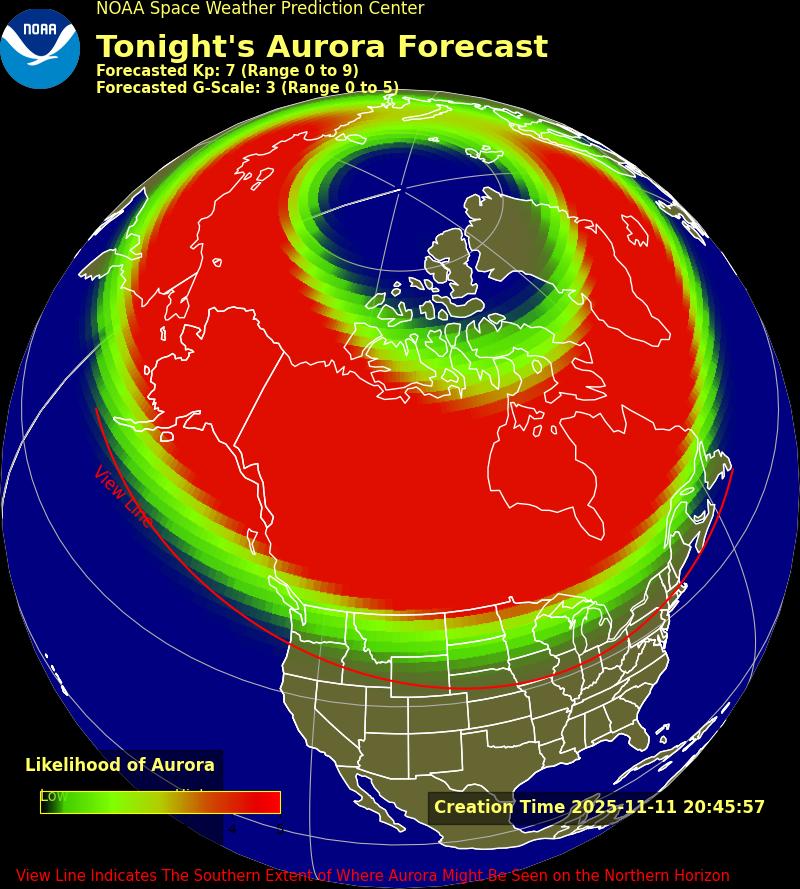
“Watches at this level are very rare; still, this is the fourth G4 Watch issued so far this solar cycle,” the center’s forecasters said.
And the new coronal mass ejection is one of several that have occurred over the past few days — but this is also the fastest and most energetic.
“As always with these events, the intensity of the [flare] will not be known with better certainty until it arrives 1 million miles from Earth and is observed by the solar wind observatories at that location,” the center added. “It is at that point that any needed Warning decisions can be made by SWPC forecasters.”
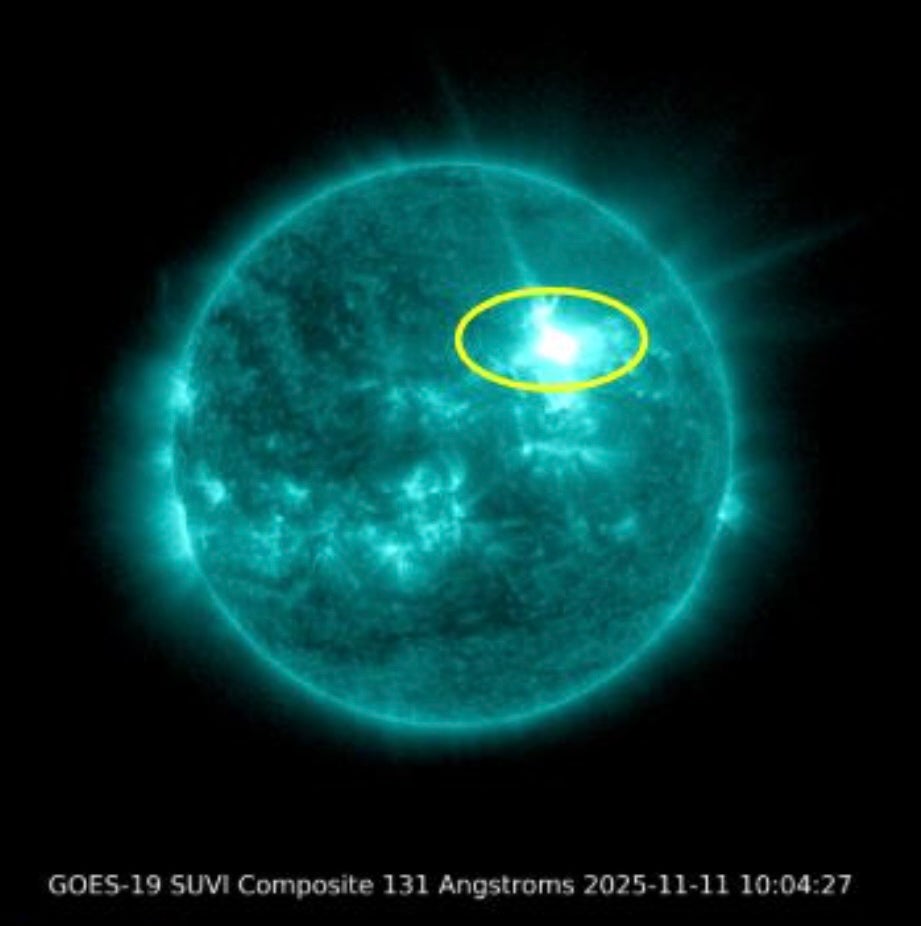
The blast triggered radio blackouts in Africa and Europe, according to Space.com.
Other potential concerns include negative impacts on power grids, drag on low-Earth orbit satellites and problems tracking them and inoperable GPS satellite navigation.
The storms come as the sun remains in its most active phase of its 11-year activity cycle, known as the solar maximum phase. This phase is expected to last at least through the end of the year.
The latest massive flare is an X5.1 class, the strongest since Oct. 3, 2024, which caused global auroras.
Join our commenting forum
Join thought-provoking conversations, follow other Independent readers and see their replies
Comments
Bookmark popover
Removed from bookmarks