Scientists just mapped dark matter in better detail than ever
New data shows the invisible role that dark matter plays in structuring our universe, scientists behind it say
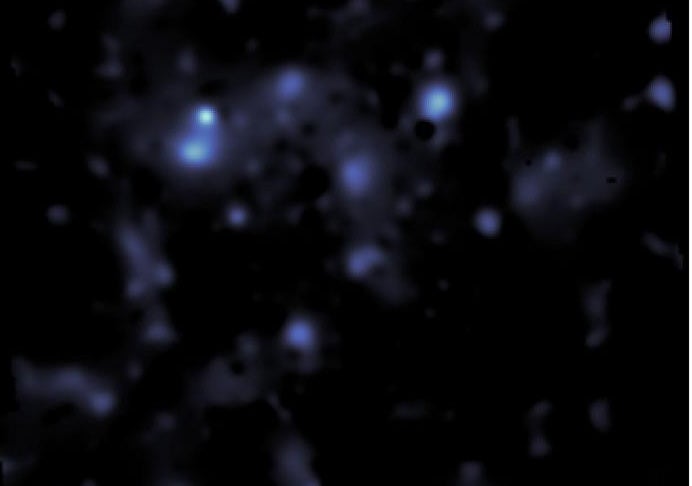
Scientists have created the most detailed ever map of dark matter, and hope to use it to better understand the mysterious and elusive part of our universe.
The new map shows the way that dark matter has helped form the stars, galaxies and planets around us, the researchers say.
It helps to confirm our understanding of its invisible but key role in our universe, but also offers new suggestions of the relationship between dark matter and the normal matter that we know much more about, they say.
The new map was created using data taken from Nasa’s James Webb Space Telescope.
Researchers believe that when the universe began, dark matter and normal matter were both quite thinly spread across the universe. Then the dark matter began to clump together, pulling in normal matter and creating the stars and galaxies that would become our universe.
As such, the structure and spread of dark matter is central to everything we see around us, including our own lives.
“By revealing dark matter with unprecedented precision, our map shows how an invisible component of the Universe has structured visible matter to the point of enabling the emergence of galaxies, stars, and ultimately life itself,” said Gavin Leroy, from the University of Durham, who helped lead the research.
"This map reveals the invisible but essential role of dark matter, the true architect of the Universe, which gradually organises the structures we observe through our telescopes.”
Dark matter is invisible to us: light does not interact with it, and it passes through normal matter. But it can be understood by looking at the way its gravity interacts with the universe that we can see.
“Wherever you find normal matter in the Universe today, you also find dark matter,” said Richard Massey, also from Durham. “Billions of dark matter particles pass through your body every second. There’s no harm, they don’t notice us and just keep going.
“But the whole swirling cloud of dark matter around the Milky Way has enough gravity to hold our entire galaxy together. Without dark matter, the Milky Way would spin itself apart.”
To make the new map, the Webb telescope looked at a patch of sky for about 255 hours, identifying 800,000 galaxies. That allowed researchers to make a map that covers a part of the sky that is about 2.5 times larger than the full Moon.
“This is the largest dark matter map we’ve made with Webb, and it’s twice as sharp as any dark matter map made by other observatories,” said Diana Scognamiglio from Nasa.
“Previously, we were looking at a blurry picture of dark matter. Now we’re seeing the invisible scaffolding of the Universe in stunning detail, thanks to Webb’s incredible resolution.”
The work is described in a new paper, ‘An ultra-high-resolution map of (dark) matter’, published in the journal Nature Astronomy.
Join our commenting forum
Join thought-provoking conversations, follow other Independent readers and see their replies
Comments
Bookmark popover
Removed from bookmarks