The Independent's journalism is supported by our readers. When you purchase through links on our site, we may earn commission.
Earth is spinning faster and is about to see one of its shortest days ever
No one is quite sure why the Earth’s rotation is speeding up, but it could be to do with melting ice caps

The Earth is spinning at its fastest rate since records began, and astronomers predict that 5 August will be one of the shortest days ever measured.
New estimates released this month suggest that the first Tuesday of August will be around 1.25 milliseconds shorter than it should be.
The average rotation of our planet is 24 hours, or 86,400 seconds, however there are several variables that cause Earth to spin faster or slower.
The Moon’s gravitational influence on Earth typically causes it to slow time over time and for days to lengthen.
There is no conclusive reason for why Earth’s rotation is accelerating, though a 2024 study suggested that melting polar ice caps and rising sea levels could be influencing it.
The shortest day ever recorded was on 5 July, 2024, measuring 1.66 milliseconds shorter, with recent years seeing the rotation speeding up.
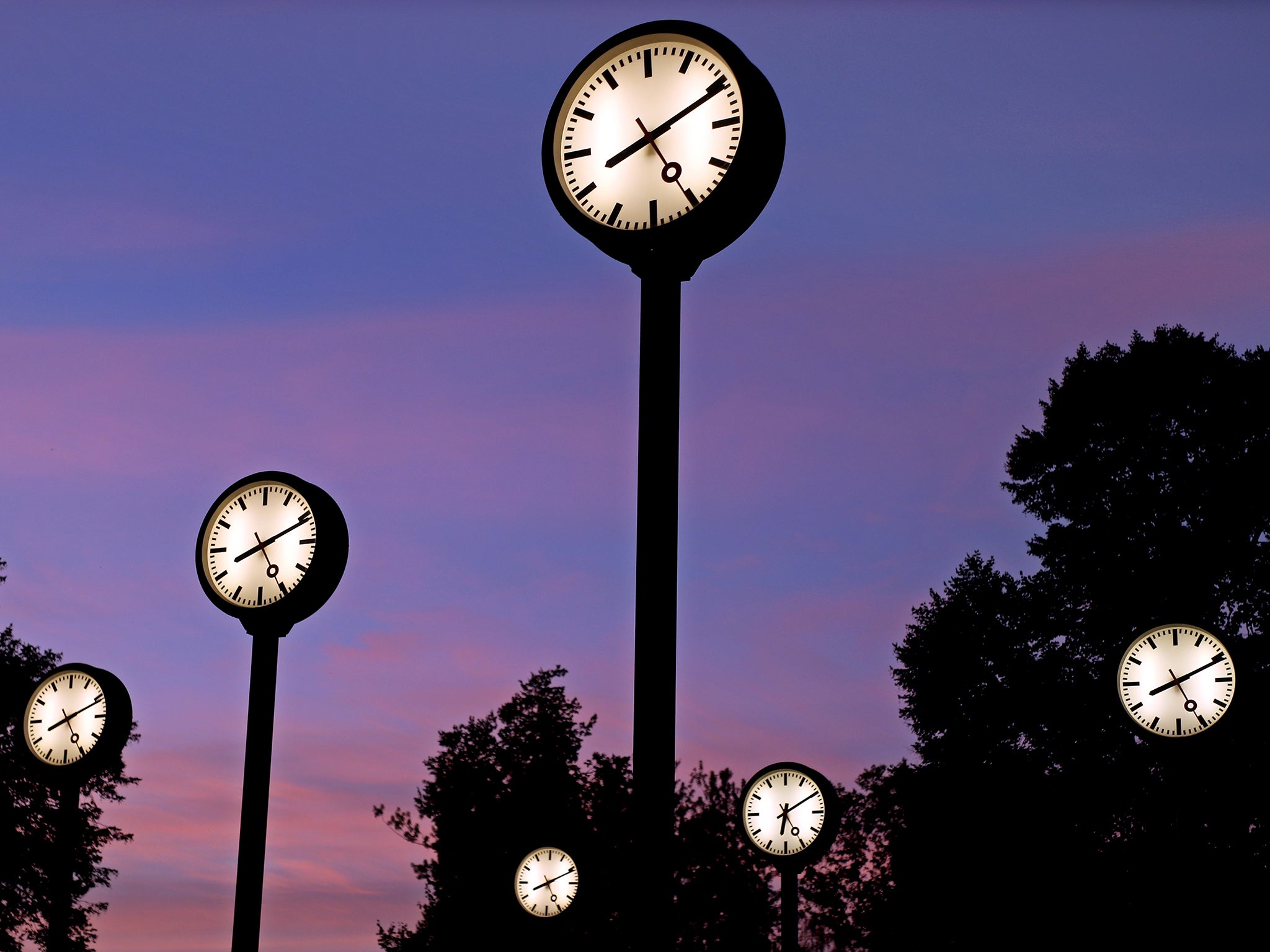
Scientists have proposed a negative leap second to compensate for the lost time, meaning all of the world’s clocks will need to be adjusted.
“This is an unprecedented situation and a big deal,” said geophysicist Duncan Agnew from the University of California, who wrote about the issue in a paper published in the journal Nature last year.
“It’s not a huge change in the Earth’s rotation that’s going to lead to some catastrophe or anything, but it is something notable. It’s yet another indication that we’re in a very unusual time.”
There have been 27 leap seconds added to Coordinated Universal Time (UTC) since 1972, when the present form of the time standard was adopted, in order to match atomic time to astronomical time.
This would be the first time that a second has been subtracted, and it is not clear how current computing infrastructure would cope with the shift.
Patrizia Tavella from the Time Department at the International Bureau of Weights and Measures, wrote in an accompanying article to the Nature paper that any potential risks should be assessed before a negative leap second is applied.
“A negative leap second has never been added or tested,” she said, “so the problems it could create are without precedent.”
Join our commenting forum
Join thought-provoking conversations, follow other Independent readers and see their replies
Comments
Bookmark popover
Removed from bookmarks