What is a ‘cannibal storm’? Experts say it’s biggest to hit Britain in two decades
The solar storm has already begun to impact the British Geological Survey’s satellites
A solar phenomenon called a Cannibal Storm could create sightings of the Northern Lights in the UK, and poses a risk to GPS, communication networks and power grids.
The British Geological Survey (BGS) has already upgraded its forecast to the maximum and said the storm could feed off another one, hence its name, creating one of the biggest “cannibal storms” in 20 years.
After reaching the UK this afternoon, the BGS said it had already impacted their satellite systems.
A solar storm is caused by an explosion of energy, particles, energy, magnetic fields, and material blasted into space by the sun. They are listed as a primary hazard on the UK’s National Risk Register as they can seriously impact navigation and energy infrastructure.
As a result of the storm, some lucky stargazers have the chance of sighting the Northern Lights on Wednesday night following sightings in the north east of the country on Tuesday.

The Met Office has issued a space weather warning for the natural phenomenon, also known as the aurora borealis, predicting it will be visible across parts of the UK on Wednesday night and into Thursday morning.
Sightings are believed to be possible again in the north of the country, with a chance of seeing the lights further south across England and Wales, although cloud coverage may affect visibility.
The weather forecast indicates lots of cloud cover around the country throughout the evening, with the north of Scotland most likely to have the least cloud and therefore potentially the best viewing conditions.
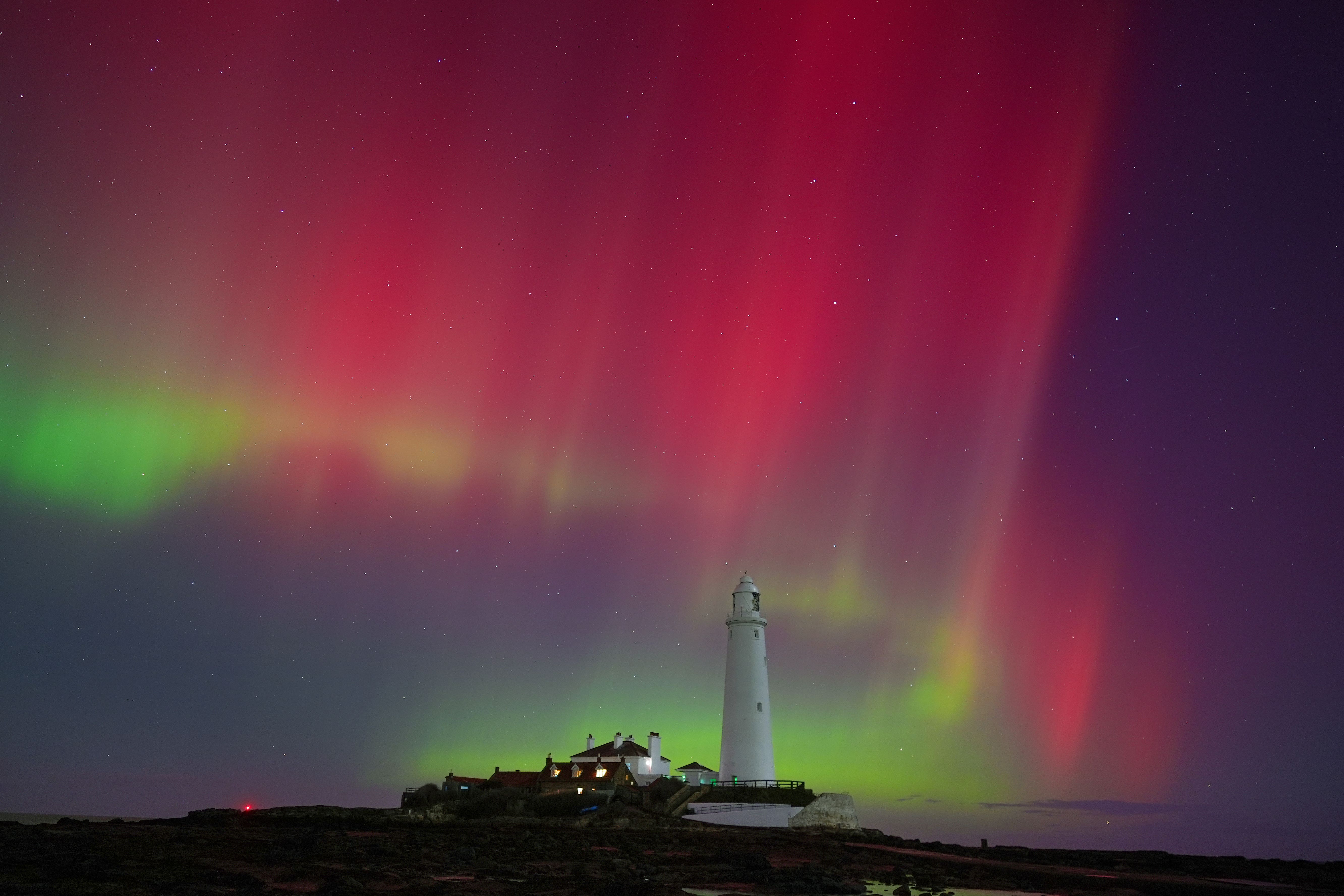
The Met Office added that the cloud may also break across south-east England through the night, potentially giving stargazers an opportunity to see the aurora.
Met Office space weather manager Krista Hammond said: “Multiple coronal mass ejections have reached Earth in recent days, with another one likely to arrive later today.
“This event is likely to be of a similar magnitude to the one in May 2024, which brought auroras across much of England and Wales.”
She added: “However, on this occasion, the weather will hamper viewing potential for many, with thick cloud and rain for much of the country.
“The best visibility is likely to be in the north of Scotland on Wednesday night, though there is a chance of some breaks in the cloud at times in the South East in the night.”
The Met Office explained that the solar storm is a result of the Sun going through an active phase experiencing coronal mass ejections, which are large expulsions that send solar particles towards the Earth.
As these particles interact with the Earth’s atmosphere, they form a dazzling light display, commonly known as the Northern Lights.
The forecaster added that activity is likely to decline by Thursday night, resulting in reduced visibility.
Join our commenting forum
Join thought-provoking conversations, follow other Independent readers and see their replies
Comments
Bookmark popover
Removed from bookmarks