The US is losing space race to China due to Starship delays, ex-chief says
World’s biggest rocket has suffered multiple setbacks since Elon Musk secured a multi-billion dollar contract with Nasa to deliver astronauts to the Moon
The former head of Nasa has said that the United States has fallen behind in the space race with China due to issues with Elon Musk’s Starship rocket.
The US space agency plans to use Starship as part of its Artemis program to return astronauts to the Moon, however SpaceX’s next-generation rocket has suffered a series of delays that have pushed back the mission’s timeline.
Speaking on Wednesday, former Nasa chief Jim Bridenstine said that Nasa’s choice of launch vehicle meant that China would likely deliver a human crew to the lunar surface first.
“Our complicated architecture requires a dozen or more launches in a short time frame, relies on very challenging technologies that have yet to be developed like cryogenic in-space refueling, and still needs to be human rated,” he told the Senate Committee on Commerce, Science and Transportation.
“Unless something changes, it is highly unlikely the United States will beat China’s projected timeline to the Moon’s surface.”
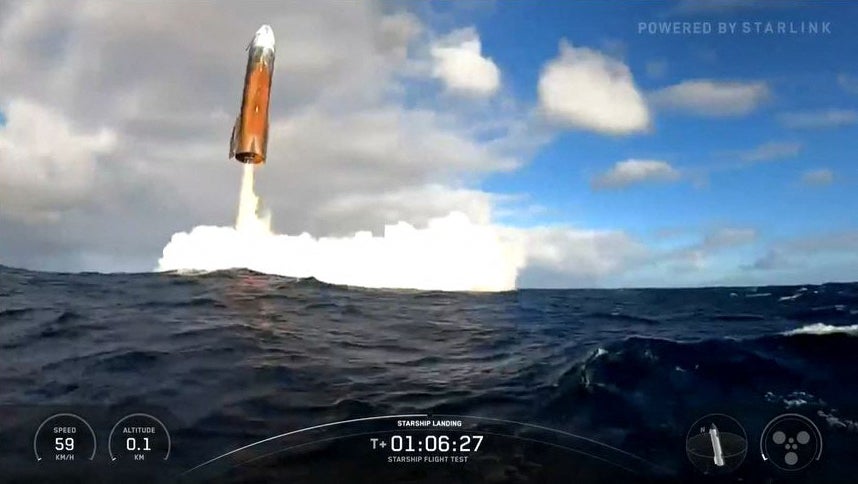
SpaceX completed the 10th test flight of Starship last week, successfully launching and returning to Earth both parts of the biggest rocket ever built.
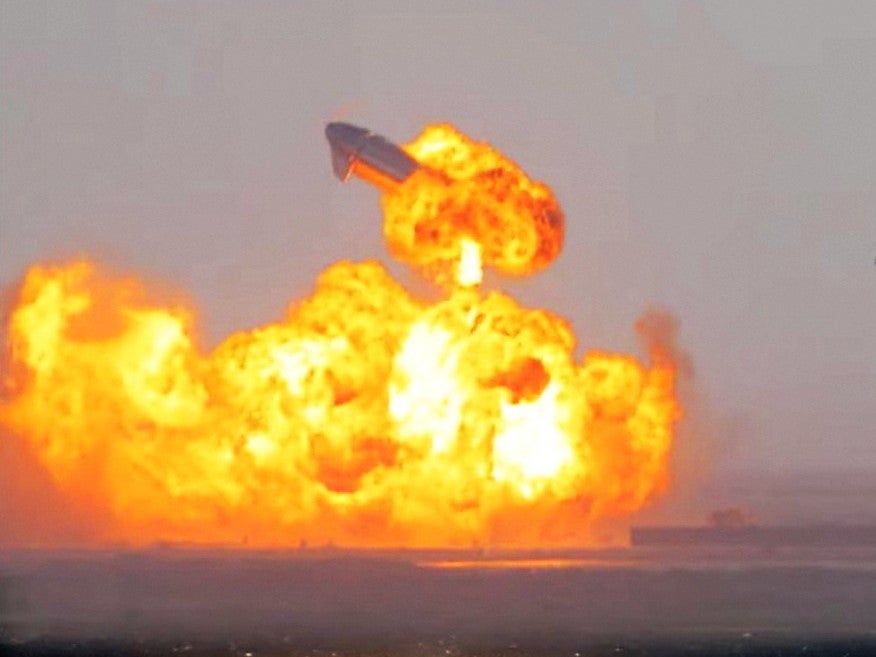
It was the first time in 2025 that SpaceX had successfully completed a Starship flight test, following three botched attempts earlier in the year.
Another rocket was destroyed in June following a massive explosion during ground tests.
Mr Musk has claimed that the rocket will be ready for the first uncrewed missions to Mars in 2026, having previously predicted in 2017 that it would reach the Red Planet by 2022.
SpaceX secured a multi-billion dollar contract with Nasa in 2021 for Starship to be used to land the first humans on the Moon in more than 50 years.
This contract was awarded when Nasa did not have a permanent chief in place, only the acting administrator Steve Jurczyk.
“I don’t know how this happens, but the biggest decision in the history of Nasa, at least since I’ve been paying attention, happens in the absence of a Nasa administrator,” Mr Bridenstine said during Wednesday’s testimony.
“This is an architecture that no Nasa administrator that I’m aware of would have selected if they had a choice.”
Nasa’s Artemis mission to send astronauts to the lunar surface was originally scheduled for December 2025 but has since been pushed back to September 2026 at the earliest following delays to Starship testing.
Last month, China completed the first test of its lunar lander, which it hopes will put the first Chinese on the Moon before 2030.
Join our commenting forum
Join thought-provoking conversations, follow other Independent readers and see their replies
Comments
Bookmark popover
Removed from bookmarks