Wolf supermoon: How and when to see the first full moon of 2026
The moon is likely to look much bigger and brighter than usual
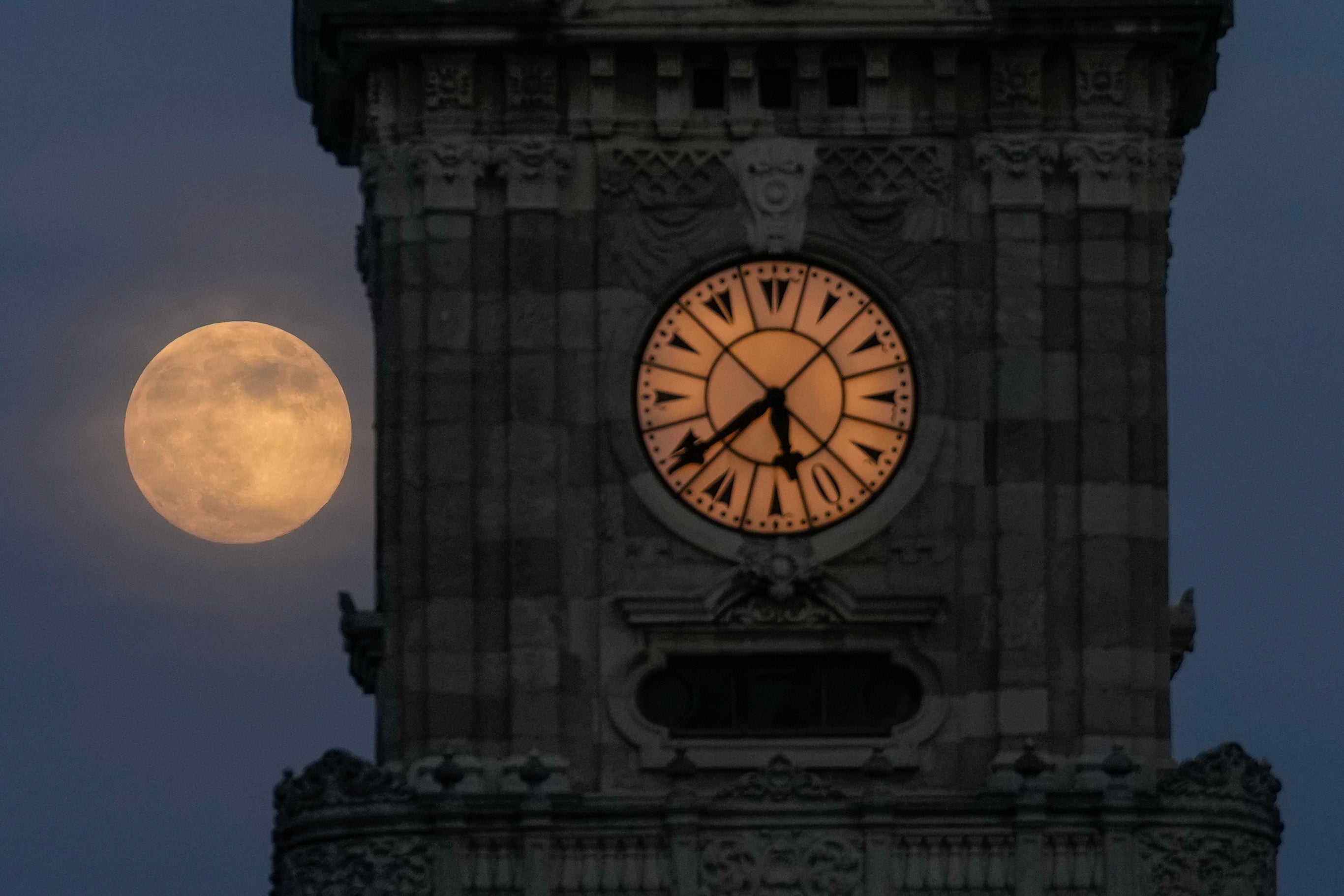
The first Supermoon of the year is about to arrive.
January’s full moon will rise on Saturday and appear unusually large in the sky. It is the last of a run of so-called supermoons, which first began in October.
Supermoons happen when the Moon and the Earth become closer than usual. It means that the moon can look 14 per cent bigger and 30 per cent brighter than usual.
The official fullest point of the January moon comes at around 10am on Saturday morning. But it should be visible as a big, bright orb throughout the night before.
January’s moon is sometimes referred to as the Wolf Moon, Cold Moon, or Hard Moon. Those names are often seen as being traditional, though many of them have really only caught on in the mainstream more recently.
Unlike many other similar celestial sights, there is no particular equipment or preparation required to see a Supermoon. In fact, in contrast to other, more delicate events, it can actually be better to watch from somewhere busy, since objects on the horizon can highlight the relative size and drama of the Moon.
The January moon will hang higher in the sky than any other moon of the year. That should make it easier to see, and for longer – though it can also make it look less dramatic, since higher moons do not tend to look as large in contrast with objects visible on Earth.
The January supermoon will arrive at roughly the same time as the Quadrantid meteor shower. That could mean it is harder see the latter, because the brightness of the full moon will make it harder to see the lights of the meteor shower as they streak across the sky.
Join our commenting forum
Join thought-provoking conversations, follow other Independent readers and see their replies
Comments
Bookmark popover
Removed from bookmarks