The Independent's journalism is supported by our readers. When you purchase through links on our site, we may earn commission.
Mysterious light flashes in 1950s sky photos have long been linked to UFOs – scientists now have an explanation
Short-lived flashes were first seen in a sky survey before launch of Sputnik satellite
Mysterious “star-like” flashes of light spotted in photographs of sky surveys in the 1950s have long been associated with the reported sightings of unidentified flying objects or UFOs.
These flashes, lasting less than about 50 minutes, appear in one photo, but are gone before the next is taken of the same sky region.
Proposed explanations for this anomaly have ranged from asteroids to unidentified anomalous phenomena, or (UAPs), which is the new official name for UFOs.
But now, scientists have found a strong link between these flashes and above-ground nuclear weapons testing.
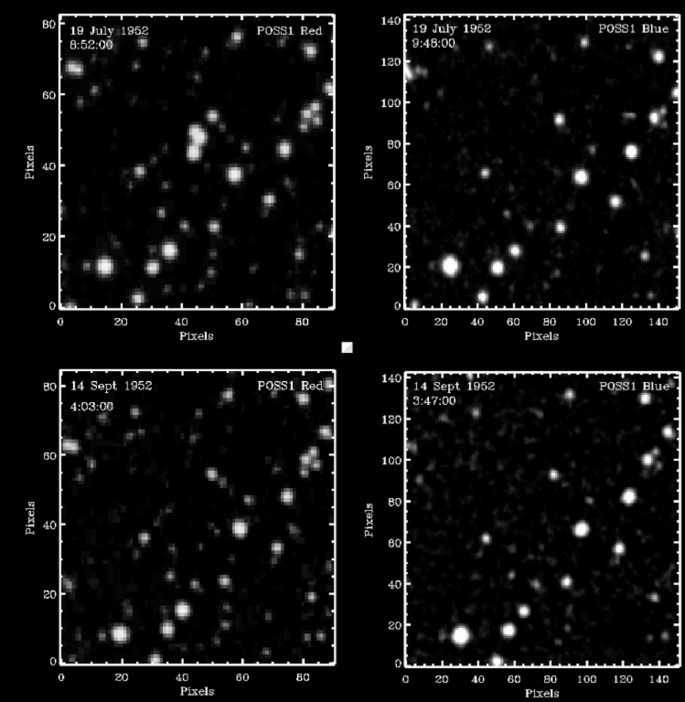
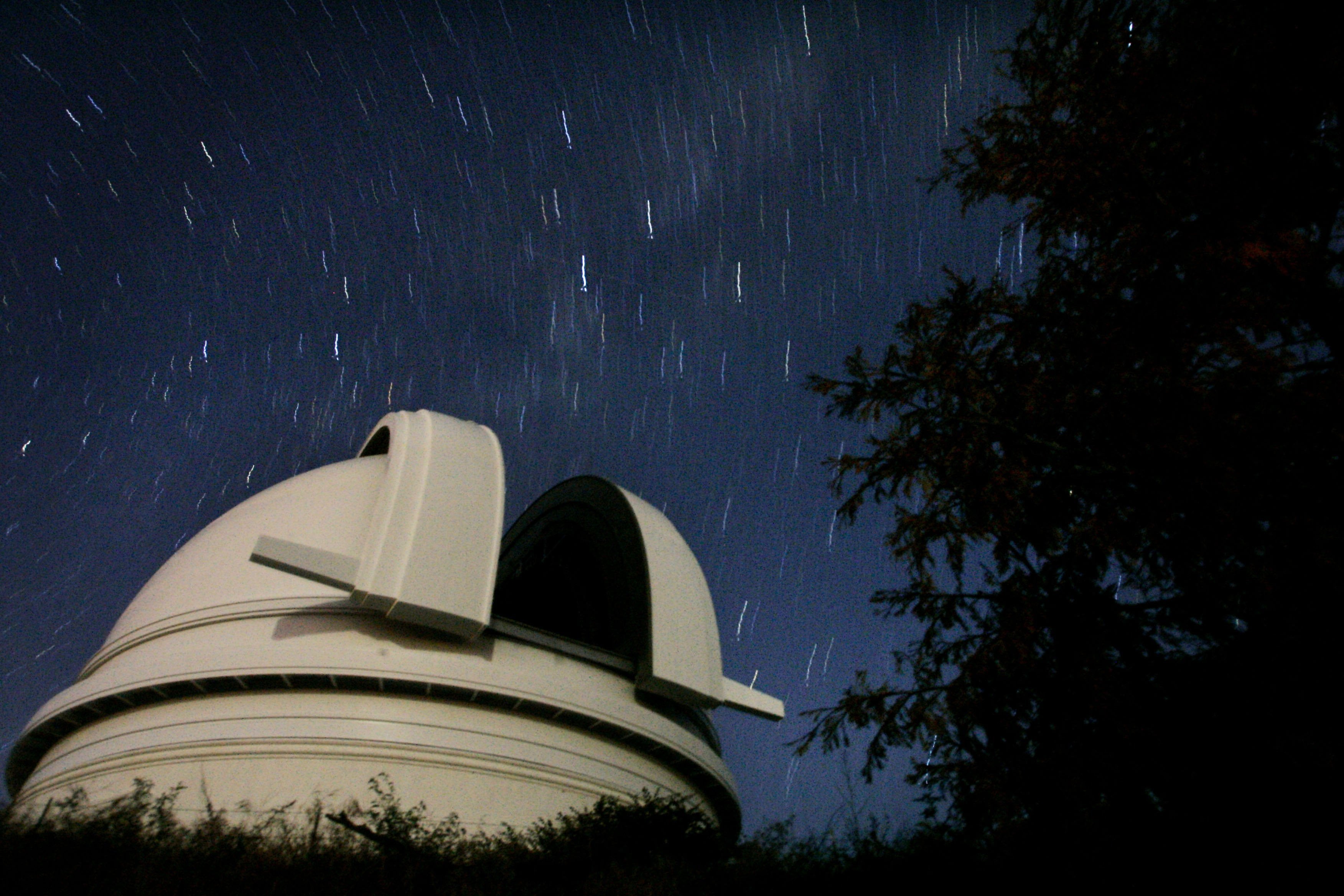
In a new study, published in the journal Scientific Reports, researchers analysed historical photographs taken during the Palomar Observatory Sky Survey (POSS-I) between 1949 and 1957, before the launch of the world’s first satellite, Sputnik.
Photographs taken during this sky survey show several mysterious bright spots that either disappeared completely or flashed briefly in the sky.
In the study, researchers compiled a dataset spanning 2,718 days and compared the dates for such transient sightings with those of above-ground nuclear tests and UAP reports.
Scientists found that these flashes, or transients, were 45 per cent more likely to be observed on dates within a day of a nuclear weapons test compared to dates outside of a nuclear test window.
“Results revealed significant associations between nuclear testing and observed transients,” researchers wrote.
"From 1951 until the launch of Sputnik in 1957, at least 124 above-ground nuclear tests were conducted by the US, Soviet Union, and Great Britain," researchers say.
The number of these transient flashes captured on camera also increased when people independently reported UFO sightings.
Researchers found that the total amount of transient activity increased by over 8 per cent for every additional UFO sighting reported.
"Our findings provide additional empirical support for the validity of the UAP phenomenon and its potential connection to nuclear weapons activity, contributing data beyond eyewitness reports," they wrote.
While the latest study does not reveal the exact cause of the transient space objects or the nature of the UFOs, the findings connect them to nuclear testing and help rule out some theories.
For instance, the association with nuclear tests implies the transient flashes are not photographic plate defects.
Since the transient flashes are spotted around a day after nuclear tests, they may not be debris from bombs, which streak across the sky very soon after detonation.
The findings, however, suggest associations “beyond chance” between the occurrence of such transient flashes in the sky and both nuclear testing and UAP reports, scientists say.
Some yet undocumented atmospheric phenomenon triggered by nuclear detonations or related to nuclear fallout could be serving as a stimulus for some UAP reports, they concluded.
Join our commenting forum
Join thought-provoking conversations, follow other Independent readers and see their replies
Comments
Bookmark popover
Removed from bookmarks