Ukrainian refugee on the brink of sumo wrestling history after fleeing war-torn country
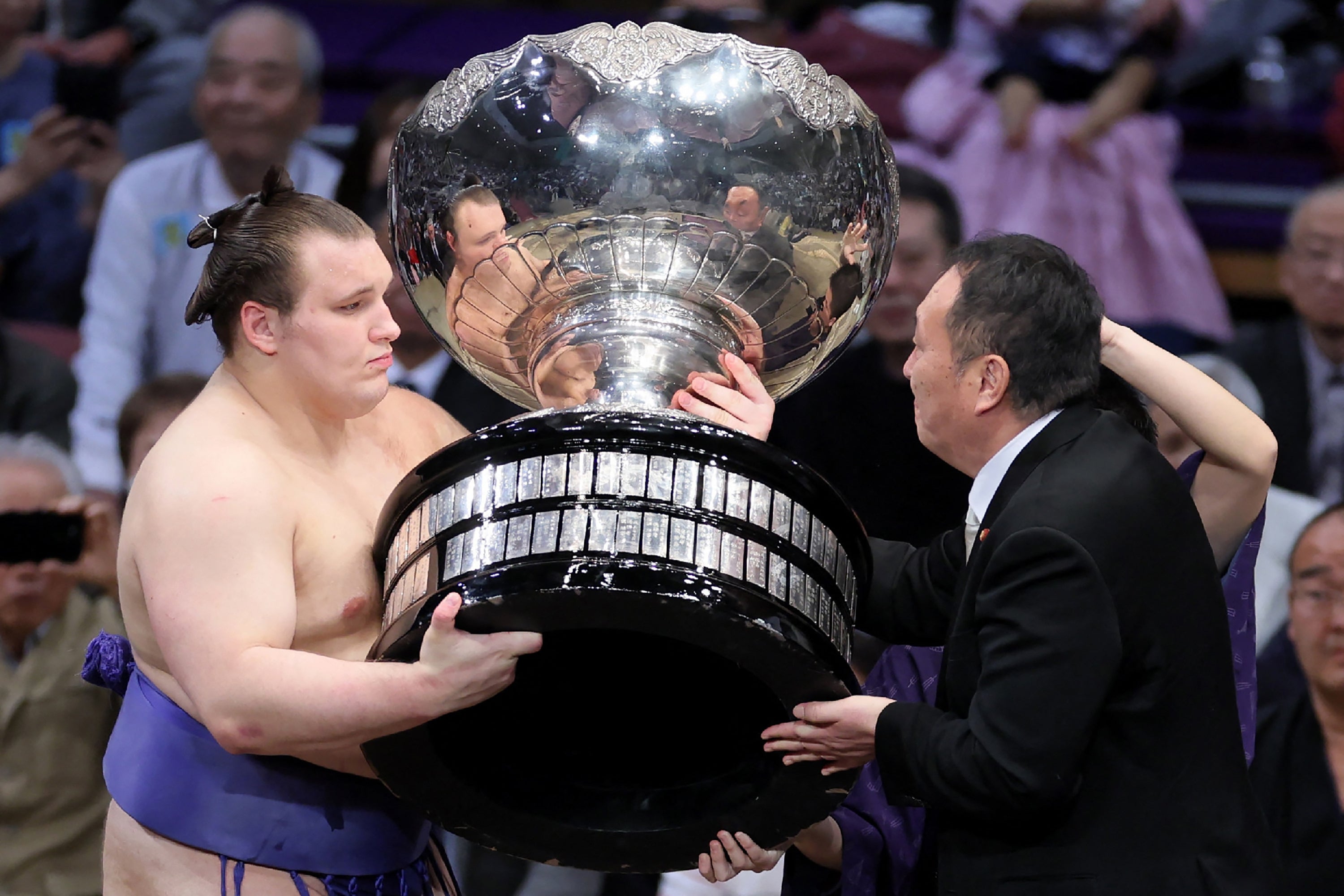
A Ukrainian-born grappler is on the cusp of making history in Japan’s national sport of sumo, as he trains intensely for a shot at its highest honour.
Aonishiki, whose sumo name translates to "blue brocade" in homage to the Ukrainian flag, has rapidly ascended through the ranks.
The 21-year-old has secured two consecutive grand tournament victories and already holds the sport's second-highest status as an ozeki champion.
A triumph at the upcoming spring tournament in Osaka next month would qualify him for promotion to yokozuna, an esteemed grand champion title achieved by only 75 men throughout sumo's long history.
"I wake up every day wanting to get stronger, wanting to climb another rank higher," the 140kg grappler told reporters in Japanese after a morning training session in Tokyo.
"The simple fact is that you can't progress without a struggle. It's my job to overcome that."
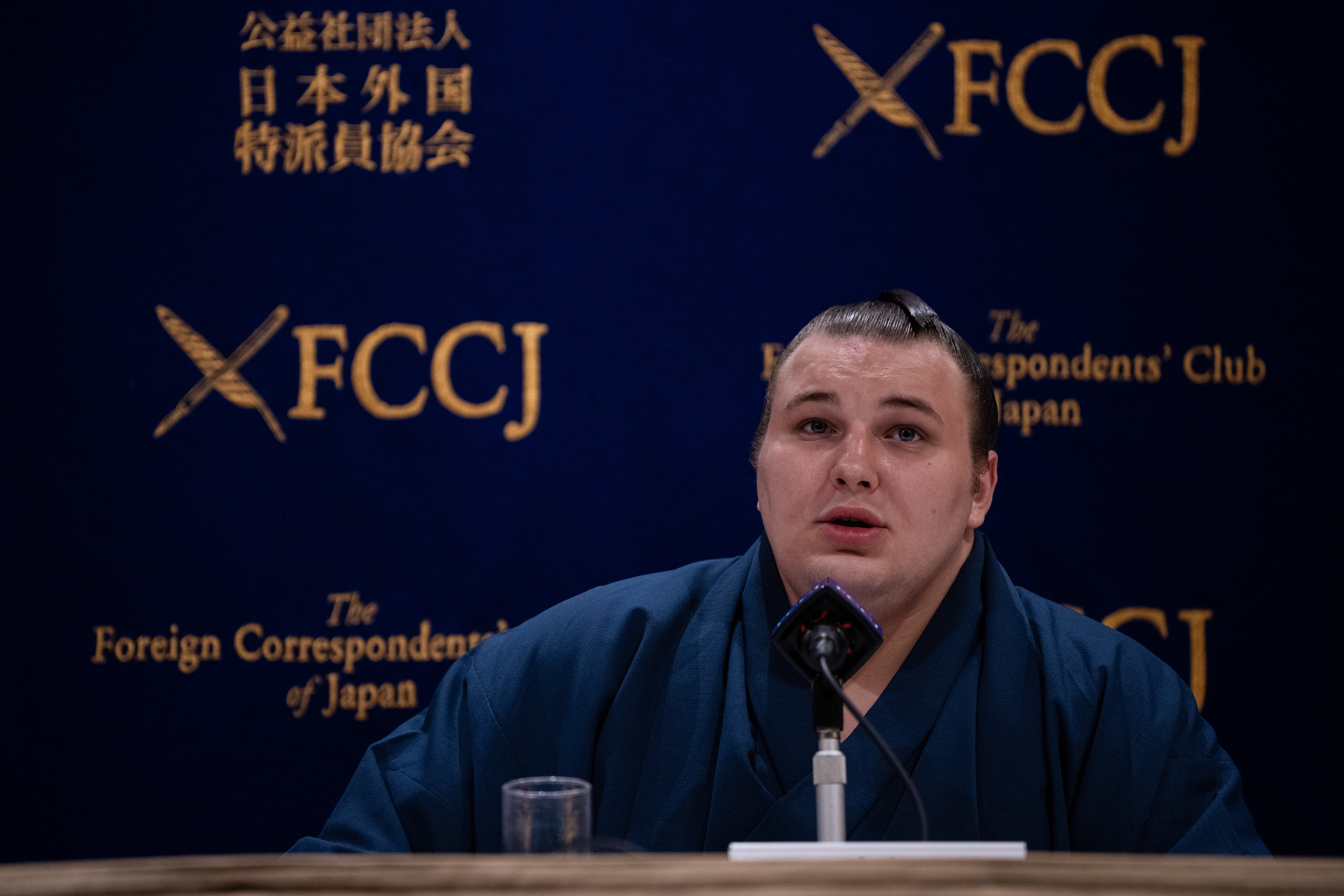
Born Danylo Yavhusishyn, his path to sumo stardom began unexpectedly. He was preparing for university in Ukraine when Russia’s invasion in February 2022 forced the amateur wrestler and sumo enthusiast to leave his homeland.
A friend from his sumo circle offered him shelter in Kobe, western Japan, where the young Ukrainian began his dedicated training.
His chosen name, Aonishiki Arata, not only honours his country but also pays tribute to his sumo master, who competed as Aminishiki, and the Japanese man who provided refuge from the war.
Aonishiki’s remarkable rise has coincided with a surge in interest in sumo and a tourism boom in Japan.
Grand tournaments, held every other month, now sell out instantly, and the sport’s leading figures recently staged an exhibition at London’s Royal Albert Hall, marking Britain’s first sumo tour in 34 years.
The growing global fascination with sumo, coupled with the pride of his compatriots, serves as a significant source of motivation for Aonishiki.
"My friends in Ukraine and my teachers back there, everyone's been watching far more sumo than I imagined," he said.
"When I won the championships or even just a regular match they'd get in touch right away. It really makes me want to push harder."
Join our commenting forum
Join thought-provoking conversations, follow other Independent readers and see their replies
Comments
Bookmark popover
Removed from bookmarks