The Independent's journalism is supported by our readers. When you purchase through links on our site, we may earn commission.
The endurance sport making its Winter Olympics debut in Milan
Ski mountaineering, or ’skimo’, is the first new sport to be introduced within the Winter Games since skeleton in 2002


The 2026 Winter Olympic Games in Milan and Cortona d'Ampezzo in northern Italy feature eight new medal events and one new official sport: ski mountaineering, or “skimo.”
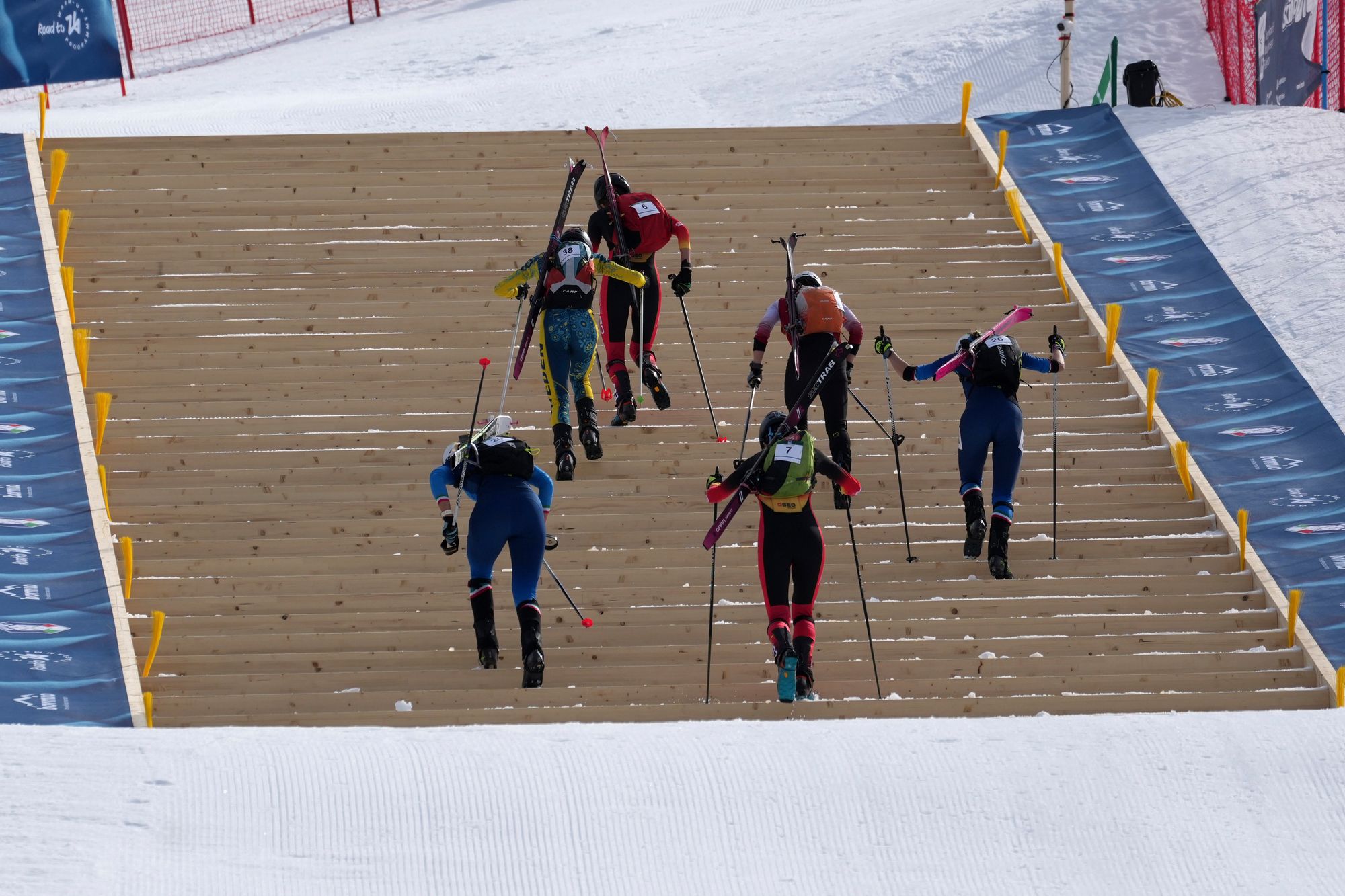
It’s an endurance sport in which athletes ascend mountains on skis fitted with climbing skins, carry their skis over sections too steep to skin and then descend on alpine terrain. In total, 36 skimo athletes will compete at the Stelvio Ski Centre in Bormio.
The Olympic format features two events: the individual sprint and the mixed relay. Athletes alternate between uphill climbing with ski skins, boot-packing and downhill skiing. Sprint races last about three to four minutes, while the mixed relay features longer, more demanding courses.
Alongside skimo, the 2026 Games have introduced women’s doubles luge, women’s large hill individual ski jumping, a freestyle skiing dual moguls event and alpine skiing team combined.
Skimo stands out within the Olympic landscape as the first new sport to be introduced within the Winter Games since skeleton was introduced at the 2002 Salt Lake City Games.
Do we need more skiing at the Games?
With 55 of 109 medals awarded for skiing events at the 2022 Winter Olympics, it’s fair to question whether we need more skiing at the Winter Games. The International Olympic Committee certainly thought so, approving skimo and three additional skiing events for 2026 while removing one.
Alpine skiing debuted at the 1936 Winter Games in Garmisch-Partenkirchen, Germany, while Nordic and ski jumping have been part of the Winter Games since the 1924 Olympics in Chamonix, France.
One of the original skiing disciplines in early editions of the Winter Games was military patrol, a combined skiing and shooting event widely considered a precursor to biathlon.

Milano Cortina has introduced a new variation on this tradition through ski mountaineering. It has been described as the “son of the biathlon without the shooting,” combining rapid transitions, technical descents and endurance climbing under extreme conditions.
What sets skimo apart is its unique focus on upward movement. Unlike most Winter Olympic sports, which emphasize downward or horizontal motion, skimo focuses on human-powered vertical movement — how effectively athletes can climb. Cross-country skiing is one of the only other sports in the Olympics comparable, but the elevation changes during the race are far smaller.
Skimo also broadens the physiological demands on athletes at the Games, rewarding qualities such as pacing, resilience and strategic energy management.
Past and present
Ski mountaineering has deep roots dating back over 1,000 years, long before the activity was formalized as a competitive sport.
It began to emerge in the late 1800s in the Alps as an adventure-based activity before transitioning into organized competition. Its first major race was the Trofeo Mezzalama in Italy in 1933.
The first world championships of the sport were held in 2002 in France. Since then, the event has taken place every two years, alternating with continental championships, alongside an annual World Cup circuit that has helped professionalize the sport and pave its way to Olympic inclusion.
Ski mountaineering is now governed by the International Ski Mountaineering Federation and was featured at the Lausanne 2020 Winter Youth Olympics before earning full Olympic status.
Accessibility and risk
Skimo has the potential to democratize participation in winter sport because it relies on climbing skins and micro-spikes — equipment that is widely available and comparatively affordable.
Because the sport is relatively accessible, participants can take part in a wide range of mountainous environments with minimal technical equipment compared with other mountaineering disciplines. That accessibility, however, does not eliminate risk.
Most ski mountaineering takes place off-piste, where weather, avalanches and navigation hazards increase the risk of accidents.
About the authors
Angela Schneider is a Director in the International Centre for Olympic Studies at Western University.
Alan C Oldham is a PhD Student in the International Centre for Olympic Studies at Western University.
This article is republished from The Conversation under a Creative Commons license. Read the original article.
As interest in the sport grows following its Olympic debut, it may draw inexperienced participants into hazardous terrain. Newcomers, in particular, should seek proper training and use safe routes in regulated environments, ideally with supervision or a partner in case of emergency.
Education around snow sports, safety awareness and responsible participation will be essential to ensure the democratization of ski mountaineering does not come at the cost of increased accidents.
The rise of designated, safer off-piste areas where people can try the sport safely is a good compromise between safety and sustainability.
Canada’s skimo prospects
Canadians are making strides on the international skimo circuit. Emma Cook-Clarke, a former mountain runner, placed sixth in the team event and women’s sprint at the 2025 world championships.
However, Canada narrowly missed Olympic qualification for 2026. This year’s favourites include Switzerland for the women’s sprint, France for the mixed relay and Spain for the men’s sprint.
Looking ahead, future success will require sustained investment. Cook-Clarke could help lead Canada to ski mountaineering gold in four years’ time, but mid- and long-term success will require a lot of work.
Canada’s elite skimo program is still emerging compared with European nations such as Norway, where the sport is well established.
Success should be measured by grassroots growth, which will provide a base for a larger, more robust elite team, and by expanded international experience as athletes compete more frequently on the world circuit.
These developments require resources, which are inevitably limited. Yet investment in ski mountaineering could be in Canada’s best interests. As a new Olympic sport, it presents an opportunity for Canada to position itself as a future leader as it has done in many other winter disciplines.
Skimo’s Olympic debut provides Canada with an opportunity to make those investments and strengthen its position at future Games.
A new direction for the Olympics
Skimo’s inclusion reflects changes in priorities surrounding sustainability, accessibility and the nature of athletic challenge.
The shift comes at a critical moment. The Winter Games face mounting scrutiny over their environmental footprint, particularly as warming temperatures threaten snow reliability in host regions.
Against this backdrop, ski mountaineering offers a meaningful test case for how the IOC can work more diligently toward its climate and sustainability goals. Skimo athletes ascend and descend under their own power rather than relying on the energy-intensive lift systems used in traditional alpine events.
While emissions from travel and venue construction remain concerns, the significance of this small shift should not be underestimated, especially in the Italian Alps, which are already experiencing above-average temperatures.
As climate change reshapes winter sport, there is evidence that broader ski culture is shifting toward a more environmentally friendly footing. Skimo is a sign that the Olympics as a whole could follow suit.
May Keeble, an undergraduate student in sports management and coaching from Bath University, contributed to this article.
Join our commenting forum
Join thought-provoking conversations, follow other Independent readers and see their replies
Comments
Bookmark popover
Removed from bookmarks