Microsoft’s Mustafa Suleyman warns against ‘uncontrollable’ AI
‘If we can’t control it, it isn’t going to be on our side’ the leading AI boss said
A leading AI boss has warned that the developing technology could become “uncontrollable” in the next few years without proper regulation.
Speaking on BBC Radio 4’s Today, CEO of Microsoft AI, Mustafa Suleyman, said that fear over the future of AI is “healthy and necessary”, adding: “I honestly think that if you’re not a little bit afraid at this moment then you’re not paying attention.”
Mr Suleyman, who is was the co-founder and former head of applied AI at DeepMind, was guest editing the BBC’s current affairs radio show when he made the comments.
The industry leader called for greater guardrails to be put in place as artificial intelligence systems develop further, predicting that advances over the next five years will be “outrageously exponential”.
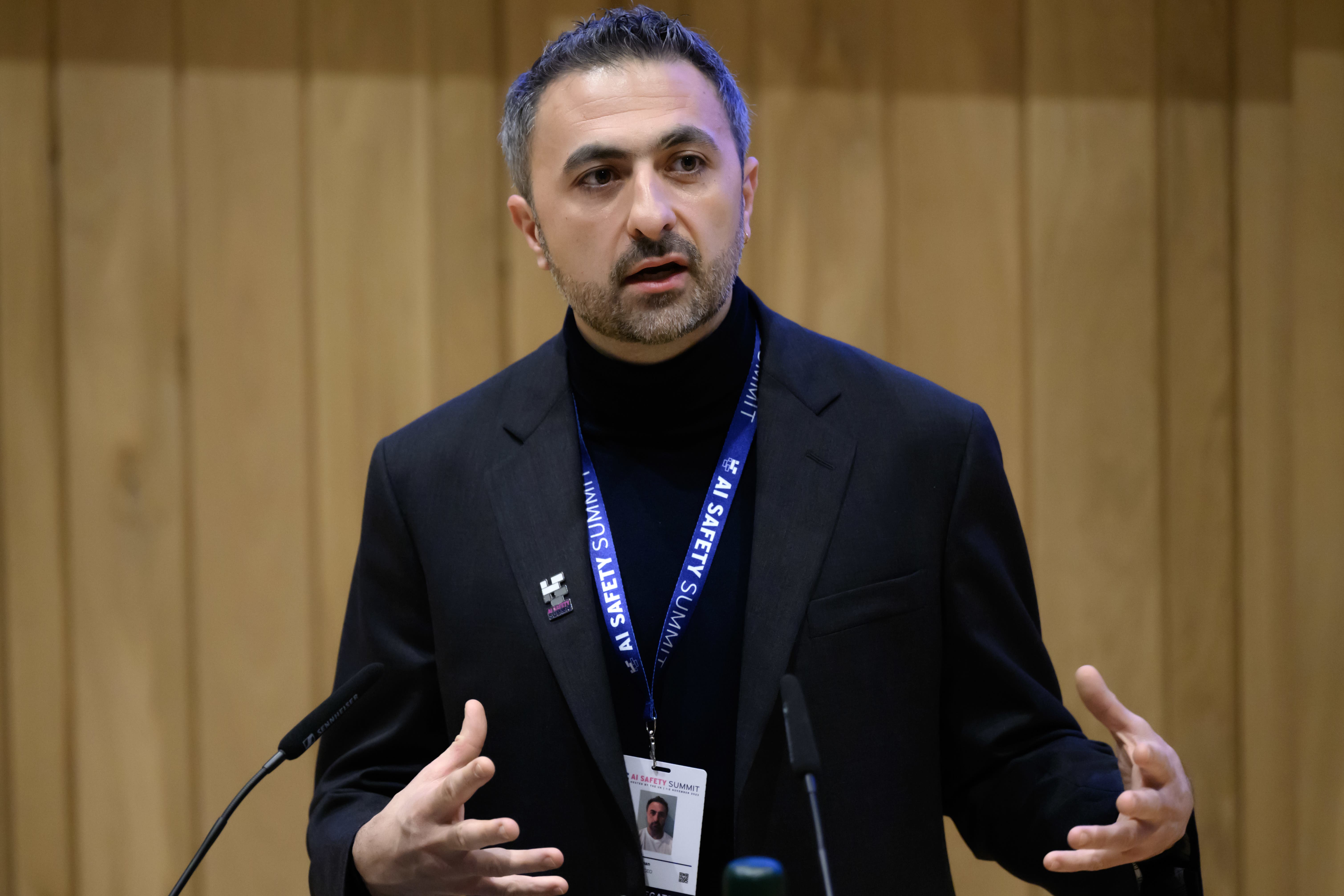
He told Today: “There are plenty of people in the industry today who see a world – in fact desire a world – in which machines get so much more intelligent than humans… that they could exceed human performance on all tasks.”
“A system like that would almost certainly not be controllable. We have to declare our belief in a humanist super intelligence, one that is always aligned to human interests”
He later added: “If we can’t control it, it isn’t going to be on our side. It’s going to overwhelm us”.
His warning comes as concerns continue to grow about the potential of AI to replace human workers, especially in white collar professions.
Research from Microsoft AI earlier this year revealed which jobs are most at risk from AI automation, assessing over 200,000 interactions with its Copilot generative AI chatbot to find where the greatest overlaps lie.

The study revealed that the work of interpreters and translators was regularly being carried out by the AI tool, followed by historians, mathematicians, and proofreaders.
Speaking about the capability of AI, Mr Suleyman said: "I think the challenge is that these are fundamentally labour-replacing technologies.
“[AI] can now use an operating system, and a spreadsheet, and send emails, and make phone calls – almost like project manager, or strategist or HR person or marketing person – those skills are actually quite predictable and quite automatable.
“There’s going to be huge efficiencies because actually operating like a white collar knowledge worker is going to become cheap and abundant.”
The Microsoft AI boss gives the example of call centre workers as a group who are already beginning to be replaced, adding that roles like paralegals, junior accountants and general purpose project managers will likely follow in the next few years.
Join our commenting forum
Join thought-provoking conversations, follow other Independent readers and see their replies
Comments
Bookmark popover
Removed from bookmarks