China puts brakes on push for self-driving cars after horror crash that killed three students
Some companies had reportedly already started making self-driving cars, expecting regulatory approval
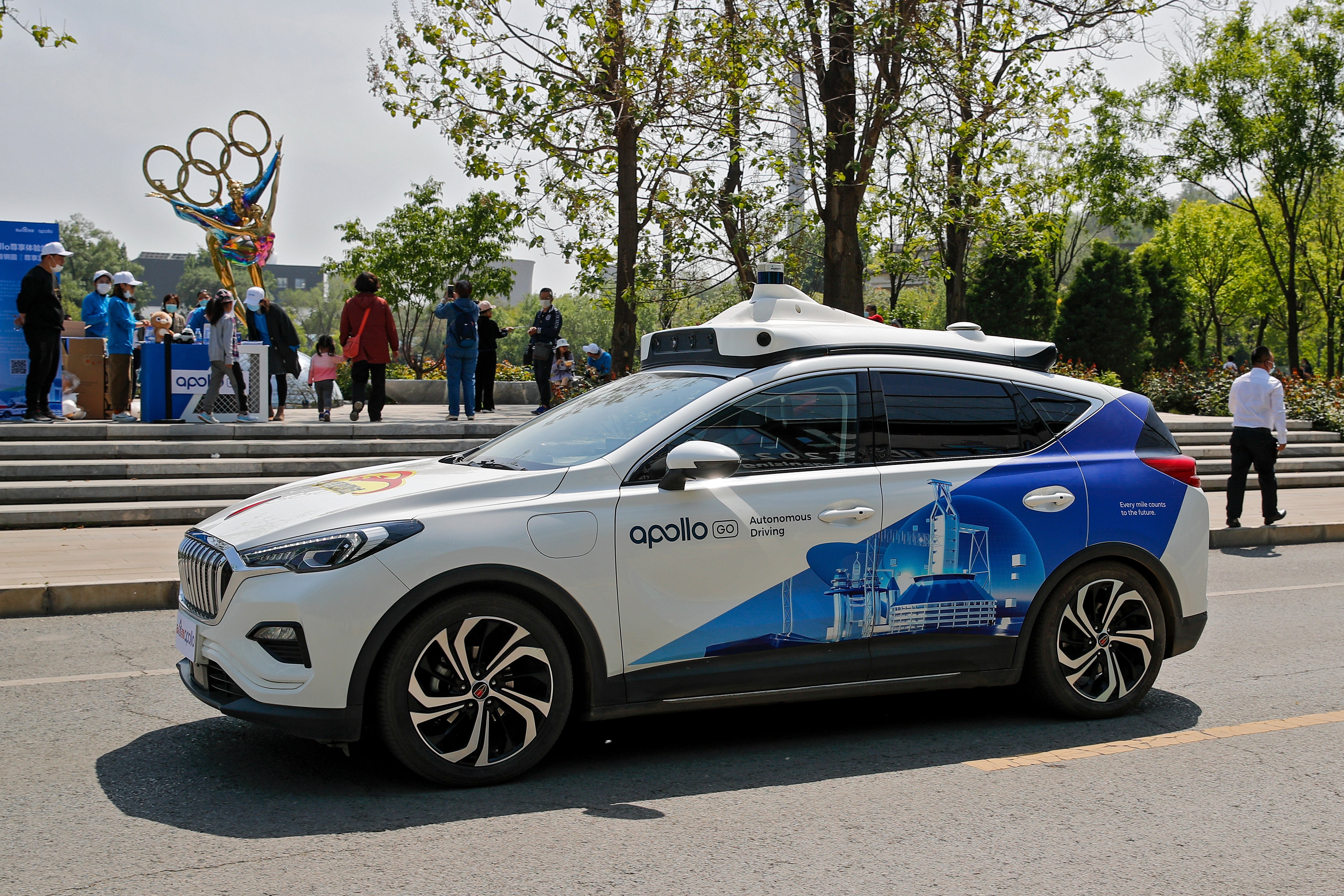
China is slowing plans to mass-produce and sell more advanced self-driving cars after a fatal crash involving assisted-driving technology.
Chinese regulators have approved only two of nine proposals submitted by manufacturers seeking permission to sell more advanced self-driving vehicles, according to reports, suggesting the country is easing off its push to commercialise higher levels of vehicle automation.
Analysts are drawing a link between the tougher stance from the regulatory authority and a horror crash in March involving Xiaomi’s SU7 electric car that killed three university students.
The car was travelling at around 72 miles per hour with its assisted-driving system engaged when it detected a lane closure due to roadworks. It issued an audible warning, after which the driver took control, but the vehicle struck a concrete barrier roughly one second later.
Last week, the ministry of industry and IT granted approvals to two companies to operate so-called Level 3 self-driving vehicles. Level 3 systems can handle driving tasks under certain conditions without the driver’s hands on the wheel, but still require a human to be ready to take control. They are already operational in certain US states, albeit under strict limitations.
But the approvals handed to Beijing Automotive Group and Changan Automobile are very limited. The companies will only be allowed to operate robotaxis on three designated stretches of highway each in Beijing and Chongqing, the cities where the companies are based, according to Chinese media. Even then, the permission is limited to further testing rather than full commercial deployment.
Under the rules, the vehicles are not allowed to change lanes while under computer control, and a human driver must take over once the car leaves the approved highway sections. Outside those limited zones, the systems cannot operate autonomously.
The narrow scope of the approvals mark a setback for Chinese carmakers, which had expected regulators to green-light the sale of Level 3 systems by the end of this year.
China currently only has Level 2 systems in operation, which can assist with steering and speed but require the driver to remain fully engaged at all times. Level 5 represents fully autonomous driving with no human intervention – no Level 5 vehicles are currently approved for public use anywhere in the world.
According to the New York Times, several Chinese automakers had already begun mass-producing vehicles equipped with the cameras, sensors and computing hardware needed for Level 3 systems, anticipating regulatory approval. Those vehicles are now expected to be sold with downgraded Level 2 software instead.
In the aftermath of the crash in March, Chinese authorities banned carmakers from using marketing terms such as “smart driving” or “autonomous driving” for vehicles equipped only with assisted-driving systems, amid concerns that consumers could be misled about the technology’s capabilities.
Public concern has also grown following reports in Chinese state media suggesting that some domestic assisted-driving systems lag behind competitors in safety performance. In one set of tests involving 36 vehicles equipped with Level 2 systems, fewer than half were able to successfully avoid a collision when approaching trucks at construction sites at night, the reports said.
In contrast, the two Tesla vehicles included in the same tests were reported to have performed well across a range of scenarios.
China has been seen as one of the most ambitious markets for autonomous driving technology, with strong government backing for electric vehicles and artificial intelligence. The country’s passenger‑vehicle autonomous‑driving market is projected to grow from about $9.85bn in 2024 to $15.3bn by 2030.
Join our commenting forum
Join thought-provoking conversations, follow other Independent readers and see their replies
Comments
Bookmark popover
Removed from bookmarks