Four person crew to simulate year-long Mars mission
Three men and one woman will enter the1,700-square-foot capsule next month

Nasa has announced the four participants of a year-long simulation of a Mars mission that will take place inside an enclosed habitat in Texas.
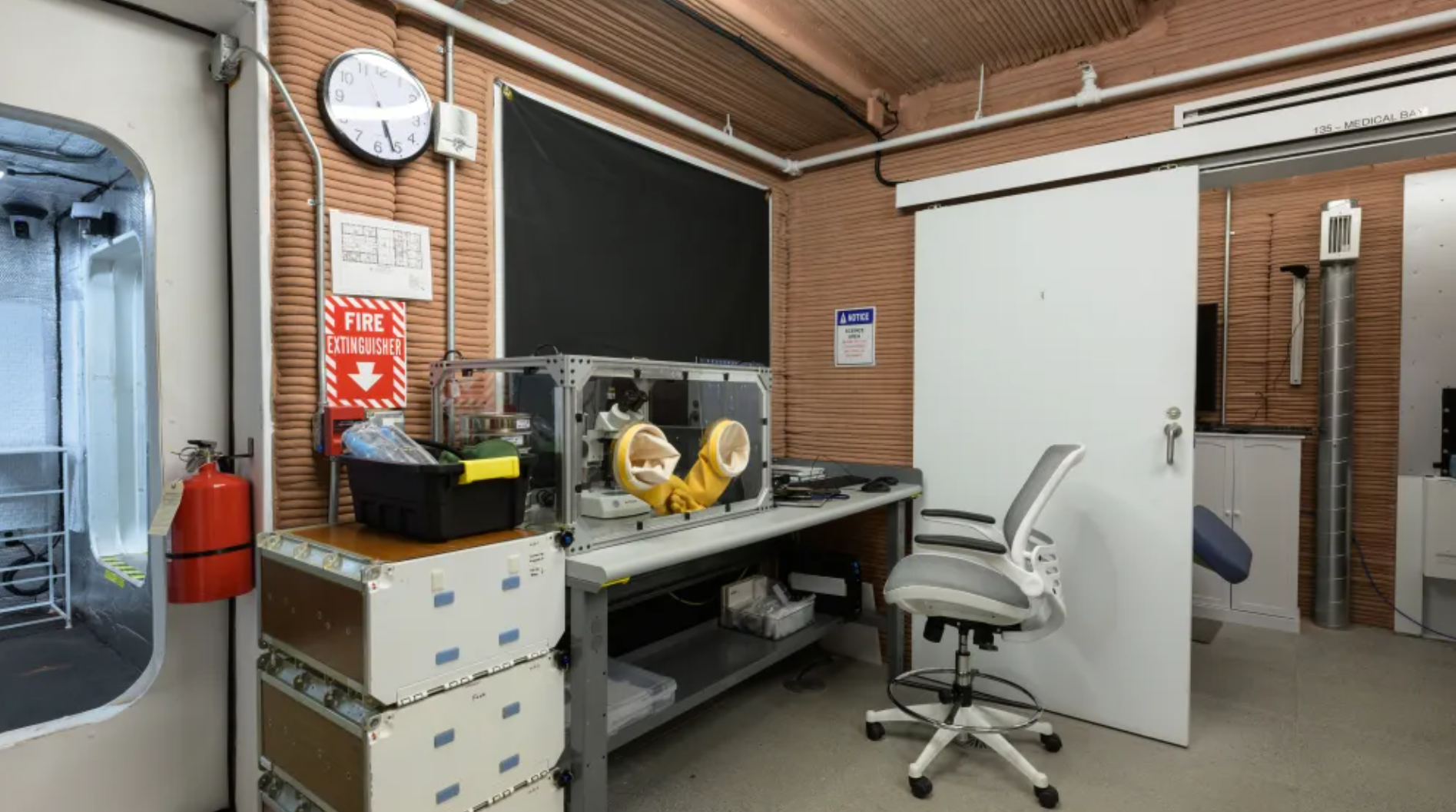
Three men and one woman will enter the1,700-square-foot (158m²) capsule at the US space agency’s Johnson Space Center in Houston on 19 October, hoping to provide foundational data for human habitation of the Red Planet.
Ross Elder, Ellen Ellis, Matthew Montgomery, and James Spicer will live and work like astronauts for 378 days before leaving the Mars Dune Alpha habitat on 31 October 2026.
The endeavour forms part of a series of Earth-based missions designed to replicate the same isolation, resource limitations, equipment failures and communication delays that astronauts will experience during future Mars missions.
The Crew Health and Performance Exploration Analog (CHAPEA) missions will involve simulated walks on the Martian surface, research experiments and attempts to grow a vegetable garden under replicated Mars conditions.
“The simulation will allow us to collect cognitive and physical performance data to give us more insight into the potential impacts of the resource restrictions and long-duration missions to Mars on crew health and performance,” said Grace Douglas, principal investigator at CHAPEA .
“Ultimately, this information will help Nasa make informed decisions to design and plan for a successful human mission to Mars.”
Nasa has stated its intention to send astronauts to Mars as early as the 2030s, with the journey to the Red Planet taking six to seven months each way.
Before that, Nasa will be sending crewed missions to the Moon as part of its Artemis program, which will also test in-space habitation and transport systems.
“As Nasa gears up for crewed Artemis missions, CHAPEA and other ground analogs are helping to determine which capabilities could best support future crews in overcoming the human health and performance challenges of living and operating beyond Earth’s resources – all before we send humans to Mars,” said Sara Whiting, project scientist with Nasa’s Human Research Program.
The US space agency has already completed one 378-day CHAPEA mission, which successfully concluded on 6 July 2024.
After stepping out of the 3D-printed habitat, Nasa volunteer Anca Selariu sidi the experience had given her a new perspective on problem solving and life in general.
“Every day seemed to be a new revelation about something; about Earth, about art, about humans, about cultures, about the history of life in the universe – what little we know of it,” she said.
“As much as I appreciate having information at my fingertips, I will miss the luxury of being unplugged in a world that now validates humans by their digital presence.”
Join our commenting forum
Join thought-provoking conversations, follow other Independent readers and see their replies
Comments
Bookmark popover
Removed from bookmarks