This rubber band breakthrough could lead to self-charging smartwatches
Innovative material may also lead to medical sensors worn close to body without external batteries
Chinese scientists have developed a polymer that converts heat from its stretching into electricity, an advance that could lead to self-powered smartwatches.
Researchers at Peking University say the breakthrough material, which is like a rubber band, efficiently converts its elasticity into electricity.
It works on the principle of thermoelectricity by which temperature differences generate power.
“Until now, all reported high-performance thermoelectric materials have realised only flexibility rather than elasticity,” the researchers wrote in their study published in the journal Nature.
Currently, wearable devices like smartwatches need batteries or frequent charging.
The new material could provide a constant power supply without need for charging.
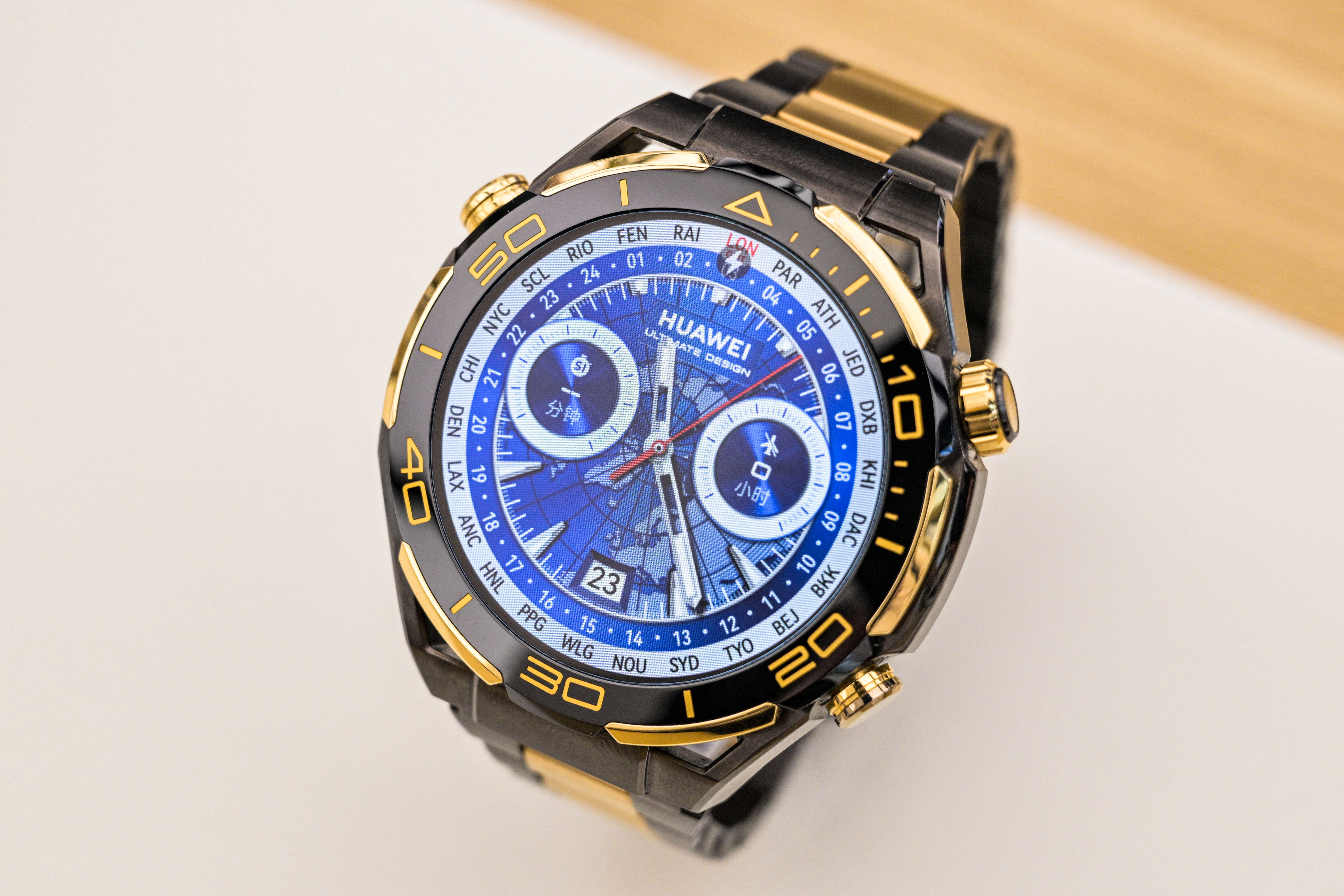
The new material capitalises on the difference in the body’s temperature and that of the environment. The human body’s temperature is around 37C while ambient temperature normally ranges from 20C to 30C.
The Chinese researchers tried to harness this temperature difference and convert it into electricity with the new material.
“We are the first in the world to propose the concept of thermoelectric rubber,” Peking University material scientist Lei Ting told the South China Morning Post.
The innovation marks progress in the development of a new class of polymer that conducts electricity and maintains conductivity when under mechanical strain. Achieving elasticity while maintaining conductivity had proved elusive until this breakthrough.
For their polymer, the scientists developed a hybrid structure by incorporating a nanofibre network into a polymeric material. The structure blends and cross-links semiconducting polymers with elastic rubber.
The researchers demonstrated that the material could stretch to over 850 per cent of its original length. It could return to 90 per cent of its original shape when stretched to about 150 per cent its size.
Adding special impurities to the material could boost its performance even further, the researchers noted.
They showed the material could bend, stretch, and cling to skin. “Such thermal devices are comfortable to wear and efficiently convert the body’s heat energy into electrical energy with less heat loss,” Dr Ting said.
“These thermoelectric elastomers have the potential to make elastic thermoelectric generators in wearable applications much more conformable and efficient,” the researchers wrote in their study.
The applications might extend beyond consumer wearables. The new material, for one, could help develop medical sensors that would be worn close to the body without external batteries.
Join our commenting forum
Join thought-provoking conversations, follow other Independent readers and see their replies
Comments
Bookmark popover
Removed from bookmarks