Starlink satellites almost smash into Chinese ones, SpaceX says
Even a small collision in space could be potentially disastrous, experts have warned
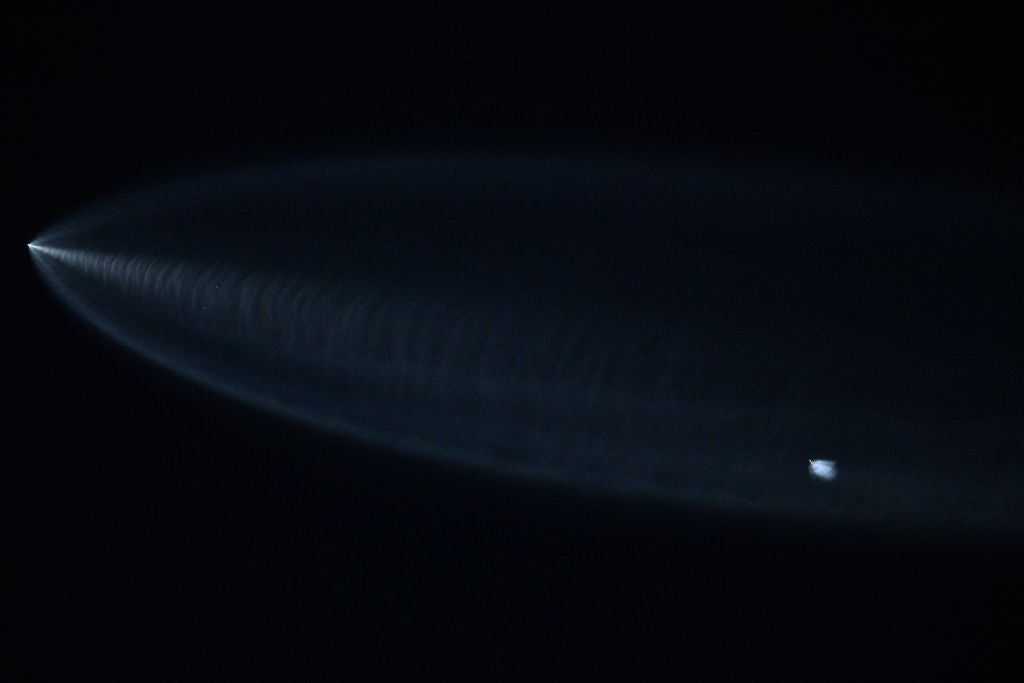
SpaceX’s Starlink satellites almost collided with another launch by a Chinese competitor, Elon Musk’s space company has said.
The satellites came within 200 meters of each other, a close approach that could have caused devastation if it had actually led to a collision.
Experts have warned that collisions between satellites are becoming increasingly common owing to the rapidly increasing amount of traffic above the Earth as well as a lack of collaboration between the international companies and organisations that launch them.
Michael Nicholls, the vice president of starlink engineering at SpaceX, said that a recent launch by a Chinese firm had brought satellites dangerously close. A lack of co-ordination meant that SpaceX could not steer its satellites away from the newly launched ones, he siad.
“When satellite operators do not share ephemeris for their satellites, dangerously close approaches can occur in space,” he wrote on X, formerly known as Twitter. “As far as we know, no coordination or deconfliction with existing satellites operating in space was performed, resulting in a 200 meter close approach between one of the deployed satellites and [a Starlink satellite] at 560 km altitude.
“Most of the risk of operating in space comes from the lack of coordination between satellite operators - this needs to change.”
In response, CAS Space – which had launched the satellites – did not accept responsibility for the near-collision but echoed the Mr Nicolls’ plea for more collaboration.
“If confirmed, this incident occurred nearly 48 hours after payload separation, by which time the launch mission had long concluded. CAS Space will coordinate with satellite operators to proceed. This calls for re-establishing collaborations between the two New Space ecosystems,” the company wrote.
“We appreciate the responsiveness and look forward to engaging in coordination for future launches,” Mr Nicolls said in reply. “Establishing data sharing between all satellite operators is critical.”
As well as any potential collision causing damage and debris to be littered across space, experts have warned about the possibility of “Kessler Syndrome”. That describes a potential scenario in which a relatively small collision causes a domino effect as other satellites collide with the debris – which could potentially fill up low-Earth orbit with so much material that it makes launching impossible.
Join our commenting forum
Join thought-provoking conversations, follow other Independent readers and see their replies
Comments
Bookmark popover
Removed from bookmarks