As thousands delete TikTok – is this the end?
The daily average of Americans deleting TikTok has risen by nearly 150 % in the days after the U.S. ownership change. What was supposed to be a quiet, legalistic changeover has become a political flashpoint – but don’t write the app off yet, writes Andrew Griffin

.jpeg)
It’s six years since the US started trying to ban TikTok – or, more specifically, to use the threat of a ban to transfer it away from Chinese ownership. The years since have brought endless headlines: bans that weren’t really bans. All the while, the app continued on, endlessly there and available, just like its famous “for you page”.
And so, when the final conclusion actually happened last week, the initial reaction was largely a worldwide shrug. The deal was structured specifically to cause the least possible disruption to anyone who uses the app in the US. The solution was to launch a new company, based in the US, which would look after the American version of the app and the data generated by its users. But all of that changeover was invisible to users who just kept scrolling.
Until they didn’t. Within days of the changeover, TikTok broke. Users complained they were unable to get online, or were seeing old and irrelevant posts. The problem was because of a power outage that had taken down the infrastructure that made it available in the US.
Then, yet more problems. Users complained that they were unable to write the word “Epstein” in messages, and said that anti-ICE posts were being suppressed. It came at a particularly bad time, as US politics was riled after federal agents killed ICU nurse Alex Pretti during a protest.
That in turn led to new attention on just who had bought the new US-based TikTok. The new joint venture is run by a board of directors, most of whom are from the US, but that includes Oracle, the cloud computing company run by Larry Ellison, a longtime ally of Donald Trump.
The problems brought official investigations. Most notably, California governor Gavin Newsom announced that he would be launching an investigation into reports that political content was being suppressed. “Following TikTok’s sale to a Trump-aligned business group, our office has received reports – and independently confirmed instances – of suppressed content critical of President Trump,” his press office wrote on X, formerly Twitter.
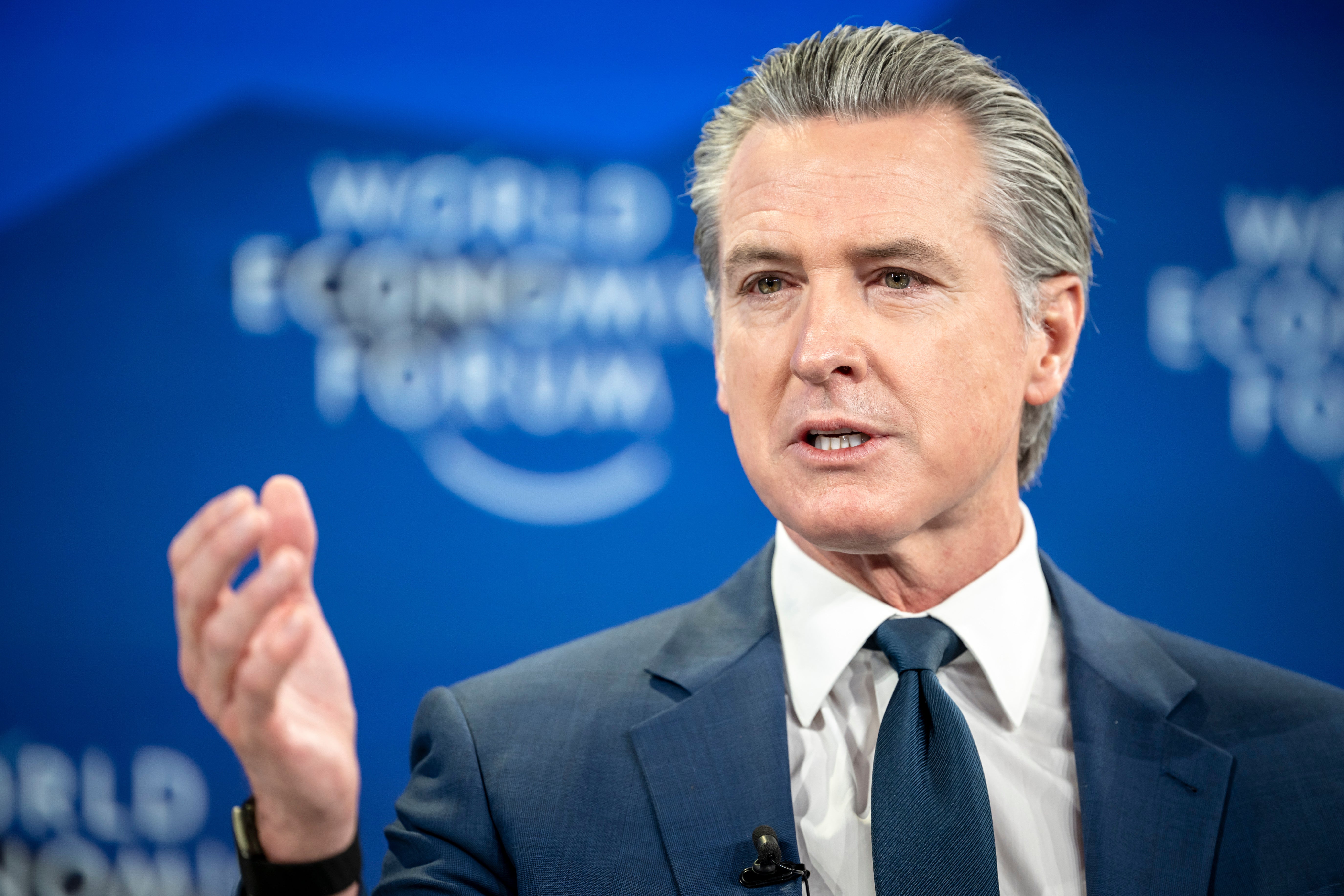
None of this is entirely new for TikTok. It has long faced accusations that it was downgrading politically sensitive content – but that was usually related to its Chinese owners, and the claim that it was intentionally favouring content promoted by its ruling communist party. Now, under new ownership, those issues have not gone away but have flipped over to the other side.
Similarly, TikTok's terms and conditions have long been the subject of scrutiny. In 2022, for instance, Joe Rogan launched a long attack in which he read the long list of data collected by the app.
“It said, ‘We collect certain information about the device you use to access the platform, such as your IP address, user region.’ This is really crazy,” he said in an episode of his podcast. He continued to read from the list of data that was collected: “User agent, mobile carrier, time zone settings, identifiers for advertising purposes, model of your device, the device system, network type, device IDs, your screen resolution and operating system, app and file names and types.”
Those expansive terms and conditions are not unusual – most social media apps allow themselves to collect similar data. Some of it sounds malevolent but is actually necessary – an app knowing what device you are using it on might sound intrusive, for instance, but it is necessary to ensure that it displays content correctly. And social media apps have long favoured giving themselves widespread permissions just in case, so that they can avoid criticism and lawsuits, probably on the correct assumption that most people won't use them anyway.
As such, using such apps has become a question of trust: all these apps can collect data, and so the question has really become about whether the app seems worth handing it over to. Many of TikTok's recent problems are not so much about changes in the way the app works but the context that it works in – whether people are happy having their data collected and used by a company implicitly allied with Donald Trump.
Many aren’t, and recent days have led to a run of people limiting their exposure to the app. There are ways to use TikTok and other apps a little more privately: by using device settings to limit what data an iPhone hands over, for instance. But others have opted to delete it entirely, a movement that appears to be growing.
Of course, people saying that they’re leaving TikTok doesn’t mean they actually are – since Twitter was taken over by Elon Musk and renamed X, for instance, it has been hit with wave after wave of trends focusing on leaving or deleting it, and it still carries on. But other TikTok competitors are beginning to crop up. This week, competitors Skylight and UpScrolled both reported a surge in downloads as the backlash took hold, and Instagram has long been ready to catch fleeing users with its Reels product, which was initially created in part as a way of responding to a similar ban in India.
Yet still TikTok remains dominant. Network effects and the sheer mass of content on the app mean that leaving is much harder than it seems. But TikTok’s bigger threat might not be a great, politically-motivated moment that leads users to become skeptical and leave. Very often, social media sites end not with a bang but with a whimper. There was no specific day when LiveJournal, Myspace, Tumblr or any of the other now largely dead platforms actually keeled over – one day people just logged off, and never logged back in again.
Join our commenting forum
Join thought-provoking conversations, follow other Independent readers and see their replies
Comments
Bookmark popover
Removed from bookmarks