Jeff Bezos and Lauren Sanchez donate $5 million for neurodiversity education
The prize money is awarded without stipulations, allowing honorees complete discretion over its use for their charitable objectives
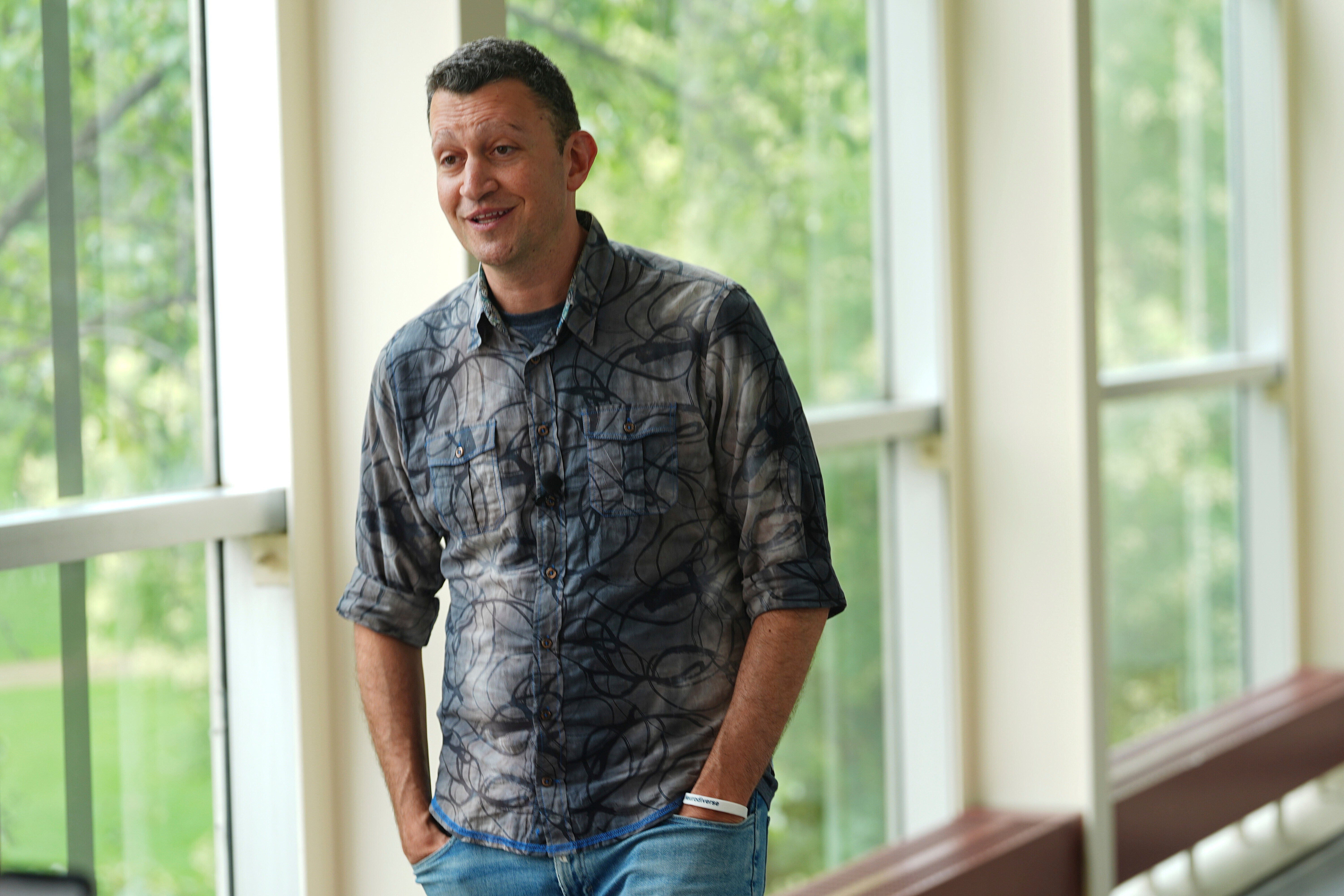
Jeff Bezos, the founder of Amazon, and his wife, Lauren Sánchez Bezos, have awarded $5 million to David Flink, the visionary behind a neurodivergent student support network.
Flink attributes this significant recognition to the collective efforts of students who are driving his rapidly expanding movement for more inclusive classrooms.
Flink, CEO of the Neurodiversity Alliance, expressed his gratitude, stating, "I feel like there’s a narrative sometimes that our little actions don’t matter. That’s just not true. And this proves it. Lots of little actions that happen every day in our work, collectively over time, reached the ears of folks like Lauren and Jeff."
This grant is part of the Bezos Courage & Civility Award, an initiative launched in 2021 to recognize individuals who break barriers and unite people behind innovative solutions to often overlooked challenges.
The prize money is awarded without stipulations, allowing honorees complete discretion over its use for their charitable objectives.
The Neurodiversity Alliance originated over 25 years ago as a peer-to-peer mentorship program for students with learning and developmental differences, including autism, ADHD, and dyslexia.
Today, the non-profit extends its reach to more than 600 high schools and colleges, fostering environments where young people can build educational systems that cater to classmates whose brains function differently from typical norms.
While the Bezoses, who married in a high-profile Venice ceremony this summer amidst protests concerning wealth inequality, have not publicly detailed their reasons for supporting this specific cause, their personal histories offer some insight. Jeff Bezos, whose net worth is estimated by Forbes at around \$240 billion, making him the world's fourth richest person, has previously invested in early childhood education through his network of tuition-free Montessori-inspired preschools.
Lauren Sánchez Bezos has spoken openly about her own experience with undiagnosed dyslexia during her childhood. Last year, she shared on "Good Morning America" that her children’s book, "The Fly Who Flew to Space," was written for "the 8-year-old me who was told I wasn't smart."
She credits a college professor, who encouraged her to get tested despite her initial reluctance due to spelling difficulties, for her eventual diagnosis.
Flink’s selection represents a notable shift for the award, which has previously honored more prominent figures such as CNN political commentator Van Jones, World Central Kitchen founder José Andrés, actor-director Eva Longoria, and country superstar Dolly Parton. This change signals a desire to direct funds closer to grassroots efforts, rather than relying on well-known personalities to distribute money to their chosen non-profits.
This more localized approach contrasts with the philanthropic strategies often employed by many of Bezos’s ultra-wealthy contemporaries, according to Leslie Lenkowsky, an Indiana University professor emeritus in public affairs and philanthropic studies.
Lenkowsky notes that modern entrepreneur-philanthropists, such as Bill Gates, typically concentrate on systemic change within health or education sectors.
"Rather than trying to change the system, what they’re trying to do is provide funding to individuals or communities to deal with important issues," Lenkowsky observed regarding the Bezoses’ approach. "It really is a much older model of philanthropy."
The overall award sum has also been reduced this year, with five winners equally sharing a $25 million pot whereas past awards have totaled as much as $100 million.
Flink stated that the $5 million will be instrumental in helping the Neurodiversity Alliance achieve its ambitious goal of expanding to over 2,000 sites by 2028. He pledged to invest in enhancing the mentorship programme, amplifying narratives that challenge negative perceptions of neurodiversity, and broadening the national network of student leaders trained to sustain their school clubs.
He emphasised the critical timing of this support, noting that "the demand has never been greater" and that schools have experienced "some oscillation" in available resources.
This comes at a time when the Trump administration’s dismantling of the Education Department led to significant layoffs at the agency responsible for addressing complaints regarding inadequate support for students with disabilities. While dozens of Office for Civil Rights staffers were recently reinstated to tackle a growing backlog of discrimination complaints, the impact of previous cuts remains.
Kala Shah, an attorney with 24 years of experience enforcing protections for students with disabilities at the Department of Education, highlighted the reliance of neurodivergent students on such oversight.
"This is an especially critical time for private foundations and philanthropy to help fill the gap in resources that’s been created by the current federal climate," she concluded.
Bookmark popover
Removed from bookmarks