Starmer must block Burnham’s return if he wants to remain PM
The mayor’s supporters will be outraged if Keir Starmer prevents his return to parliament – but there is nothing Burnham can do about it, writes John Rentoul


Andy Burnham has made what is for him the logical decision. He wants to be prime minister and thinks that there is a chance that he could be. Therefore he has put himself forward and dared Keir Starmer to stop him.
If he had turned tail at this stage and failed to seek permission to stand in the by-election in Gorton and Denton, he would have looked weak. He would have been saying, in effect, that he was happy as mayor of Greater Manchester, and willing to end his career as a successful leader of a great British city.
Now, he risks alienating some of its citizens, who may feel that he was less committed to them than they thought. Indeed, he has just shown that he is willing to break his promise to them to serve out his third term, which ends in 2028.
But he knows that Starmer is unlikely to allow him to break that promise. Labour’s national executive committee (NEC) is expected to refuse him permission to seek the nomination as the party’s by-election candidate. One member of the NEC told Matt Chorley of the BBC: “He will not be the candidate if I have got anything to effing do with it. Not a chance.”
There will be an outcry against what will be called an undemocratic stitch-up. All the people who warned against blocking a candidate beforehand will condemn the decision when it is made. It will be Starmer who looks weak, but he will still be strong enough, as I wrote yesterday, to withstand an open letter to The Guardian.
In the end, though, there will be nothing that Burnham can do about it. He can only exploit his status as the wronged party to gather more supporters to his banner. He has declared, in effect, that he thinks he could do a better job than the prime minister. One striking sentence in his statement was that his “role in returning” to Westminster would include helping the government “communicate the difference it is making”. In other words, “I am a good communicator.”
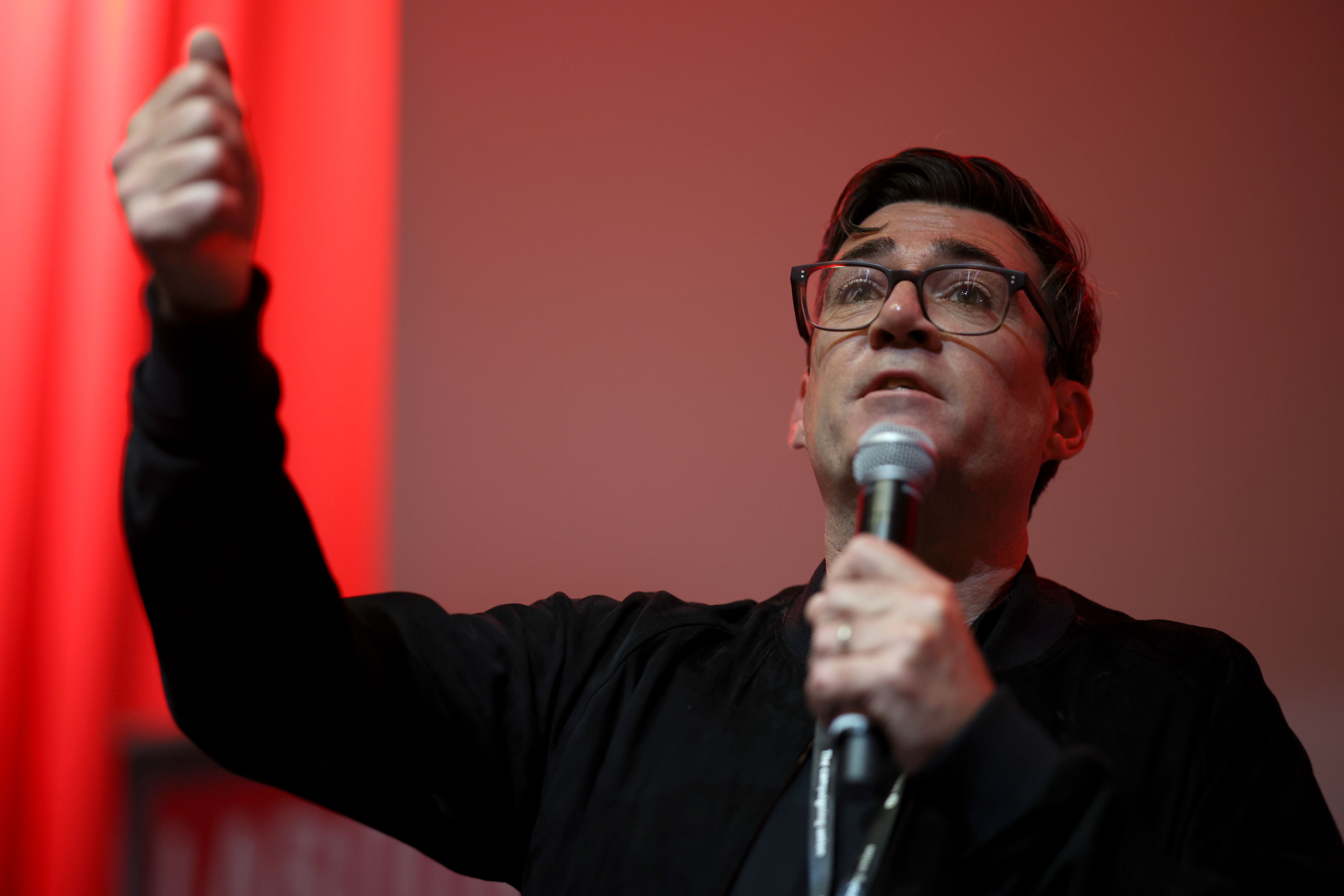
It will look to his admirers that it is only Starmer’s cowardice that is keeping him from riding south to the rescue. His only consolation is that his purity as the saviour of the party and the country, exiled from Westminster, will remain unsullied.
The best outcome for Burnham might be for Labour to lose the by-election, so that his supporters could say that he would have won it – such is his personal popularity in the North West.
He could continue to agitate for a return to parliament, and he might still be a viable candidate for the leadership when his mayoral term ends, with a year still to go before the general election. If Starmer is still prime minister at that stage, he might be weaker, and unable to resist Burnham’s stronger claim to be allowed to fight a by-election.
But that is two-and-a-half years away. In the meantime, Starmer will be more secure. He is likely to ignore the warning that blocking Burnham makes a challenge to his leadership more likely. That can never be proved. It may be that some Labour MPs who were wavering might be pushed further into the rebellion camp, but if that is all it takes they probably couldn’t have been relied on anyway.
The one thing that Starmer knows for sure is that if Burnham isn’t available as a candidate, it makes a leadership challenge harder, because the potential candidates in the House of Commons who might stand against him are less strong. Angela Rayner still hasn’t cleared up her tax affairs. Wes Streeting lacks support among party members. Ed Miliband is much less popular among Labour members as a possible prime minister than he is as a cabinet minister.
Burnham is more popular than any of them among the general public, too, which is an important consideration for MPs and party members alike. Polls suggest that he is the only candidate who could do better than Starmer against Nigel Farage in a general election. But the difference is small, and that kind of polling about hypothetical scenarios is notoriously unreliable.
Burnham does not offer a different policy from Starmer, except to hint at a kind of left-wing version of Trussonomics. His superficial popularity could disappear like the froth on a pint in a gale.
Starmer knows that there will be a short-term cost to blocking his rival, but better for him to endure that temporary embarrassment than to have a walking bad-news generator – sorry, a “good communicator” – stalking the corridors of Westminster.
Join our commenting forum
Join thought-provoking conversations, follow other Independent readers and see their replies
Comments
Bookmark popover
Removed from bookmarks