Defenceless Britain is a sitting duck – when Ukraine falls, we’re next
The government is doing the British public no favours by not facing up to the Russian threat, writes Robert Fox – not least when military leaders are lining up to point out how unprepared we are for future conflict


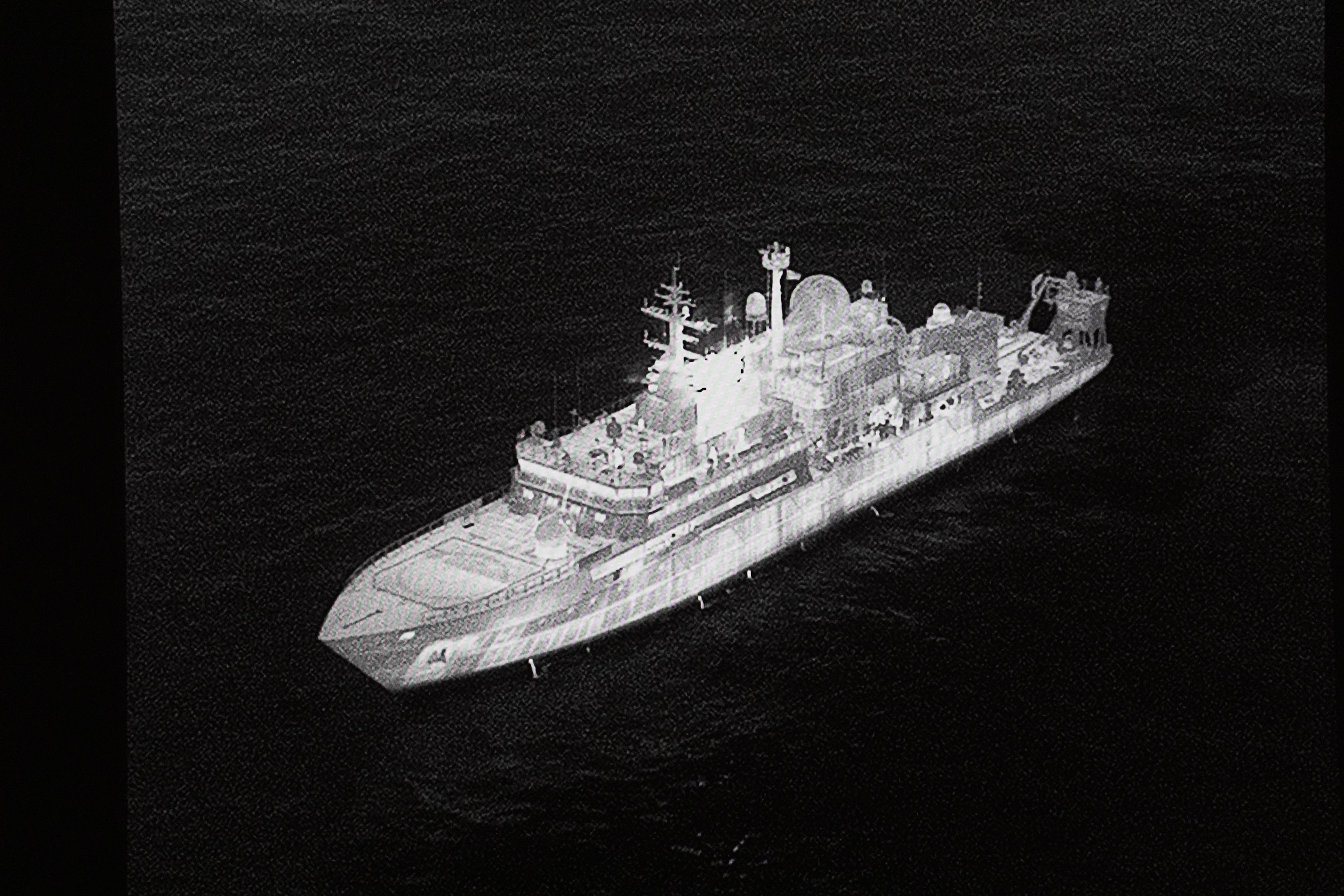
On Thursday, the defence secretary John Healey put Vladimir Putin and his military on notice following reports of aggressive activity by the Russian surveillance ship Yantar towards an RAF plane sent to track it off the north of Scotland.
Healey said the Yantar crew had fired laser beams at the pilots of an RAF P-8 maritime patrol plane. “That Russian action is deeply dangerous,” he warned. “We see you. We know what you are doing. And if Yantar travels south this week, we are ready.”
Ready for what, you may ask? The activities of Yantar around the British Isles have been noted for nearly three years. The summer before last, the Irish coastguard spotted the ship loitering off Limerick for almost a month, close to one of the main hubs for the transatlantic communication cables. The ship comes under Russia’s GUGI agency, a separate naval command, now responsible for ocean surveillance and sabotage. Among the GUGI inventory is a mother submarine, Belgorod, which can launch underwater attack drones capable of cutting underwater cables and oil and gas pipelines.
Just a few hours before Healey gave his warning to Vladimir Putin, the powerful Commons defence committee concluded, after a lengthy enquiry, that the UK is less than capable of defending itself, its territories and allies, and in particular its home territory. The report, entitled “Questions raised about UK’s fundamental ability to defend itself”, states bluntly: “Conclusion: We question the Ministry of Defence’s ability to protect the UK and the Overseas Territories from crisis or conflict.”
The UK is not fulfilling its prime duty under Article 3 of the Nato founding charter, which obliges a country to be capable of defending itself, thereby enabling it to come to the assistance of allies. Almost uniquely, the UK still doesn’t have a proper a Nato-compliant national defence plan, despite being a founder member of the alliance.
Among the biggest weaknesses highlighted by the Commons report are inadequate defences against missile and drone defences, especially for key facilities like Heathrow airport, the City of London and the container ports of the east coast.
Imagine this: on a dank November morning, Dutch air defence radar warns that a swarm of military drones or subsonic cruise missiles is heading towards the Thames Estuary and central London. “We have only a handful of Sabre air defence missile batteries, scattered between the Falklands, Poland, and Salisbury Plain for training,” says the leading analyst and former TA officer Francis Tusa. “It would take several minutes to scramble the Typhoon quick reaction flight from Coningsby. By then, armed drones could be over Waterloo station at rush hour.”
The weapons of the Ukraine war – Chinese-designed Iskander and Kinshal attack missiles – pose a real threat. The air defences of England are little better than those for the 2012 Olympics over London – and they were pretty threadbare at the time. One strike could wreck the infrastructure of the eastern counties, the electricity grid, container ports at Tilbury or Felixstowe, the banks of the City of London and mainline railway stations Waterloo or Paddington, and Heathrow airport.
In June, the government published its Strategic Defence Review and National Security Strategy. It promised greater spending on defence – up to 2.5 per cent of GDP by 2027, and possibly 3.5 per cent by 2030 – by which time there will be a new government facing a new set of problems.
The services are underfunded and unprepared for the worsening security crisis across Europe. The army lacks munitions, equipment and adequate manning. It has only 14 medium 155mm howitzers, “and more ceremonial guns than ones for operations”, according to a serving general. The two large aircraft carriers are still not working as intended. The army has bet the ranch on the Ajax reconnaissance vehicle, which will have cost nearly £7bn for 590 copies, only now coming into full operation 10 years late.
This week, Brigadier Ben Barry, the veteran analyst of the International Institute of Strategic Studies, gave a grim verdict in his book The Rise and Fall of the British Army 1970 -2025: “The British Army could now barely field one Armoured Brigade for Nato duty in Eastern Europe. The Poles are preparing six armoured divisions, and Germany similar forces.”
General Rupert Smith is a former UK Nato leader who was deputy supreme allied commander in the Kosovo crisis of 1999. He sees the war in Ukraine at a particular point of danger for the Nato alliance as a whole, including the UK. “Russia is pursuing a form of wider ‘ambiguous’ warfare across the region, and beyond Ukraine,” he observes.
With a messy armistice and ceasefire likely in Ukraine in the next few months, the prospects become hazardous and uncertain, he says. “We have a huge nation under arms in Ukraine, with very much its own mind. Russia will likely use the pause to regroup and rearm.” And the line of confrontation will be “much longer and more volatile than at any time between Nato and the Warsaw Pact alliance in the Cold War.”
Peacekeeping, policing any armistice, overseeing disarmament, will be a nightmare. Ukraine today is better armed in quantity and quality than most Nato forces, including the UK. Russia currently has potentially some two million regular and reserve soldiers, and many more in local militias, gendarmeries and security police. The economy, distinctly creaky admittedly, is now geared to war – and Putin seems in no mind to reverse this.
Several of the authors of the UK defence review believe Europe is now threatened by further hostility from Russia. “We are no longer at peace,” Friedrich Merz, the German chancellor, said with no little understatement last week. However, there are some in Downing Street’s inner sanctum and the Cabinet Office who just don’t accept this. “We are not at war with Russia,” a senior official said recently, seeming to read from the Pollyanna playbook.
This has raised the alarm of the Commons defence committee and its Labour chairman, Tan Dhesi MP. He believes the government is offering too little, too late, and is not being honest with the public.
“There needs to be a coordinated effort to communicate with the public on the level of threat we face and what to expect in the event of conflict.”
Join our commenting forum
Join thought-provoking conversations, follow other Independent readers and see their replies
Comments
Bookmark popover
Removed from bookmarks