The Pope’s contrition for the crimes of his church is welcome, but actions speak louder than words
Many in Ireland, as in the US and Australia and elsewhere, still feel that the Roman Catholic church is making it difficult to bring past perpetrators to justice, and they point out that recent cases are coming to light even now
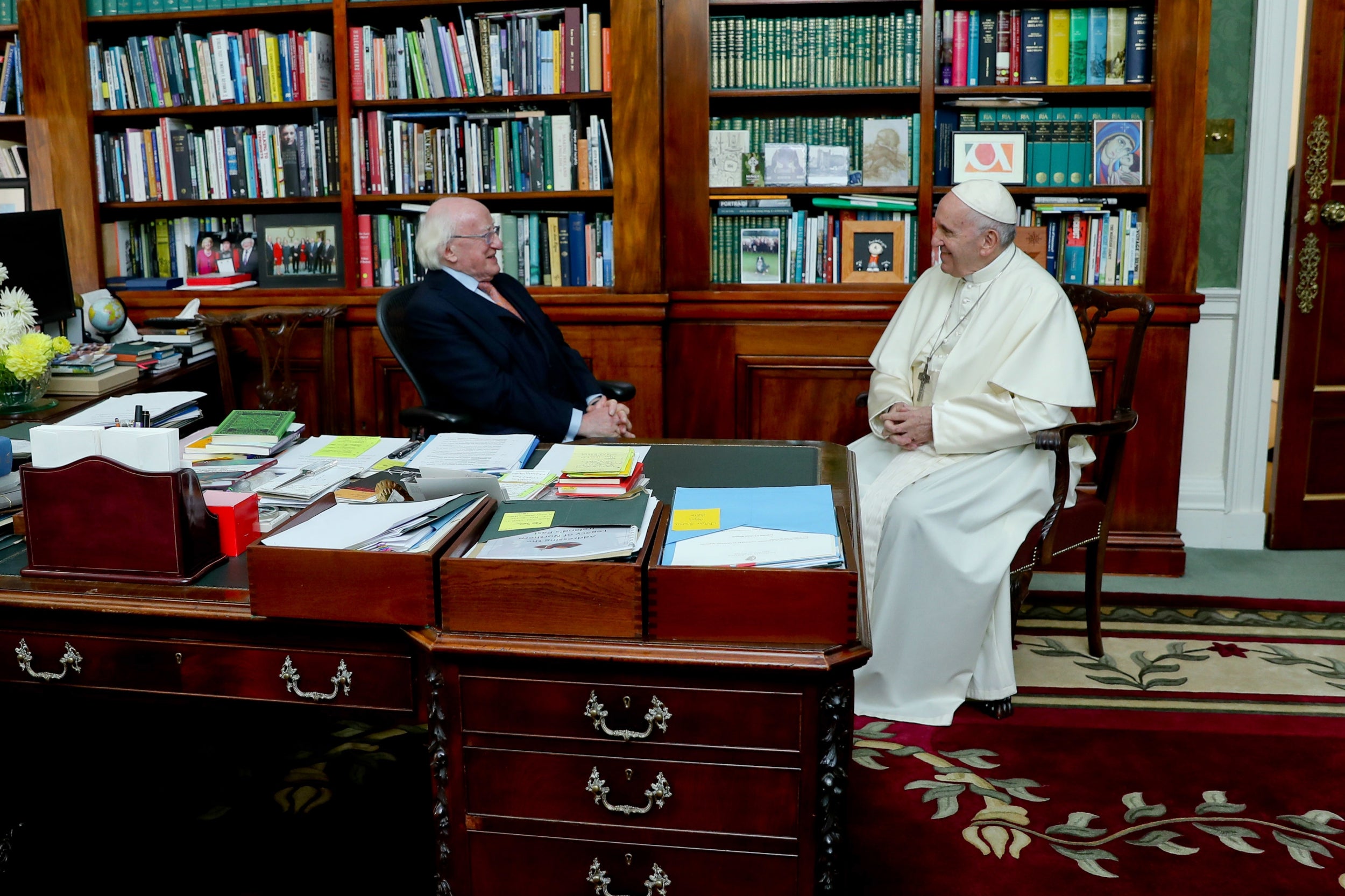
The Pope spoke powerfully in Dublin on the first day of his visit to Ireland today. He said the failure of the church authorities to deal with a long history of the abuse of children in their care – “these repellent crimes” – was a source of “pain and shame”.
It was notable, however, that Pope Francis held back from anything quite so direct as an apology. It is not for The Independent to divine the reasons behind this reluctance, except to observe that his predecessor, Benedict XVI, did say in 2008 that he was “deeply sorry for the pain and suffering” inflicted by Roman Catholic priests.
Pope Francis certainly sounds contrite. Before he arrived in Ireland he published an open letter this week to the world’s 1.2 billion Catholics, in which he described his church’s crimes as “atrocities” and acknowledged that “the heart-wrenching pain of these victims, which cries out to heaven, was long ignored, kept quiet or silenced”.
His letter continued: “The extent and the gravity of all that has happened requires coming to grips with this reality in a comprehensive and communal way.” Those are the right words, but they need to be translated into action.
The Pope’s visit to Ireland, the first papal visit since 1979, would have been a good chance to begin to turn powerful words into effective action. Since John Paul II toured Ireland 39 years ago in an early version of the Popemobile, a Ford truck with a covered platform on the back, the country has been transformed.
The most recent mark of that change was the referendum to liberalise the law on abortion in May, in which two-thirds of the Irish voted in favour. The Irish state, which has been entwined with the Catholic church since birth, has finally broken those bonds.
Yet the shadow of past crimes committed in the church’s name still falls on the nation’s present. If the Pope really wanted to “come to grips with this reality”, he would propose a truth and reconciliation movement, not just in Ireland but in all the countries of the world. Many in Ireland, as in the US and Australia and elsewhere, still feel that the church establishment is making it difficult to bring past perpetrators to justice, and they point out that recent cases are coming to light even now.
This is not the zero tolerance that the Pope’s fine words imply.
Pope Francis’s biographer, Paul Vallely, formerly of The Independent, praised his refocusing of the church’s mission to the poor, but warned – two years ago – that “his failure to act effectively on sex abuse may seriously mar his otherwise radical papacy”.
Unfortunately, not enough has been done in the past two years to convince us that the verdict on an otherwise admirable spiritual leader should yet be revised.
Join our commenting forum
Join thought-provoking conversations, follow other Independent readers and see their replies
Comments
Bookmark popover
Removed from bookmarks