Theresa May runs not only a minority Government but a Brexit coalition
So trapped by the warring factions in her own party is the Prime Minister that she couldn’t appoint someone better suited to the role of International Development Secretary than Penny Mordaunt
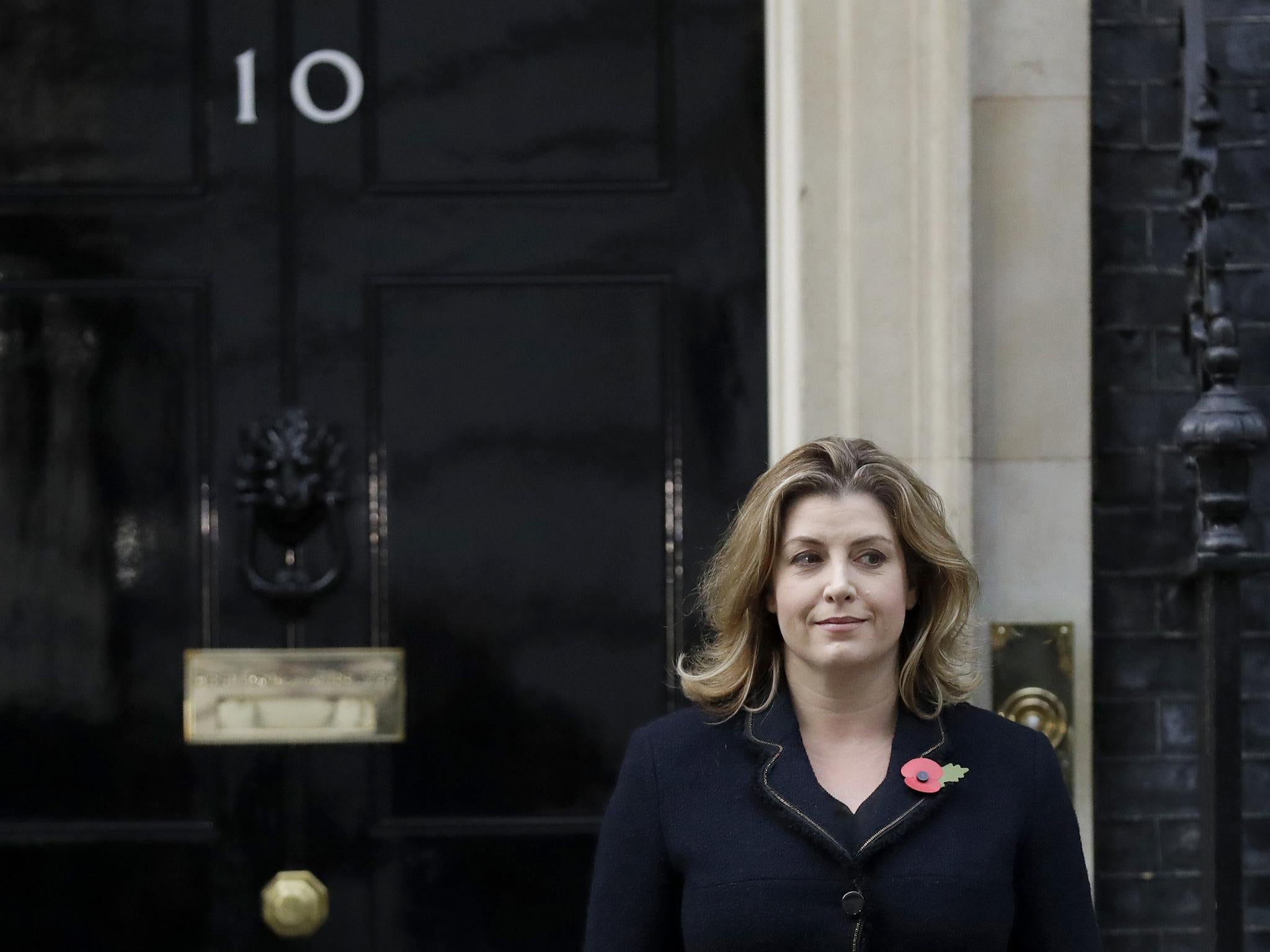
No amount of goodwill towards the promotion of a woman to the Cabinet can wash away Penny Mordaunt’s political “original sin” – her role in the EU referendum campaign. Shamelessly she claimed that Turkey was not only going to become an EU member – an at-best distant prospect – but that some terrifying proportion of its population of 80 million would immediately turn up in Britain and, the most doubtful of her claims, the UK would have no right of veto over the new member state.
That was wrong, and, for what it was worth, contrary to the Government’s declared policy, which was to favour Turkish accession in principle. Thus did Ms Mordaunt qualify for her first footnote in history; something of much greater significance than her much-noticed appearance in a televised diving contest.
Of course, those exaggerations about the EU were one powerful reason why she got the job – in its way a reward for her political deceits. So crib’d, confin’d, and bound in by the warring factions in her own party is the Prime Minister that she couldn’t appoint someone better suited to the role who happened to have a record as a staunch Remainer, such as Sir Alan Duncan.
Unnoticed, Ms May runs not only a minority Government but, in effect, a coalition formed by the two wings of her own party that cannot draw on upon the best talents for its front-line positions: it is that bad.
At least Ms Mordaunt is not on record as favouring the abolition of the Department for International Development, as her ill-starred predecessor Priti Patel was. She should, as her first priority, repair some of the morale of the DfID after Ms Patel, and declare unequivocally that the UK’s target of spending 0.7 per cent of its national income on international aid stands – and that there will be no sneaky attempts to siphon it off to subsidise the defence budget (of the UK, Israel or any other country for that matter). The British commitment to overseas development is one of the few abiding (happy) legacies of David Cameron, and has helped Britain to a leadership role in this field, at a time when the British profile in world affairs is fast diminishing.
All of which leaves the Foreign Office, when it isn’t busy clearing up after Boris Johnson, with the task of rebuilding Britain’s reputation in the Middle East. In such a sensitive part of the world where conspiracy theories find a particularly fertile soil in which to grow, the damage done by Ms Patel was real, though probably not enduring. There remain a number of questions about her motivation – prompted by the quip made by one of her officials that the only development Ms Patel was concerned about was her own political career. If it is correct that her activities were part of some long-range plan for a leadership bid, then Ms Patel was simply deranged.
Theresa May knows better than most that this is not the end of her troubles, and that she may count herself lucky if she is able to celebrate Christmas surrounded by her few remaining political allies at Chequers. Damian Green, about the only soul she can rely upon around the cabinet table, is vulnerable. Even if he survives in post as de facto deputy prime minister, his authority too will be weakened. By-elections in a variety of seats – held by all parties – could radically alter the future of the country in such a precariously balanced Parliament as this one. A change of government and even a cancellation or pause on Brexit are perfectly plausible scenarios.
Meantime, like an episode of some soap opera or apparently far-fetched political satire show, the nation looks forward to next week’s ministerial reshuffle.
Join our commenting forum
Join thought-provoking conversations, follow other Independent readers and see their replies
Comments
Bookmark popover
Removed from bookmarks